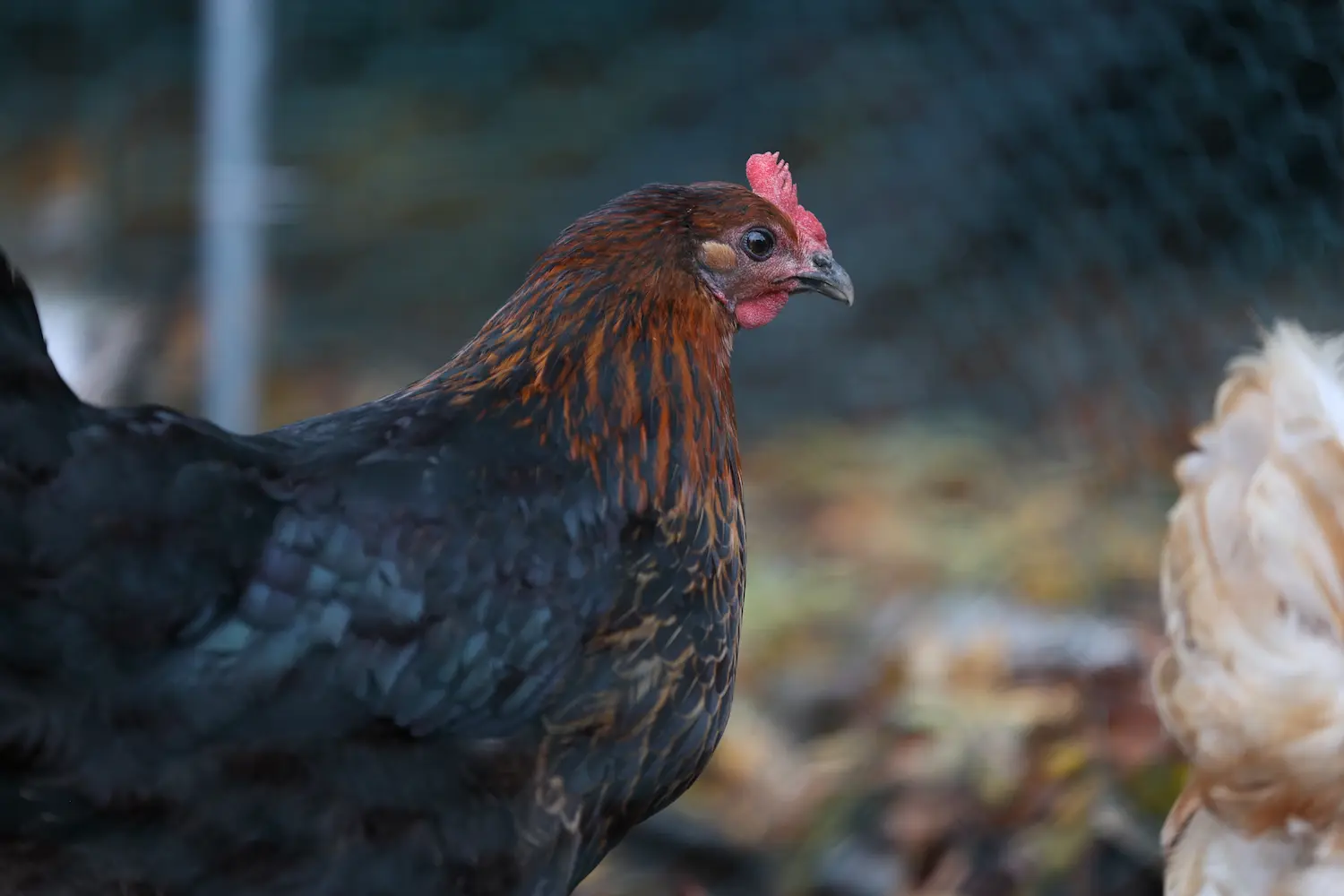
Copper Marans are calm, dual-purpose chickens from France that lay deep chocolate-brown eggs; in UK flocks they’re hardy and easy to keep if housing stays dry, well-ventilated and mud-free.
About the Copper Maran chicken
We added a Copper Maran to our flock in 2025 and loved the variety they bring to our eggs. Their amazing colours also make the flock more interesting to watch.
The Marans chicken was developed near the French port of Marans in the early 20th century. Breeders combined local swamp birds with imported game fowl. They created a hardy, dual‑purpose bird valued for both meat and eggs. Today’s Copper Maran (also called Black Copper Marans) is one of many colour varieties. It is popular for the stunning contrast of its black body and copper hackles.
Marans hens are medium–large birds, weighing roughly 6.5 lb (3 kg); roosters can reach 8 lb (3.6 kg). They have broad shoulders, a full breast and relatively short tails held at around 45 degrees. The dark plumage helps them blend into hedgerows while the copper neck feathers glint in sunlight. Their most celebrated trait, however, is their deep chocolate‑brown eggs, which are among the darkest of any chicken breed.
Because Marans were developed as barnyard all‑rounders, they still make good table birds. The meat is firm and flavourful, though slower growing than modern hybrid broilers. This dual‑purpose nature gives keepers flexibility; eggs are the primary draw, but surplus cockerels can be reared for the pot.
If you are new to keeping chickens check out our guides on on Can I Keep Chickens in the UK? Legal Rules, Costs & Tips and What to feed chickens in the UK.

Breed history and appearance
Origins and development
Marans chickens emerged in the 1920s near the town of Marans on France’s Atlantic coast. Poultrykeeper notes that the original birds laid 160–210 dark‑brown eggs and had lightly feathered legs. When Marans were exported to Britain in 1929, breeders selected for bare legs to aid cleanliness. Feathered shanks are now considered a serious defect in the British standard. British Marans therefore have clean legs, while French Marans (including many Copper strains) may retain some leg feathering.
The British Poultry Standards recognise several colour varieties, including Black, Dark Cuckoo, Golden Cuckoo and Silver Cuckoo. Copper‑necked birds (also called Brown Red Marans or Copper Black) are not officially standardised in the UK. However, they are popular with backyard keepers for their striking plumage.
Physical features
Marans are soft‑feathered birds with single combs, red earlobes and wattles. Their beaks are slightly hooked and horn‑coloured. Hens carry themselves upright and broad; roosters have an imposing yet elegant stance. The copper hackles are more pronounced in roosters, often extending down onto the saddle feathers. Many French strains still possess lightly feathered legs. Some keepers in the UK import these birds for the darkest eggs. This feathering requires extra care in muddy conditions.
Our Copper Maran has added a lovely contrast of colour to our lighter Light Sussex and Rhode Island Reds.
Temperament and behaviour in small flocks
Copper Marans are known for their friendly, laid‑back temperament. They noted that hens are docile. They are also easy to handle. Most hens sit comfortably in the middle of the pecking order and mix well with other breeds. They enjoy foraging and will follow keepers around the garden in search of treats but are not overly cuddly.
Roosters are generally calm, though individuals can be protective. A‑Z Animals reports that Marans hens are friendly, while roosters may occasionally be contentious. It’s wise to avoid keeping multiple cockerels together unless you have ample space to prevent fighting. Because Marans are confident but not aggressive, they integrate well with docile breeds like Orpingtons or Plymouth Rocks. They can become flighty if kept in cramped runs, so provide plenty of room to roam.
Egg colour, size and laying performance
Dark eggs and egg yield
Variety in egg colour was a primary reason we chose to add a Copper Maran to our flock. One of the biggest draws of the Copper Maran is its dark chocolate‑brown eggs. The pigment coats the eggshell during the final hours of formation. Early in the laying season, the shells can be almost mahogany. They gradually lighten as the season progresses. Marans hens typically produce 150–200 eggs per year. That equates to about three eggs per week. They start laying later than many hybrids. They begin at around 32 weeks of age. However, they will continue for several years if kept healthy.
Eggs are extra large, weighing 75–80 g in mature hens. New pullets may lay slightly smaller eggs (around 65 g), increasing as they mature. The rich shell colour does not affect flavour. It is prized by bakers for adding a unique visual appeal to cakes and custards.
Comparing the Copper Maran with Rhode Island Red
Many UK keepers also consider Rhode Island Reds (RIR) when choosing brown‑egg layers. According to the Livestock Conservancy, RIR hens are prolific layers, producing 200–300 large brown eggs per year. This means Rhode Island Reds outlay Copper Marans by roughly one extra egg per week. However, RIRs tend to be more assertive and are bred primarily for egg production. Copper Marans lay fewer eggs but offer darker shells and a calmer temperament. If your priority is maximum egg numbers, a hybrid or RIR may be a better choice. If you’re seeking novelty eggs and a relaxed bird for a mixed flock, Copper Marans fit the bill.
Hardiness and suitability for UK weather
Marans were developed in the damp marshes of southwestern France, so they cope well with cold and wet conditions. Their dense plumage provides insulation. It helps them withstand frosty nights. British strains have been selected for clean legs to avoid mud clinging to feathers. Despite their tolerance of rain, constant damp and deep mud can cause foot problems, including scaly‑leg mites and frostbite. The British Hen Welfare Trust (BHWT) advises using a layer of hardwood chips in winter runs. This lifts birds off wet ground. Keeping the run dry prevents mud from caking on leg feathers and reduces the risk of fungal infections.
Ventilation is equally important. The BHWT notes that perches and shelter allow hens to stay warm. They ensure hens are comfortable. The BHWT recommends that each perch be 3–5 cm wide. There should be 20–25 cm of space per bird. Hens huddle together on perches for warmth, so avoid draughts at roost height. For extra cosiness, you can provide a cardboard “den” on the coop floor.
Space, housing and coop recommendations
Minimum space requirements
Copper Marans are medium‑large birds and need adequate room to thrive. The Hen Adoption FAQs from BHWT provide clear guidance. Floor space inside the house should be at least 30 cm² per bird. Perch space should be at least 25 cm per bird. The outside run should provide at least 1 m² per bird for ex‑caged hens. For other hens, it should be 2 m² per bird. This setup should be accompanied by daily free‑range time. Crowded conditions lead to feather pecking and stress, so it’s better to oversize your housing. Always buy or build a coop that accommodates more birds than you plan to keep.
Coop design and materials
In the UK’s damp climate, plastic coops such as the Nestera and Omlet ranges are popular. They’re easy to clean and resistant to red mites. Wooden houses also work but require regular maintenance and mite treatments. Regardless of material, ensure the coop is fox‑proof. It should have secure latches and robust mesh. Make sure it provides adequate ventilation without creating draughts. Position the house to shelter hens from prevailing winds. Keep the entrance dry. Adding a roofed veranda or porch over the pop hole reduces mud ingress.
Perches should be rounded and sized to suit large‑footed birds. The RSPCA advises that perches should be around 3–5 cm wide with rounded edges. The RSPCA recommend 15cm of perch per chicken but, due to the size of Copper Marans we recommend at least 25 cm of perch per chicken. There should be enough space between perches for birds to hop up and down without injury. Nest boxes need to be enclosed, draught‑free and lined with dry bedding such as straw or wood shavings.
Run and ground care
A spacious run with dry footing keeps Copper Marans happy year‑round. In winter, BHWT recommends adding hardwood chips to the run to lift birds off wet ground. This also helps with drainage and reduces mud. Rotate or rest parts of the run to allow grass to recover. The RSPCA suggests that the outdoor area should have short grass and dry soil for dust bathing. It should also have overhead shelter or small trees for shade. Include enrichment items such as perching logs, scratching areas and hanging vegetables to encourage natural behaviours.
Coop size guide and product recommendations
For more detailed sizing guidelines, see our chicken coop size guide. When selecting a coop for Copper Marans, select one rated for at least four birds. This is important if you plan to keep three. Our favourite options include the Nestera Aspen 6. See our Nestera Aspen 6 review. The Nestera Aspen 6 and the Omlet Eglu Cube offer generous space. They are easy to clean. Their construction is also predator‑proof.

Feeding and health notes
Copper Marans need a balanced diet to produce strong eggs and maintain glossy plumage. The BHWT recommends Smallholder Range Natural Free Range Layers Crumble or Pellets. These feeds are GM‑free. They provide all the nutrients hens need. Place several feed and water stations around the run so that low‑ranking birds aren’t bullied away from food. A small amount of mixed corn can be offered in the afternoon as a treat. However, it isn’t essential. The layers feed supplies a complete ration.
Provide oyster shell grit in a separate hopper to ensure adequate calcium for strong eggshells. Hens with feathered legs may be prone to scaly‑leg mites if they spend time in wet mud. Inspect their legs regularly. Apply treatment if scales lift. Keeping the run dry with woodchips helps prevent infestations. Always supply clean, fresh water; choose drinkers with covers to prevent rain contamination or wild birds fouling the water. Avoid feeding kitchen scraps or bread. The BHWT notes that hens can become obese. It is illegal to feed most kitchen waste to poultry.
For more feeding advice, read Best chicken feed for healthy layers. If you need to treat specific health issues, consult a poultry‑savvy vet; the BHWT provides a list of hen‑friendly practices.
Pros and cons at a glance
| Trait | Pros | Cons |
|---|---|---|
| Egg colour | Produces some of the darkest brown eggs of any breed | Shell colour fades later in the season; egg numbers moderate |
| Temperament | Friendly, docile hens mix well with other breeds | Roosters can be protective and may fight other cockerels |
| Hardiness | Dense feathering provides good cold tolerance and the breed copes with damp weather | Dislikes persistent mud; leg feathering (in French strains) needs extra care |
| Housing needs | Moderate space requirements; suitable for small gardens if given 1–2 m² run per bird | Requires dry footing, good ventilation and predator‑proof housing |
| Egg yield | 150–200 extra‑large eggs a year | Fewer eggs than prolific hybrids or Rhode Island Reds |
FAQs
Are Copper Marans good layers?
Yes. Copper Marans lay around 150–200 eggs annually. The egg production is lower than hybrid layers. However, the eggs are extra‑large and have a deep chocolate‑brown shell. This makes them a favourite for specialty markets and home bakers.
Do Copper Marans get along with other breeds?
Generally, yes. Marans hens are friendly and sit in the middle of the pecking order. They mix well with similarly sized breeds and are easy to handle. Roosters are usually calm. But, they may become protective of their hens. Avoid housing multiple cockerels together unless you have a very large run.
Can Copper Marans live outside all winter in the UK?
They tolerate cold well and can live outside year‑round if provided with a dry, draught‑free coop and sheltered run. Use hardwood chips to keep footing dry. Supply adequate perch space (20–25 cm per bird). This allows hens to huddle for warmth. Avoid leaving hens in persistently muddy conditions; mud on legs increases the risk of scaly‑leg mites and frostbite.
Sources & further reading
- Poultry Club of Great Britain — Marans Standard – details of recognised colour varieties and defects.
- British Hen Welfare Trust — caring for hens – comprehensive guides on housing, feeding and hen health.
- RSPCA — chicken welfare – advice on housing, perches and outdoor areas for chickens.
You must be logged in to post a comment.