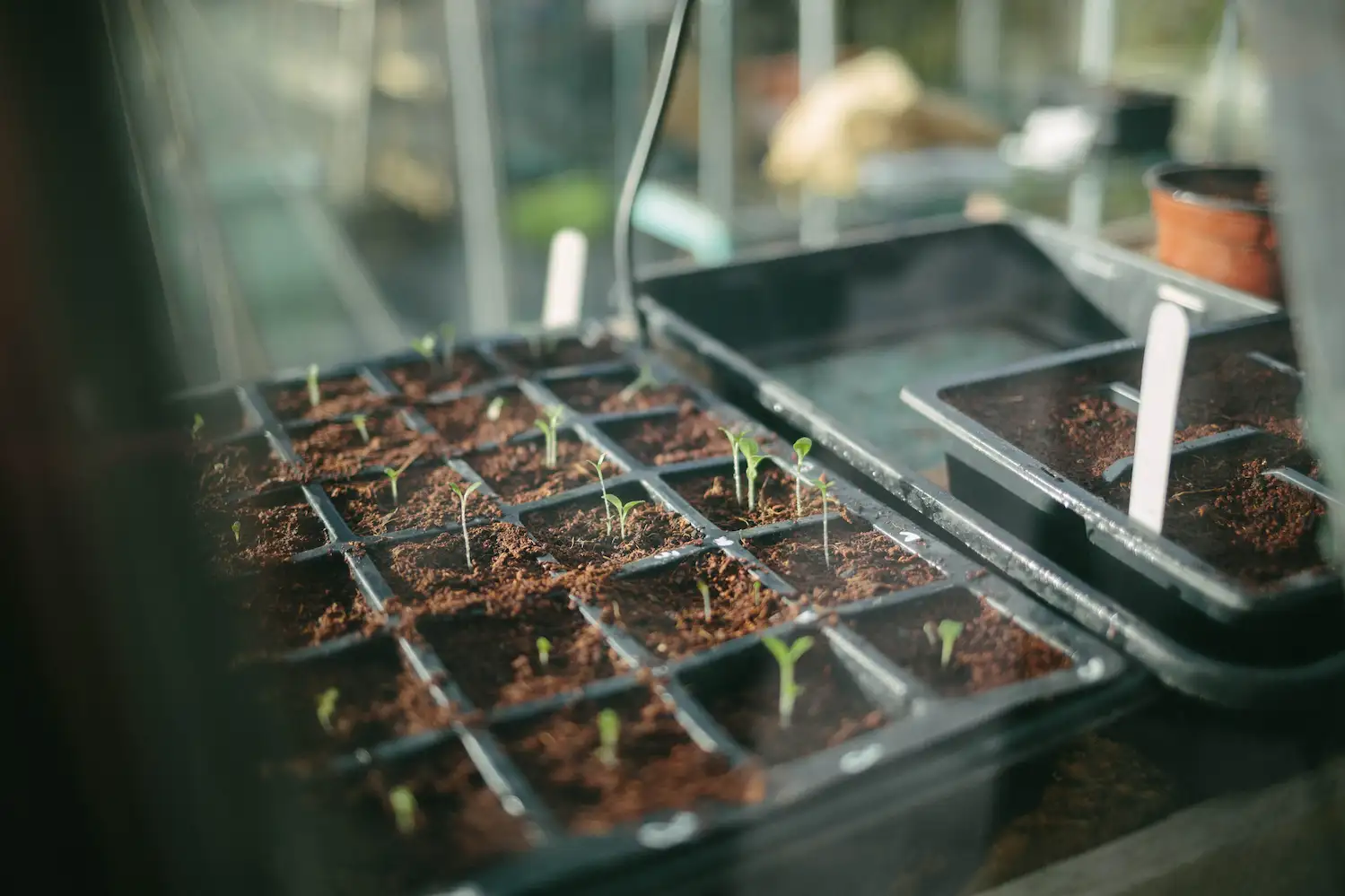
Leggy seedlings happen when they grow faster than the light available, so the stems stretch and weaken.
Starting seeds indoors is one of the most satisfying parts of gardening. You sow, you wait, and then, like magic, tiny green shoots appear. But that excitement can quickly become frustrating. Your seedlings may shoot up tall, thin, and floppy. They lean toward the light as if they’re trying to escape the room.
If that’s happening to you, you’re not alone and it happens to me most years. Leggy seedlings are one of the most common problems for UK gardeners raising plants indoors or when sowing seeds early. The good news is once you understand why it happens, you can usually prevent it easily. Fixing it is often possible too.
What leggy seedlings are (and why it matters)
Leggy seedlings are seedlings with unusually long, thin stems and wide gaps between leaves. They often look like they’ve raced upwards without building any strength. They may lean hard toward a window, flop over, or need support far earlier than they should.
For me, my tomato and pepper seedlings often become leggy. I start them in January when the days are short.
Seedlings becoming leggy matters because a leggy seedling is weaker. A long, thin stem can’t support healthy growth effectively. The plant is more likely to topple, snap, or struggle when you pot it on. Even if it survives, it often grows more slowly because it has to recover from those early weak foundations.
The earlier you spot legginess, the easier it is to stop. A seedling can stretch dramatically in just a few days if conditions are wrong. This is especially true in a UK home from January to March. During this time, daylight is short and often dull.
Interested in knowing what to sow between January and March? Check out our guides:
- What to Sow in January in the UK: A Gardener’s Guide
- Top 5 Seeds to Sow in January for Successful Gardening
The real cause (and why UK homes make it worse)
Most leggy seedlings are caused by insufficient light. When light is weak, seedlings elongate (“stretch”) to reach it, producing tall, weak growth rather than short, sturdy stems.
UK homes make this more likely for three reasons:
- In winter and early spring, the sun is low and daylight hours are limited.
- Windowsill light often comes from one direction, encouraging seedlings to lean.
- Indoor temperatures are often warm and steady, which speeds up growt, even when light is weak.
That combination, fast growth plus weak light, is the perfect recipe for tall, fragile seedlings.

60-second diagnosis: what’s failing in your setup
This is the quickest way to stop guessing and fix the right lever.
- Leaning hard toward the window?
Light is too weak or too one-sided. Rotate trays daily and increase light intensity. - Tall, pale and grown in a warm spot (radiator shelf / heat mat left on)?
Warmth is accelerating growth without enough light, so stems stretch. Cool them slightly once they’re up and improve light. - Tall and crowded tray (leaves overlapping early)?
Competition is forcing a “race upward”. Thin or prick out sooner. - Stems not just tall but floppy, with damp compost and still air?
Overwatering and low airflow is producing soft growth and increasing disease risk. Improve drainage habits and add gentle airflow.
If you only fix one thing: fix light.
Step 1: stronger light after germination (plus quick light tests)
Strong, close light right after germination prevents most legginess. Insufficient light is repeatedly identified as the most common cause of leggy seedlings. Windowsills often don’t provide enough intensity for proper development, especially early in the year. Even in my greenhouse, my seedlings do not get enough light. I have to supplement natural light with grow lights.
A room that looks bright to your eyes can still be dim for seedlings. Human eyes adapt. Seedlings can’t. If the light is even slightly insufficient, they will stretch.
Start with the brightest spot you’ve got
A south-facing windowsill is usually your best natural-light option in the UK. East and west windows can work too, but they’re more hit-and-miss in mid-winter depending on weather and shading. North-facing windows are rarely bright enough for compact seedlings without extra help.
If you can’t give them a brighter window, don’t panic. Just be honest about what you’re working with and adjust your approach.

Get the light closer and more even
Distance of the light from the plant matters. A seedling near the glass gets far more light than one set back on a table “near the window.” Move trays closer to the window if you can do so safely and without chilling them overnight.
If light is coming from one side, seedlings lean. That leaning is a sign they’re still chasing light. Rotate your tray once or twice a day. This prevents seedlings from growing curved stems. Curved stems later struggle to hold the plant upright.
A simple reflective backing can help too. Even something pale behind the tray can bounce light back onto the shaded side and reduce uneven growth.
Two quick light tests (no equipment needed)
When people say “seedlings need more light”, it’s easy to assume that means “put them near a window”. It could also mean “add a lamp somewhere above the tray”. The problem is that what looks bright to us can still be dim at leaf level. Seedlings respond by stretching. Adding a grow light is something I have to do for many of my seedlings early in the year.
Here are two simple checks that make the light issue obvious, without any kit.
1) The shadow test (your fastest reality check)
Put the tray where it normally lives. Hold your hand a few inches above the seedlings. Look at the shadow it casts onto the compost or leaves.
- If the shadow has a clear edge, the light is reasonably strong in that spot. That setup is less likely to cause legginess (assuming you’re not overheating or overcrowding them).
- If the shadow looks fuzzy or barely there, the light is weak. In UK winter and early spring, that usually means stretching is very likely.
This isn’t a “pass or fail” science experiment, it’s a comparison tool. Try it:
- right up against the window versus a foot back into the room
- your brightest window versus a different one
- under a lamp at different heights
You’ll usually find one position that clearly produces a sharper shadow. That’s your best spot.
2) The distance check (why a lamp can look bright but still do nothing)
If you’ve added a light and seedlings are still getting tall and flimsy, distance is often the culprit.
Light gets weaker very quickly as you move it away from the plant. So a lamp mounted high above a tray can brighten the room but still be underpowered where the leaves are. In practice, a “light on a shelf above” often behaves like “no meaningful extra light” for seedlings. As a result, they continue stretching.
How to test it: move the lamp closer (without letting it heat the plants or touch the leaves). Then watch the next few days of growth:
- If new leaves form closer together and the seedlings stop leaning so hard, you’ve fixed the problem.
- If nothing changes after a couple of days, you may need a brighter light or longer daily exposure. Alternatively, you might have to accept that a window-only setup just won’t be reliable that early in the UK season.
If you only remember one thing from this section: don’t judge your setup by how bright it looks to you. Instead, judge it by what’s happening right above the seedlings.
The grow light truth (and why it’s not overkill)
If you sow in January–March and want consistent results, a grow light is the biggest reliability upgrade. It gives seedlings the intensity they need close to the leaves, for long enough each day to grow compactly.
You don’t need a professional indoor farm. You need dependable brightness close to the leaves, for long enough each day to keep growth balanced.
If you’re sowing early and want reliable results, consider using supplemental light. This is especially important for chillies, tomatoes, or anything you’ll be growing indoors for a while. Supplemental light is often the difference between sturdy plants and lanky chaos. Adding a grow light was one of the best things I did to extend m growing year.

UK timing: sow early only if your setup can support it
Sowing too early is a common mistake, one I have made often. This often leads to trying to “hold seedlings back” under poor light and temperature conditions. Such conditions result in tall, weak plants.
Use this as a practical guide:
- Jan–Feb: Lowest light. Legginess risk is high on windowsills. Grow lights make success predictable.
- March: Better light, but still variable. Bright window + rotation + cooler growing-on can work.
- April onwards: Natural light improves a lot; legginess becomes much less likely indoors unless trays are overheated or crowded.
This isn’t about being “late”. It’s about matching your sowing time to your available light.
Step 2: Manage temperature after germination (warmth is not always your friend)
Warmth speeds growth; weak light makes that fast growth stretchy. Many guides recommend reducing temperatures once seeds have germinated (while increasing light) to avoid tall, weak seedlings.
I use heated propagators and a heated bench to aid germination. Then I take seedlings off the heat once they start to show. Interested in making your own heated propagation bench? Here’s our guide: DIY Heated Propagation Bench
This is where many beginners get caught out. They do the right thing by keeping seeds warm to germinate. This can be done on a heat mat, in a propagator, or near a warm room. But then they keep that same warmth once seedlings have emerged. If the light isn’t strong enough, the seedling grows quickly and stretches. If you are interested in starting to sow early, here is our guide on How to Start Seeds Early.
A simple rule helps here: germination conditions and growing-on conditions are not the same.
Many seedlings do better once they’ve sprouted if they’re grown a little cooler, still comfortable, just not “toasty.” Cooler conditions slow the rush upward and give the plant time to build stronger tissue. You don’t need to turn your house into a fridge. You should avoid the hottest spots. These include radiator shelves and constant warm drafts. Also avoid leaving heat mats running when they’re no longer needed.
This matters even more in the UK because many gardeners start seeds early when light is weak. In that situation, extra warmth is like pressing the accelerator while the plant is half-blind.
Step 3: Stop competition—thin, space, and pot on sooner than you think
Overcrowding increases legginess by creating a light “race”. When seedlings shade each other, each one grows upward faster to escape the shade. In low winter light, crowding turns a manageable setup into guaranteed stretch.
Crowding makes legginess worse because seedlings compete for light and space.
If you sow a tray densely, the seedlings shade each other. Each one responds by trying to outgrow the others. That “race” produces taller, weaker stems. Even if your window is fairly bright, overcrowding can still trigger legginess.
So thinning isn’t just about giving plants room later—it’s a preventative measure early on.
When seedlings are small, it can feel brutal to remove any. But two strong seedlings will always outperform ten weak ones. Thin as soon as you can identify the healthiest plants. If you want to avoid disturbing roots, snip unwanted seedlings at soil level rather than pulling them out.
Prick out seedlings into modules or small pots earlier than you planned. Do this if you’ve started seeds in a communal tray. Giving each seedling its own space improves airflow and provides steadier moisture. This also reduces competition. A seedling with its own space gets better airflow, steadier moisture, and less competition.
Step 4: Water for strength, not softness
Aim for evenly moist compost with good drainage, not constant wetness. Overwatering and poor drainage reduce oxygen to roots. They encourage fungal problems. Steady moisture and appropriate drying between watering is commonly advised for healthier seedlings.
Watering won’t usually be the main cause of leggy seedlings, but it can absolutely make the problem worse.
Seedlings kept too wet often develop softer tissue and weaker stems. Seedlings repeatedly allowed to dry out get stressed and grow poorly. The sweet spot is consistent moisture with good drainage and a bit of “breathing room” at the surface.
A few practical habits help:
- Water from below when possible, then allow excess to drain.
- Don’t leave seedlings sitting in water for long periods.
- Remove humidity lids once seeds have germinated so the surface doesn’t stay constantly damp.
- Aim for compost that feels like a wrung-out sponge—moist, but not soaked.
It’s tempting to overwater because seedlings look delicate. But stronger seedlings come from balance, not constant coddling.
Step 5: Use airflow to build thicker stems (the underrated secret)
Gentle airflow helps reduce humidity and can increase stem strength. A small fan at plant level helps to lower humidity. This method also increases stem strength.
A seedling grown in still indoor air doesn’t have much reason to strengthen its stem. Outdoors, even a light breeze triggers plants to develop sturdier tissue. Indoors, that stimulus is missing.
A small fan on a low setting can make a noticeable difference. Place it nearby to create a gentle movement rather than a blast. It also reduces stagnant humidity around the base of seedlings, which can help prevent mould and other issues.
If you don’t have a fan, there’s a simple alternative. Lightly brush your hand over the tops of seedlings once or twice a day. It sounds silly but it works. You’re mimicking the plant’s outdoor training environment.
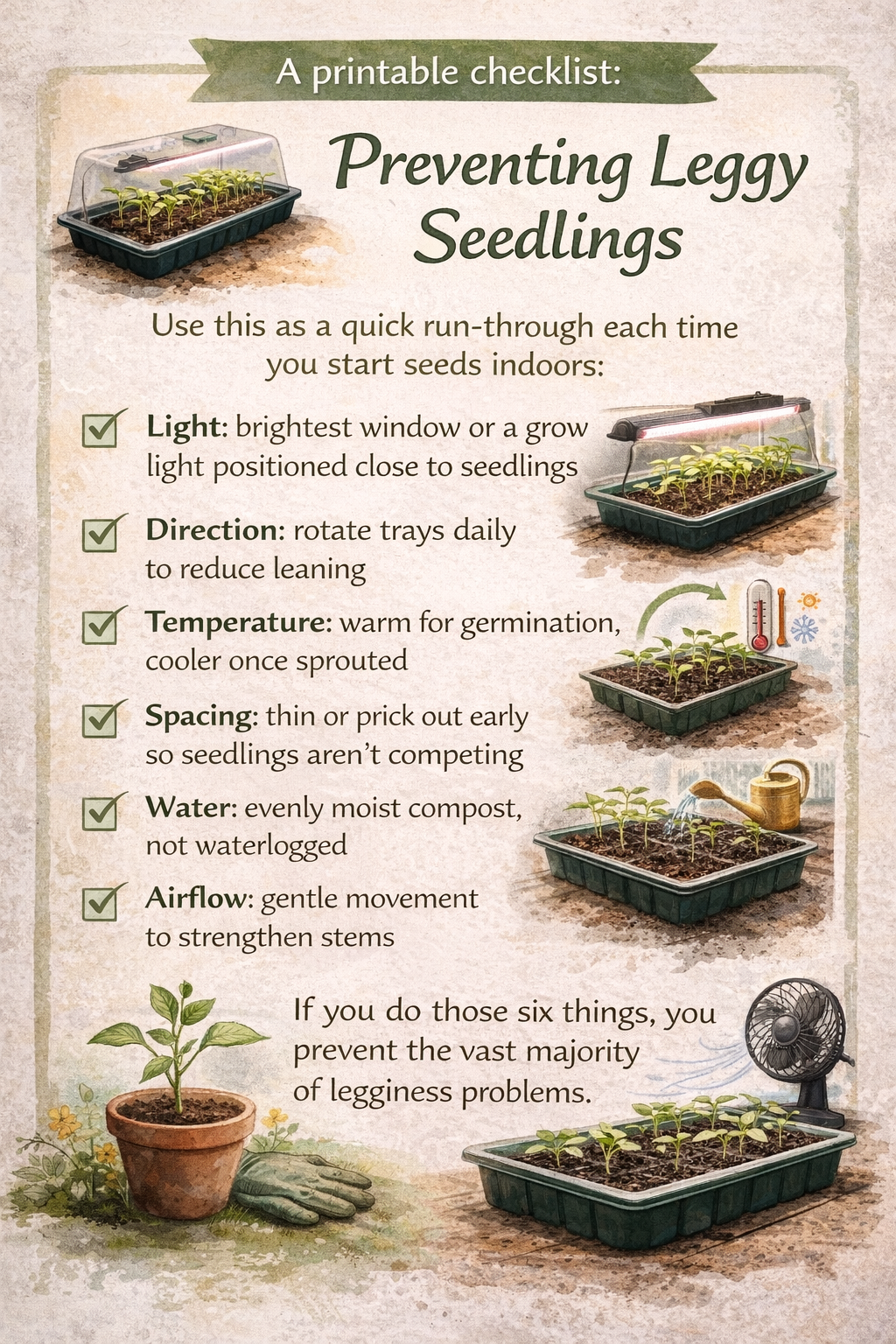
A printable checklist: preventing leggy seedlings
Use this as a quick run-through each time you start seeds indoors:
- Light: brightest window or a grow light positioned close to seedlings
- Direction: rotate trays daily to reduce leaning
- Temperature: warm for germination, cooler once sprouted
- Spacing: thin or prick out early so seedlings aren’t competing
- Water: evenly moist compost, not waterlogged
- Airflow: gentle movement to strengthen stems
If you do those six things, you prevent the vast majority of legginess problems.
Can leggy seedlings be saved?
Most leggy seedlings can be stabilised by fixing light, warmth, spacing and airflow immediately. For some plants (especially tomatoes), potting on deeper can turn a stretched stem into a stronger root system. If seedlings are collapsing or paper-thin, restarting with better light is often the fastest win. Taking some simple steps early has saved many of my tomato plants in the past.
Often, yes, especially if you act before they collapse.
First, stop the stretch. Improve the environment immediately: increase light intensity, reduce excessive warmth, and add gentle airflow. If you fix the cause, new growth can become more compact even if the early stem remains a bit tall.
Second, consider potting on.
Some plants can be repotted deeper so the long stem is buried. Tomatoes are the classic example. When you bury part of the stem, the plant can develop extra roots. This process turns a weak seedling into a stronger one.
For other plants, deep planting can be risky because buried stems may rot. If you’re unsure, focus on improving light and airflow and pot on normally.
The “restart or rescue” decision rule (simple and realistic)
- Rescue if the seedling is leaning or stretched but still upright, with healthy colour and the first true leaves forming.
- Rescue + pot deeper if it’s a plant that tolerates it well (tomatoes are the obvious one).
- Restart if stems are collapsing, pale and thread-like. Restart if the seedling can’t hold itself up even after you improve the light for 48 hours.
Restarting isn’t failure. It’s good growing. Most experienced gardeners have restarted trays more times than they’ll ever admit.
One important warning: don’t try to “feed your way out” of legginess. If the problem is weak light, extra fertiliser can lead to even softer growth. Fix light first, then consider gentle feeding later if needed.
Got old seeds and wondering if they are worth sowing? Here is our guide to completing a simple germination test.
FAQs
Why are my seedlings leggy even on a sunny windowsill?
How do I stop seedlings getting leggy without a grow light?
Can leggy seedlings recover on their own?
Should I pinch out leggy seedlings?
Does a fan really help seedlings?
Is sowing later better than fighting legginess?
Common myths that cause leggy seedlings
Myth 1: “Feeding will fix leggy seedlings.”
Not usually. If the issue is weak light, extra feed tends to encourage more soft growth. Fix light first, then worry about nutrition later.
Myth 2: “A sunny windowsill is always enough.”
Windowsills can work, but many sources note that windows often don’t provide enough intensity and duration. This is particularly true for sturdy seedlings, especially early in the year.
Myth 3: “Heat mats should stay on the whole time.”
Warmth helps germination. Once seedlings are up, excess warmth and weak light can cause tall, weak growth.
Myth 4: “Leggy seedlings are just ‘how it goes’ indoors.”
They’re not. Most legginess is a setup issue you can correct with light, temperature, spacing, watering discipline, and airflow.
Final thoughts
Preventing leggy seedlings is mostly about light; stronger, closer, and more even. Use slightly cooler growing-on temperatures. Start early thinning and ensure steady watering. Provide a bit of airflow as well. This way, your seedlings stay compact and tough.
Once you’ve cracked this, indoor seed starting stops feeling like guesswork. It becomes a repeatable system, and that’s when growing your own really starts to compound.



You must be logged in to post a comment.