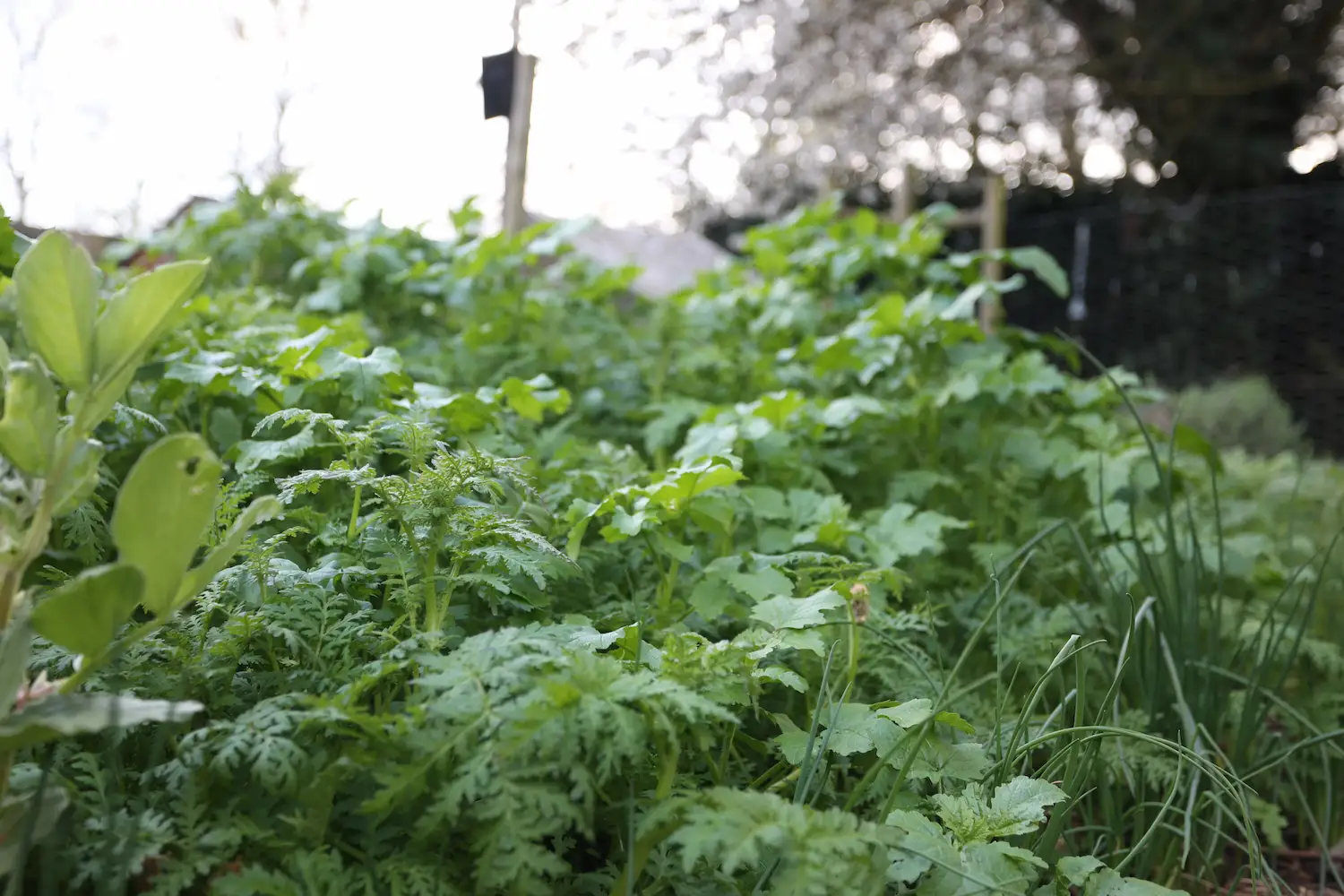
If your green manure is suddenly looking tall, and you need the bed back soon, its the right time to cut it down. This ensures you do not slow down the next crop.
I started using green manure. I wanted more organic matter in the soil without buying in compost all the time. Last autumn I sowed a bed and let it grow on. By spring, it was doing its job well. I also knew I wanted that space back for planting in May. That is the point where green manure stops being a nice idea and becomes a practical decision.
When to cut green manure
The safest rule is to cut green manure just before it flowers. At that point, the stems are still soft enough to handle easily. The material breaks down more quickly. You are far less likely to turn a simple spring tidy-up into a bigger clearing job. This is also the approach set out in the RHS guide to green manures.
The mistake is leaving it because it still looks healthy and productive. That is what catches people out. One extra week can make a bed easy to reset. It can also make it suddenly feel coarse, bulky, and slow to turn around.
If you are not sure whether it is time, look for buds. Once buds are forming, I would cut it.
What yours looks like now
Find the stage that looks most like your bed. Then follow the matching action.
Lush leaves, no buds
Easy stageBest move: Cut it now and either compost the tops or leave only a light surface layer.
Usually ready in: 2 to 3 weeks.
Main risk if you wait: It gets bulkier and slower to clear.
Buds visible at the tips
Best cut pointBest move: Cut it now and either remove it, mulch lightly, or fork it into the surface.
Usually ready in: 3 to 4 weeks.
Main risk if you wait: It quickly turns stemmy and harder to manage.
Flowers open or stems tough
Slower resetBest move: Cut it and remove most of the top growth, especially if you want the bed back soon.
Usually ready in: Around 4 weeks or more.
Main risk if you wait: You create a coarse mat and delay planting.
Seed heads forming
Too lateBest move: Clear it fully and reset the bed.
Usually ready in: As soon as the bed is cleared and workable.
Main risk if you wait: You risk self-seeding and more work later.

What to do if it is soft and leafy
If the growth is still soft and leafy, this is the easiest version of the job. The bed is still manageable. The material breaks down more quickly. You have more choice over how to handle it.
You can cut the tops and compost them, or you can leave a thin chopped layer on the surface. The word there is thin. A light layer can settle down well. A thick layer often creates a soggy mat and turns into something you regret a week later.
If you garden no-dig, this is usually the best stage to deal with it. Cut at ground level. Leave the roots where they are. Add compost on top when you are ready to plant. If you want a practical next step for the cuttings, see how to start composting at home. For a broader look at how green manures fit into a no-dig approach, Garden Organic’s advice about them is useful too.
What to do if it is stemmy or flowering
Once the stems are tough or the flowers are open, the job changes. At that point, I stop thinking about a neat chop-and-drop. I start thinking about how to reset the bed cleanly.
On a vegetable bed, I would usually cut and remove most of the top growth. This method is quicker and cleaner. It won’t leave you waiting for coarse material to rot down. This prevents the planting window from slipping away.
If rye is involved, cutting alone may not finish the job. Covering the bed briefly can help stop regrowth and save you another round of clearing later. The extra hassle with tougher green manures is something the GrowVeg guide to green manures also touches on.
In my garden, this is the stage where a bed can look full and promising one week. The next week, it can turn into awkward clearing work just when I want to plant.
Dig, mulch, or no-dig
The right method depends less on gardening ideology. It depends more on the condition of the green manure. It also depends on how quickly you need the bed back.
If speed matters, the cleanest route is usually to remove the tops. Leave the roots in place. Add compost over the surface. If the growth is still soft and you have a bit more time, chop it more finely. Leave a light layer or lightly fork it into the very top of the bed.
Deep digging is not automatically better, especially in wet soil. If the bed is cold and sticky, you might end up with a sour mess. Digging bulky green material in may not give you the useful head start you want.
How long to wait before planting
If chopped green manure stays in the bed, waiting about 3 to 4 weeks is the safest default. That gives it time to settle. It gives you a much better chance of planting into something that feels finished. This is preferable to planting into something half-way through rotting down.
| Transplants | 1 to 2 weeks if tops are removed and compost is added |
| Direct sowing | Usually 3 to 4 weeks |
| Woody or rye-heavy material | Often 4+ weeks |
Seeds need a cleaner surface than transplants, so be stricter there. If the bed still feels half-finished, slimy, or sour, it is worth waiting a little longer.
If you need the bed quickly
Sometimes the real question is not what is ideal. It is how to get the bed usable without creating problems for the next crop.
Within 7 days
Cut everything, remove the tops, compost them, and top the bed with compost. Plant transplants rather than sowing direct.
Within 14 days
Cut, chop finely, and keep any surface layer light. This can work for transplants if the bed smells fresh and the weather is moving in the right direction.
Within 30 days
You have enough time for a more forgiving approach. Chop and leave, or lightly incorporate, then rake the bed down once it has settled.
If you are rebuilding the top layer after clearing the bed, see the peat-free compost guide for help choosing a compost that is actually useful.
Common mistakes
- Waiting too long: a manageable bed turns into a much bigger clearing job.
- Leaving thick layers behind: it slows the reset and can create slug shelter.
- Digging into wet soil: you can end up with a sour, airless bed.
- Treating all green manure the same: soft leafy growth behaves very differently from rye or coarse flowering material.
- Sowing too soon: a bed can look tidy before it is actually ready.
You must be logged in to post a comment.