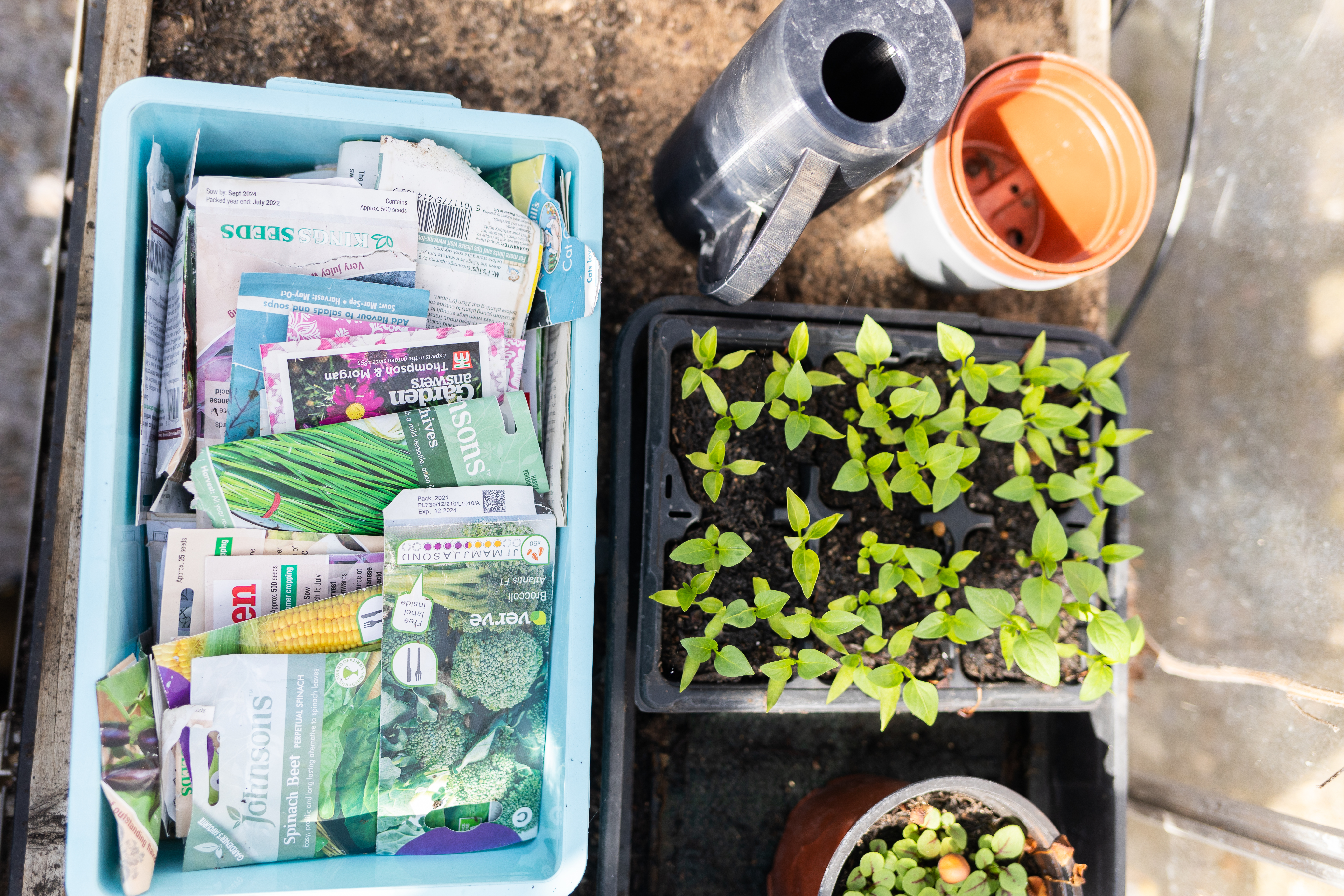
May is a busy time in the garden. Many seeds can be sown under glass and directly into the ground. The warmer temperatures and longer days are not only encouraging germination but also seedlings to grow.
Seeds to Sow in May.
- Sweetcorn: Direct sow sweetcorn seeds outdoors in well-drained soil, spacing them about 30cm apart. Sweetcorn can be sown in modules in a greenhouse before transplanting out. Plant in blocks rather than rows for better pollination. Keep the soil consistently moist.
- Courgettes (Zucchini): Courgette can be sown in module trays, one per module, and planted out once their true leaves show. If sowing courgette seeds directly into the soil, sow about 2.5cm deep and 90cm apart. Ensure the soil is well-drained and keep it consistently moist until germination occurs.
- Cucumbers: Start cucumber seeds indoors in pots or trays and transplant them outdoors once the risk of frost has passed. Provide a warm environment for germination (around 21-27°C) and keep the soil consistently moist. Plant out once try leaves have shown.
- Peas: Direct sow pea seeds outdoors in well-drained soil, either in rows or in blocks. Peas prefer cooler temperatures, so plant them in a sunny spot with some afternoon shade. Keep the soil moist, but not waterlogged. Peas will need supporting once they start to grow so plan ahead and prepare supports.
- Beetroot: Direct sow beetroot seeds outdoors in well-prepared soil, about 2.5cm deep and 10-15cm apart. Water regularly to keep the soil consistently moist, which helps with germination. Beetroot can be sown in module trays and planted out once they show their true leaves. Beetroot can be multisown, which helps to save space and increase yield. However, each beetroot will be smaller than if grown with space between them.
- Radishes: Direct sow radish seeds outdoors in well-drained soil, about 1cm deep and 2.5cm apart. Keep the soil consistently moist for good germination, and thin out seedlings as they grow to prevent overcrowding. Radishes grow quickly so succession sowing can provide fresh radishes throughout the growing season.
- Lettuce: Direct sow lettuce seeds outdoors in well-drained soil, either in rows or in containers. Cover the seeds lightly with soil and keep them consistently moist until germination occurs. Provide some shade during hot weather to prevent bolting.
- Spinach: Direct sow spinach seeds outdoors in well-drained soil, about 1cm deep and 5-10cm apart. Keep the soil consistently moist for good germination, and thin out seedlings as they grow to allow proper spacing. Perpetual spinach is a great choice, leaves will grow back once cut giving multiple harvests from a single plant.
- Herbs (such as basil, coriander, and dill): Sow herb seeds indoors in pots or trays. Follow the instructions on the seed packet for depth and spacing. Keep the soil moist and provide plenty of light for germination. Herbs can be great companion plants and grow in spaces between other plants. Basil and tomatoes work very well together.
- Squashes (such as butternut squash, pumpkin, and spaghetti squash): Sow squash seeds indoors in pots or trays. Transplant them outdoors once the risk of frost has passed. Provide a warm environment for germination (around 21-27°C) and keep the soil consistently moist. Squashes benefit from plenty of space, so plant them about 90-120cm apart in well-drained soil enriched with compost. Squashes will take up a lot of space so plan ahead and ensure they have plenty of space to grow.
Remember to check each seed packet for specific instructions regarding depth, spacing, and germination conditions. Requirements vary slightly between varieties.
Leave a Reply