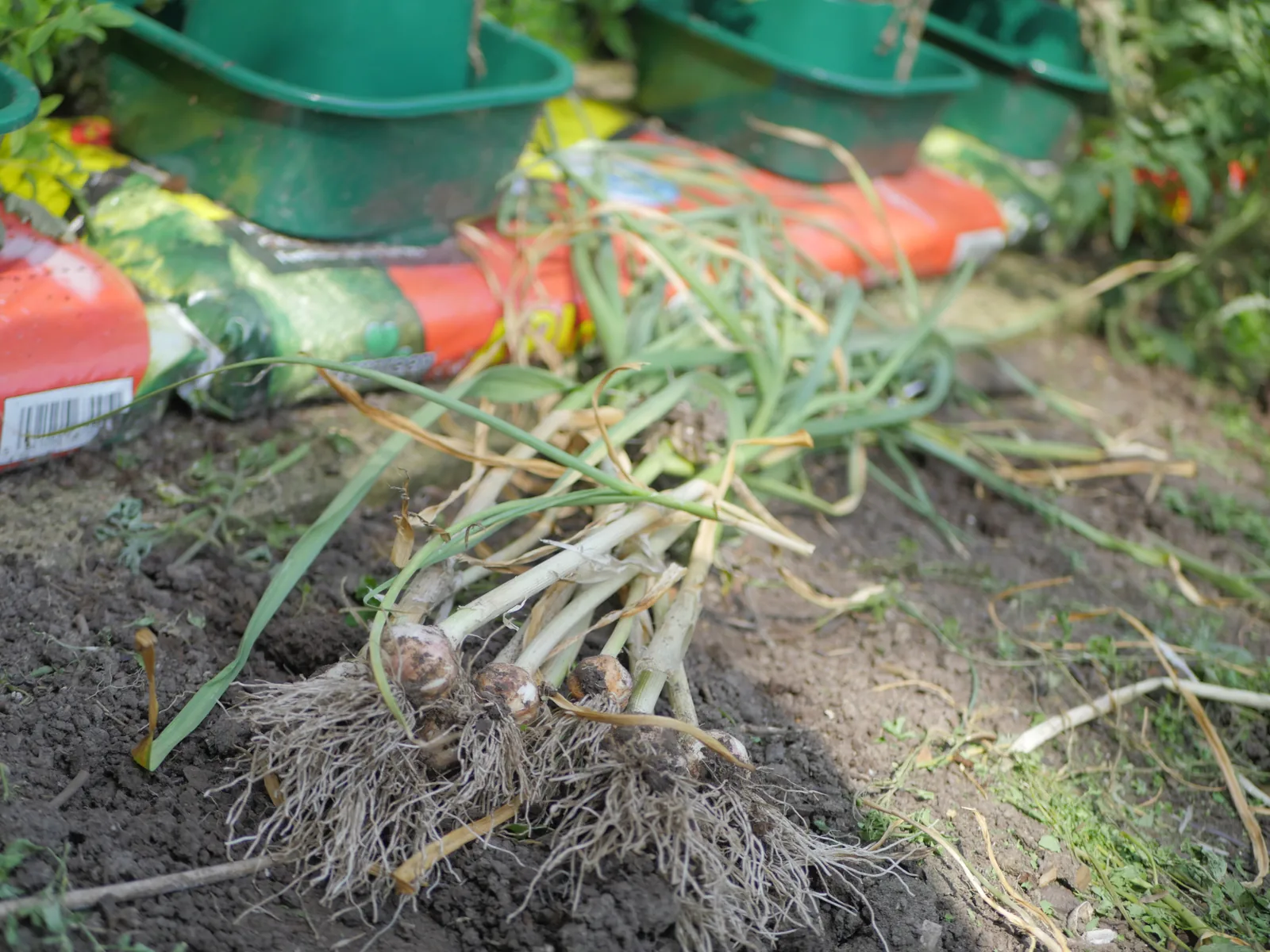
If you are wondering what to plant after garlic or onions in July, the answer depends on soil condition, crop rotation and how much growing season is left.
At a glance
- Best quick crops: Salad leaves, lettuce, radish, turnips and baby beetroot.
- Best autumn crops: Pak choi, mizuna, tatsoi, chicory and other leafy greens.
- Best winter options: Brassica plugs, winter salads, leeks if already started, and spring cabbage.
- Best low-effort option: Compost mulch, cover the bed, or sow a suitable green manure.
- Main thing to avoid: Treating the bed as blank space without thinking about crop rotation.
UK timing note
Last checked: July 2026
Use this as a guide, not a fixed date: July can still be productive in the UK, but dry soil, pest pressure and shorter growing time all change what is sensible after garlic or onions.
Why this bed is worth using again
I plant onions and garlic in autumn and overwinter them. That means the ground works through winter, then usually clears early enough to use again in summer.
That matters when you are trying to grow more food from the same space. I grow them at home and down the allotment because onions and garlic store well, and a good stored crop is valuable long after the bed has moved on to something else.

The trade-off is that the bed is not truly fresh. It has already grown a crop. Before I put anything else in, I need to think about moisture, fertility and crop rotation.
That is the difference between useful succession planting and just filling a gap because it annoys you to see bare soil.
If you are planning this from the start of the season, my guides to growing garlic in the UK and overwintering onions in the UK show why autumn planting is such a useful way to get an early summer harvest.
The wider principle is supported by the RHS onion guide, which notes that overwintering onion sets can be planted in autumn for a June or July harvest, and the RHS garlic guide, which describes garlic harvests from late spring onwards depending on variety.
Is the advice different after garlic and onions?
Mostly, no. Garlic and onions are both alliums, so the follow-on decision is similar.
The exact timing can vary. Garlic may come out from late spring into summer depending on variety and conditions. Overwintered onions often clear in June or July. Once the crop is lifted, the useful question is the same: what can still grow well in this space now?

The answer depends less on whether the previous crop was garlic or onion, and more on how dry the bed is, whether the soil needs compost, how much growing season is left, and whether your rotation allows another allium crop there.
If you can avoid putting onions, garlic or leeks straight back into the same bed, that is usually the better long-term choice. The RHS crop rotation guidance explains how moving crop families around helps reduce pest, disease and soil problems over time.
Choose the job for the bed
When deciding what to plant after garlic or onions, choose the crop by the job you want the bed to do next. This is easier than starting with a long list of seeds.
Quick food
- Choose salad leaves, lettuce, radish, turnips or baby beetroot.
- This suits a bed you can water regularly.
- It is the simplest choice if you want a useful crop before autumn.
Autumn food
- Choose pak choi, mizuna, tatsoi, chicory or beetroot.
- This suits a bed with decent moisture and some protection from pests.
- It works well when you want leaves and smaller harvests rather than one big crop.
Winter continuity
- Choose brassica plugs, winter salads, leeks already started, or spring cabbage.
- This suits a bed you are happy to commit for longer.
- It is often safer with plugs or module-grown plants in July.
Soil recovery
- Use compost mulch, cover the bed, or sow a suitable green manure.
- This suits tired, dry, weedy or awkward beds.
- It is better than leaving bare soil to bake and grow weeds.
If you are unsure, choose a simple leafy crop if you can water it, or mulch the bed and use it later. Both are better than sowing something slow into tired, dry soil and hoping it catches up.
July replanting is a selective job. If the bed is dry, weedy or hard to water, plugs, leafy crops or soil cover are safer than gambling on slow seed.
Check the bed before planting
Check the bed before you choose the crop. In July, the condition of the soil matters as much as the crop list.
The bed is ready if
- The soil is damp below the surface.
- Old roots, weeds and crop debris are cleared.
- The top layer can be raked without forming hard clods.
- Water soaks in rather than running straight off.
- You can keep new seedlings watered while they establish.
Wait or improve it first if
- The bed is dusty below the top layer.
- The surface has gone hard and capped.
- Perennial weeds are coming back.
- The soil looks tired or compacted.
- You cannot realistically water a new sowing.

A cleared allium bed is ready to replant when the soil is damp below the surface, old roots and weeds are removed, and water soaks in rather than running off. If the bed is dusty, compacted or hard to water, improve it before sowing again.
If the soil is dry and dusty, water it properly before sowing. A quick sprinkle over the surface is not enough if the seed row underneath stays dry. My guide to watering container vegetables in summer is written for pots, but the same basic lesson applies here: in hot weather, the root zone matters more than a damp-looking surface.
If the bed looks tired, add compost before replanting. You do not need to rebuild the whole bed, but a thin top-up can help the next crop establish, especially if you are asking the space to produce again straight after an overwintered crop.
What to plant after garlic or onions in July
Choose the crop by the job you want the bed to do. After garlic or onions in July, the safest follow-on crops are fast salads, leafy greens, turnips, beetroot, or plug plants for autumn and winter crops. Avoid immediately repeating alliums if you can, because crop rotation helps reduce pest, disease and soil problems over time.
Fast crops if you want a quick harvest
Fast crops are the safest choice if you want the bed to give you something back before autumn.
Salad leaves are the obvious option. They are quick, flexible and useful in the kitchen. In hot July weather, they need steady moisture and may do better with a little shade, especially if the bed bakes in the afternoon.
Radish can work if you keep it moving. The problem with radish in summer is stress. Dry soil can make it tough, woody or quick to bolt. If you cannot water the bed consistently, do not make radish your main plan.
Turnips are worth considering because they can be used young. They still need a clean, moist start, so do not sow them into dry, hard ground and hope for the best.
Beetroot can be useful if you are happy with smaller roots or baby leaves. By July, I would think of beetroot as an autumn crop rather than expect huge roots.
Spring onions are possible, but they are still alliums. If you are trying to keep a simple rotation, I would not make them the default follow-on crop after onions or garlic.
Autumn and winter crops worth starting now
A cleared allium bed in July can also become part of the autumn and winter garden.
Pak choi, mizuna, tatsoi and chicory can make good use of the space, especially if you can keep them watered and protect them from pests.
Spring cabbage and brassicas are worth considering if you already have plants ready, or if you can buy good plug plants. Starting some crops from seed in July can still work, but the later you leave it, the more you rely on decent weather, steady watering and a clean start.
Leeks are slightly different. If you already have leek plants waiting, July can be a useful time to get them into their final positions. I would be more cautious about starting leeks from scratch at this point.
Winter salads are one of the best follow-on ideas because they match the job of the bed. You are not trying to force a big summer crop late. You are using the July gap to begin the next phase of food. If that is the route you want to take, my guide to growing winter salads in the UK goes into the timing, protection and cold-frame approach in more detail.
The RHS July growing advice also lists useful July options such as spring cabbage, turnips, Chinese cabbage, pak choi, tatsoi, mizuna, chicory, fennel, autumn and winter salads, carrots and late beans in suitable areas.

When plugs are better than seeds
In July, plugs are often safer than seeds for slower autumn and winter crops because they already have a head start. Seeds are still useful for fast crops, but they need steady moisture during germination.
Seeds are cheaper and give you more choice, but they need consistent moisture while they germinate. That can be awkward in a July bed that has just had onions or garlic lifted from it. The top layer can dry quickly, especially at the allotment where watering may not be as easy as it is at home.
Plugs give you a head start. They also make sense when you want winter brassicas, leeks or established leafy crops and do not want to lose two or three weeks waiting for uneven germination.
The downside is cost and availability. Plugs are not magic. If they sit in a tray too long, dry out at the garden centre, or go into poor soil, they can still struggle.
My rule is simple: sow seed for fast crops, use plugs or modules when July timing is starting to feel tight.
If you are planting out young plants that have been raised under cover, it is still worth thinking about hardening off. My 7 day guide to hardening off seedlings explains how to avoid shocking plants when they move into outdoor conditions.
What not to plant after garlic or onions
The main thing I would avoid is immediately planting more onions, garlic or leeks in the same bed if you have another option.
That is not because one repeat crop will instantly ruin the soil. It is because crop rotation is one of those quiet disciplines that only really pays off when you stick with it over time. If alliums keep going back into the same space, you increase the chance of pest, disease and fertility problems building up.
I would also be cautious with very slow crops that should have been started earlier. July can still be productive, but it is not spring. If a crop needs a long run and you cannot protect or water it well, it may be better to use the bed for salads, leafy greens, green manure or compost mulch.
Potatoes are possible in some late-season plans, but I would think carefully before using them as a casual follow-on crop after onions or garlic. The issue is timing, watering, available space and whether you are putting another hungry crop into a bed that has already worked once.
If you are planting carrots, brassicas or leafy crops, think about pest protection from the start. My guides to horticultural fleece and cloches and organic pest control in the garden may help you choose a sensible protection plan.
If in doubt, choose something quick, leafy or already started.
Should you leave the bed empty?
You do not always need to plant another food crop.
If the bed is very dry, full of perennial weeds, or needed for a planned autumn crop, leaving it covered or resting can be more sensible than forcing a weak second sowing.
That does not mean leaving bare soil to bake. You could mulch with compost, cover the bed, or sow a suitable green manure if that fits your rotation and timing. The aim is to protect the soil and make the next crop easier, not to make the bed look busy for the sake of it.
This is where my home garden and allotment can differ. At home, I can keep a closer eye on watering and pests. At the allotment, a second crop needs to be a bit more robust because I am not standing next to it every day.
That practical reality should shape the choice.

Common mistakes and July checklist
Common mistakes
- Sowing straight into dry soil: Seeds need moisture where they are actually sitting, not just a damp-looking surface.
- Ignoring crop rotation: An empty bed after alliums is not a blank slate. Avoid repeating onions, garlic and leeks in the same place if you can.
- Choosing crops that are too slow: July still has options, but some crops are better as plugs or not worth starting from seed now.
- Forgetting pest protection: Brassicas, carrots and leafy crops may need protection depending on what you grow and what pest pressure you have.
- Leaving the bed bare for weeks: If you are not replanting, cover or mulch the soil rather than letting it dry out and grow weeds.
July empty bed checklist
- Clear old roots, weeds and crop debris.
- Check moisture below the surface.
- Water deeply if the bed is dry.
- Add compost if the soil looks tired.
- Choose the crop by job: quick food, autumn food, winter supply or soil recovery.
- Avoid repeating alliums if you have another bed.
- Protect and water the new crop until established.
FAQs
Can I plant onions, garlic or leeks after garlic or onions?
Is July too late to plant after garlic or onions?
Should I add compost after lifting onions or garlic?
What if I do not want another crop?
Final thoughts
What to plant after garlic or onions depends on the soil, the weather, the time left in the season and your rotation. A cleared July bed is an opportunity, but it is not a free-for-all.
If you want a simple rule, use the space for fast crops, autumn leaves, winter salads or plugs that already have a head start. If the bed is tired, dry or awkward for rotation, improve and protect the soil first.
That is how overwintered onions and garlic become more than one harvest. They become part of a year-round growing plan.
Next, you may find it useful to read how to grow winter salads in the UK, especially if you want this cleared bed to keep producing into autumn and winter.
You must be logged in to post a comment.