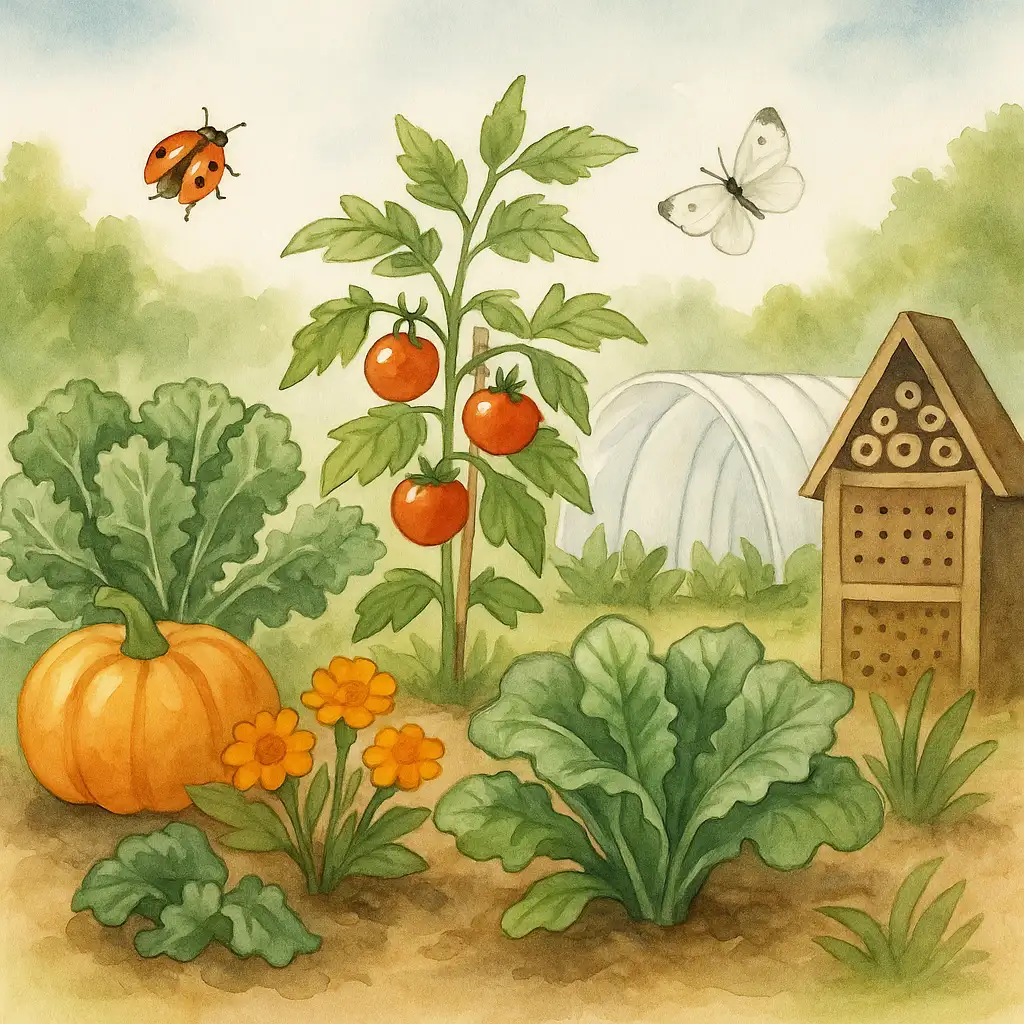
Organic pest control in the garden (UK) means preventing and managing pests with barriers, beneficial wildlife, and only UK‑approved products when necessary—not routine chemical sprays. Identify the pest, net vulnerable crops, hose off sap‑suckers, encourage predators, and, for slugs, use ferric‑phosphate pellets (metaldehyde is banned).
At‑a‑glance
• Identify the pest first, then act. Use the RHS picture guides to confirm what you’re dealing with before you treat.
• Start with prevention: healthy soil, good spacing, netting, and biodiversity beat most outbreaks.
• Prioritise physical and biological controls; use approved garden products only when labels and law allow.
• Ferric‑phosphate pellets (not metaldehyde) are wildlife‑friendly for slugs.
• Track progress weekly—aim for balance, not zero pests.
What is organic pest control?
Managing pests through prevention, barriers, biodiversity, and targeted, label‑approved products as a last resort. It protects pollinators, soil life, and waterways while keeping crops productive.
Helpful starting points:
- RHS: Managing pests & diseases without chemicals – practical tactics you can apply today:
- RHS: Using chemicals in gardens – when you don’t need them, and legal basics if you do.
Step 1: Identify the problem (before you treat)
Correct ID prevents wasted effort and protects beneficial insects. Look under leaves, take clear photos, and match symptoms to reputable guides.
- RHS A–Z plant health (with photos)
- Quick IDs:
- Aphids – clusters on soft tips; sticky honeydew; curled leaves.
- Glasshouse whitefly – tiny white moth‑like insects that fly up when disturbed.
- Slugs & snails – shredded foliage and slime trails, especially after rain.
Snap a close‑up of the leaf underside—that’s where most pests hide.
The seven tactics that work (UK, beginner-friendly)
Start here: these seven UK‑proven actions deliver the biggest, safest gains for beginners.
1) Healthy plants outgrow most problems
Strong seedlings, correct spacing, steady water, and nutrient‑rich soil make plants less attractive to pests. Build soil life with homemade compost and leaf mould.
- Internal reads: Ultimate Guide to Composting, Making Leaf Mould, How to Start Composting at Home
2) Physical barriers and timing
Use insect‑proof mesh or fleece over brassicas to block cabbage white butterflies and flea beetles. Cover immediately after planting, then remove or lift for pollination when crops flower. Clean and store covers dry.
How to fit insect mesh over brassicas (10 minutes)
You’ll need: 1–1.35 mm insect mesh, 1.2 m hoops or canes, clips/pegs, mulch.
- Space hoops 80–100 cm apart along the row.
- Drape mesh so it doesn’t touch leaves (but is tight to soil).
- Clip to hoops and peg edges every 50 cm.
- Water through the mesh; check for gaps after wind.
- Lift for weeding; refit immediately.
Tip: Remove or lift when crops flower so pollinators can reach blooms.
3) Slug & snail control (wildlife‑friendly)
- Hand‑pick at dusk/dawn; drop into soapy water.
- Habitat tweaks: lift pots, remove dense debris where slugs shelter, and water in the morning so surfaces are drier overnight.
- Pellets: if you use pellets, choose ferric phosphate products and avoid metaldehyde, which is banned for outdoor use in Great Britain. Guidance: GOV.UK RHS slug advice.
What we saw (back garden, wet July): Morning watering plus lifting pot saucers and clearing debris noticeably cut new damage; pellets were only needed around vulnerable seedlings.
4) Water jet, squash, and prune
Knock aphids off with a firm hose jet (undersides first), pinch out the worst tips, and bin heavily infested trimmings (don’t compost soft, sap‑sucking outbreaks).
5) Encourage natural predators
Plant nectar‑rich flowers (marigolds, calendula, dill, fennel, yarrow) and leave small patchy habitats (log piles, hedgehog corridors). Hoverfly and ladybird larvae devour aphids.
- RHS on hoverflies
- Companion planting features
- Related read: Decoy Planting to Protect Vegetables
6) Sticky traps & monitoring (glasshouses)
Use yellow sticky cards to monitor whitefly and fungus gnat levels in greenhouses. Combine with good airflow and careful watering.
7) Biological controls (targeted, chemical‑free)
Introduce beneficial nematodes, predatory mites, or Encarsia where appropriate—especially under cover. For example: Encarsia formosa for whitefly in greenhouses, Phasmarhabditis hermaphrodita for slugs (sold as “slug nematodes”), Steinernema feltiae for fungus gnats, and Neoseiulus/Amblyseius californicus for spider mites.
Principles and supply: Garden Organic & Green Gardener.
Myth‑busters: what not to waste time on
Skip these: eggshell rings, coffee grounds or grit as primary slug defences (results are inconsistent); beer traps beside beds can draw slugs in—site them sparingly and away from crops; home‑mixed sprays (e.g., washing‑up liquid) are not authorised and can scorch leaves or harm beneficials.

Common UK pests and what to do
Use this: match the symptoms to the pest, apply the least‑harm fix, and only escalate if monitoring shows continued damage.
Aphids (greenfly/blackfly)
Quick fix: Blast off with water; encourage predators; pinch out sticky tips.
Next steps: Use a labelled ready‑to‑use plant soap or oil approved for home gardens if needed. Check the label for the pest, crop, and MAPP number (see HSE register below).
Learn more: RHS aphid page
Slugs & snails
Quick fix: Night patrols, tidy refuges, copper on pots, wildlife‑friendly pellets (ferric phosphate) used sparingly and never near ponds.
Legal note: Metaldehyde slug pellets are banned outdoors in Great Britain. If you still have old stock, do not use it—check your local council’s disposal guidance.
More help: RHS slug & snail advice
Cabbage white (caterpillars on brassicas)
Quick fix: Netting immediately after planting; check undersides and remove eggs/larvae; invite birds with shrubs and perches.
What we saw (allotment, Apr–Jun): Netted kale stayed clean through peak butterfly flights; weekly checks took minutes.
Optional under cover: targeted Bacillus thuringiensis (Bt) products where legally approved for amateur use—always follow label.
Whitefly (mostly under cover)
Quick fix: Yellow sticky cards to monitor; hose underside of leaves; ventilate.
Next steps: Introduce Encarsia formosa (parasitic wasp) in greenhouses and keep sprays to an absolute minimum to avoid harming it.
Learn more: RHS whitefly page
Spider mites (hot, dry conditions)
Quick fix: Increase humidity; mist paths/polytunnel floor; isolate stressed plants.
Next steps: Introduce predatory mites under cover; avoid broad insecticides which make mites worse.
IPM (Integrated Pest Management) calendar for UK gardens (Zone 8a, East of England)
| Month | Scout & prevent | Act if needed |
|---|---|---|
| Jan–Feb | Clean pots, repair beds, order mesh/netting; prune for airflow. | None—plan rotations and sow predator‑friendly flowers. |
| Mar | Harden off seedlings slowly; apply copper to pots; set sticky cards in greenhouses. | First night patrols for slugs after rain. |
| Apr | Net brassicas on planting; mulch beds; water mornings. | Water‑jet aphids; ferric‑phosphate pellets sparingly. |
| May | Keep greenhouse doors/louvres open on warm days. | Introduce Encarsia/predatory mites if whitefly/spider mites appear. |
| Jun | Deadhead marigolds & calendula to keep nectar flowing. | Hand‑pick caterpillars; bolster mesh after wind. |
| Jul | Thin congested growth; harvest promptly. | Repeat water‑jet on aphids; spot‑treat with approved plant soaps if label allows. |
| Aug | Keep watering to mornings; remove yellowed leaves in tunnels. | Refresh sticky cards; patrol for slugs after storms. |
| Sep | Clear spent crops; sow green manures. | Lift vulnerable seedlings onto slug‑safe benches. |
| Oct | Tidy hiding spots; compost disease‑free debris. | Protect late salads with mesh/fleece. |
| Nov–Dec | Clean and store nets dry; service tools. | None—review notes for next year. |
Choosing products safely (and legally) in the UK
If you decide to use a garden product, you’re legally responsible for using it correctly. Only choose products that list your pest and crop on the label and carry a MAPP number for amateur/home use.
Useful links:
- HSE Register of Authorised Plant Protection Products – search by pest, crop, or active:
- HSE garden‑use guidance
- RHS: Chemical labels explained
Decision tree (quick):
- Identify the pest and the crop.
- Choose a product that lists your pest and crop on the label and shows a MAPP number for amateur use.
- Apply exactly as directed; keep away from water; avoid metaldehyde (banned outdoors).
Should you make homemade sprays?
Generally, no. DIY mixtures (e.g., washing‑up liquid) aren’t authorised as plant protection products, can damage leaves, harm beneficial insects, or pollute water, and won’t list correct dose, crops, or safety data. If you need a spray, buy a labelled, approved product (plant soap or oil) and follow the instructions exactly—or stick to water jets and hand removal.
Pest-deterring plants for vegetable gardens
Mix flowers and herbs through beds to feed predators and confuse pests.
- French marigold (Tagetes) under tomatoes (whitefly deterrence under cover)
- Calendula (pot marigold) for nectar all season
- Dill, fennel, yarrow for hoverflies and lacewings
- Nasturtium as a trap for cabbage white eggs/aphids on brassicas
Learn more: RHS companion planting features – https://www.rhs.org.uk/advice/grow-your-own/features/companion-planting
What actually works (quick reviews)
| Method | Best for | Wildlife impact | Effort | Where it shines |
| Insect mesh (1–1.35 mm) | Cabbage whites, flea beetle | Very low | Medium (setup) | Brassicas from planting day |
| Ferric‑phosphate pellets | Slugs/snails | Low when used sparingly | Low | Around vulnerable seedlings, not near ponds |
| Water jet (hose) | Aphids | Very low | Low, repeat | Roses, broad beans, kale tips |
| Encarsia formosa | Whitefly (under cover) | Very low | Medium (monitoring) | Greenhouses/polytunnels |
| Slug nematodes | Slugs (soil‑dwelling) | Very low | Medium (watering) | Moist beds; raised beds in spring/summer |
| Predatory mites | Spider mites (under cover) | Very low | Medium | Hot, dry greenhouses (avoid broad sprays) |
Product chooser (UK-legal)
Where are you treating?
- Outdoors: ferric‑phosphate pellets (slugs/snails), labelled plant soaps/oils (aphids/whitefly on edibles), slug nematodes (Phasmarhabditis), insect mesh as first line.
- Greenhouse/polytunnel: Encarsia cards (whitefly), predatory mites (spider mites), sticky cards (monitoring), labelled plant soaps/oils where compatible.
What is the pest type?
- Sap‑sucker (aphids/whitefly): water jet → predators/Encarsia (under cover) → labelled plant soap/oil if the label lists your crop/pest.
- Caterpillar on brassicas: insect mesh first; hand‑remove; Bt (Bacillus thuringiensis) only if an amateur‑use product lists your crop/pest.
- Slug/snail: cultural tidy‑up → ferric‑phosphate pellets sparingly → slug nematodes when soil is warm and moist.
- Fungus gnats (pots/seedlings): drier surface watering → yellow sticky cards → Steinernema feltiae.
Always: check the HSE register and the label before buying/using.

Quick micro how-tos
Encarsia for whitefly (under cover)
- Release when temps are consistently above ~10–12 °C.
- Hang cards near infested plants, out of direct sun.
- Avoid spraying soaps/oils once released.
- Check weekly for black parasitised scales; replace cards per supplier advice.
Slug nematodes (Phasmarhabditis) for soil‑dwelling slugs
- Apply to moist soil in spring/summer when soil is >5–7 °C (check pack).
- Water in during evening; keep soil evenly moist for at least a week.
- Reapply as directed; best in raised beds and pots.
Sticky cards for monitoring (not a cure)
- Use yellow cards at plant height (≈1 per 2–3 m²) in greenhouses.
- Replace when covered; spikes signal an underlying issue.
- Combine with ventilation and careful watering.
Further reading & trusted resources
- RHS – Preventing pests & diseases
- RHS – Managing without chemicals
- RHS – Using chemicals in gardens
- Garden Organic – Biological controls
- Green Gardener (UK supplier)
- HSE Register of Authorised Plant Protection Products
FAQs: Organic pest control in the garden (UK)
What is the best natural pesticide for a garden?
There isn’t a single “best.” Start with physical and biological controls (netting, water jets, hand‑picking, predator‑friendly flowers). If a spray is necessary, choose a labelled plant soap or oil approved for home gardens and for the specific pest/crop. Confirm the product in the HSE register and follow the label.
How are pests controlled in an organic garden?
With Integrated Pest Management (IPM): prevention, good hygiene, barriers, crop timing, biodiversity, and targeted biological controls—reserving approved products as a last step.
What’s the best thing to get rid of bugs in your garden?
Identification plus the least‑harm method for that pest. For example: hose aphids off; ferric‑phosphate for slugs; netting for cabbage whites; Encarsia for whitefly under cover.
How do you make homemade pest control for the garden?
We don’t recommend DIY sprays. They’re not authorised, can scorch leaves, and may harm beneficials. Instead, use water jets, hand removal, netting, and approved ready‑to‑use plant soaps where the label covers your crop and pest.
Are slug pellets still allowed in the UK?
Yes—ferric‑phosphate pellets are available for home gardens. Metaldehyde pellets are banned outdoors in Great Britain.
Is neem oil allowed in UK gardens?
Only use products specifically authorised for UK home gardens and listing your target pest and crop with a MAPP number. Many “neem” products are not authorised as plant protection products—always check the HSE register before purchase or use.
What kills aphids but won’t harm bees?
Start with water jets and hand removal, then encourage predators (hoverflies, ladybirds). If you must spray, use a labelled plant soap or oil, apply at dusk, never on open flowers, and follow the label exactly.
Leave a Reply