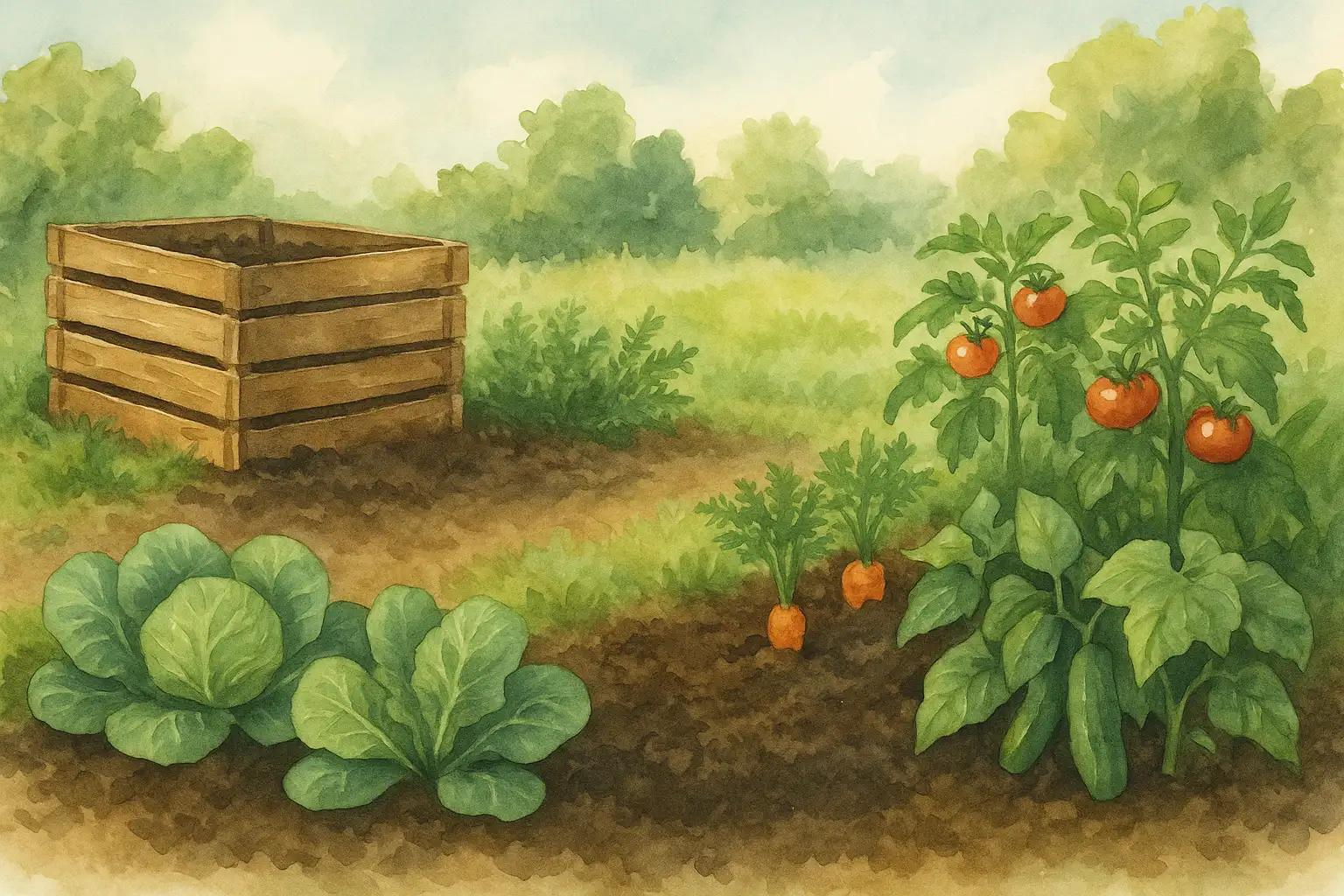
Composting is the process of turning everyday organic waste—like peelings, prunings and paper—into rich, living soil that feeds your garden. It closes the loop between kitchen, garden and climate by recycling nutrients instead of sending them to landfill. This simple practice saves money, cuts waste and builds microbe-rich soil that helps plants thrive. Whether you use a small caddy indoors or a steaming heap behind the shed, this guide shows exactly what to add, what to avoid and how to keep your compost working year-round.
What is Composting?

Composting is the natural process of decomposing organic materials—like kitchen scraps and garden waste—into a dark, crumbly substance known as compost. This process is driven by microorganisms that break down the materials, resulting in a nutrient-rich amendment for your soil.
Benefits of Composting
- Enhances Soil Structure: Compost improves soil texture, making it easier for roots to penetrate and access nutrients.
- Boosts Nutrient Content: It adds essential nutrients like nitrogen, phosphorus, and potassium, promoting robust plant growth.
- Increases Water Retention: Compost helps soil retain moisture, reducing the need for frequent watering.
- Supports Beneficial Microorganisms: It fosters a healthy microbial community that aids in nutrient cycling and disease suppression.
- Reduces Waste: By composting, you divert organic waste from landfills, decreasing methane emissions and contributing to environmental sustainability.
Why Composting Is Essential for Healthy Soil
A Deeper Look at Environmental Impact
When organic waste ends up in landfills, it decomposes without oxygen, releasing methane—a greenhouse gas far more potent than carbon dioxide. Composting at home reduces the volume of waste sent to landfills, directly cutting down methane emissions. In fact, food waste makes up nearly 25% of landfill content in many areas. Every bit you compost at home contributes to a more sustainable planet.
A Personal Note
When I started composting, I was amazed at how much our kitchen bin shrank each week. What once filled a bin bag now became nourishment for our soil. It’s a simple act that feels empowering—like you’re taking nature into your own hands and giving something back every day. Healthy soil is the foundation of a thriving garden. Compost enriches soil by:
- Improving Soil Fertility: It replenishes nutrients depleted by plant uptake.
- Enhancing Soil Structure: Compost increases soil porosity, facilitating better air and water movement.
- Promoting Microbial Activity: A diverse microbial population aids in breaking down organic matter and suppressing pathogens.
- Reducing Erosion: Improved soil structure minimizes erosion by enhancing water infiltration and retention.
Moreover, composting reduces reliance on chemical fertilizers, leading to a more sustainable gardening practice. In short, composting for healthy soil supports not just your garden, but the broader ecosystem too.
How to Start Composting at Home
A simple compost bin setup uses alternating green and brown layers, with enough moisture and air to keep microbes active. Starting a composting system is straightforward:
Choose a composting method:
- Backyard composting – Ideal if you have outdoor space. Use a bin or pile in a shaded, well-drained spot.
- Worm composting (vermicomposting) – Great indoors. Use a ventilated bin with bedding (shredded paper) and red wigglers; add small amounts of food scraps and keep it moist.
- Bokashi composting – Ferments kitchen waste, including cooked foods, using a Bokashi bin and bran. After 2–3 weeks, bury or add to a compost heap to finish breaking down.
Select a compost bin:
- Store-bought bins come in many sizes and keep things tidy.
- DIY bins can be made from pallets or drilled containers — just allow for airflow.
Pick the right location:
- Outdoor – Put your bin on bare soil for drainage and access for worms.
- Indoor – Keep a worm bin or Bokashi bin under the sink or in a cupboard.
Start composting:
- Alternate layers of greens and browns for balance.
- Keep the pile moist — like a wrung-out sponge.
- Turn weekly to add oxygen and speed up decomposition.
What to Compost and What to Avoid
Green Materials (Nitrogen-Rich)
- Fruit and vegetable scraps
- Coffee grounds and filters
- Tea bags (ensure they’re plastic-free)
- Fresh grass clippings
- Plant trimmings
Brown Materials (Carbon-Rich)
- Dry leaves
- Shredded newspaper
- Cardboard
- Sawdust
- Straw
Materials to Avoid
- Meat, fish, and dairy products
- Oily or greasy foods
- Pet waste – While it may seem natural, pet waste can contain harmful bacteria and parasites like E. coli or roundworms, which can survive the composting process if temperatures don’t get hot enough. Including pet waste risks contaminating your compost and any food crops grown with it.
- Diseased plants – Composting infected plant material can spread diseases throughout your garden if the pile doesn’t reach high enough temperatures to kill pathogens. To keep your compost healthy and your garden safe, dispose of diseased plants in the trash or burn them if allowed.
- Glossy or coated paper
How to Use Your Finished Compost

Once your compost is dark, crumbly, and earthy-smelling, it’s ready to use:
- Soil Amendment: Mix into garden beds to enrich soil.
- Mulch: Apply around plants to retain moisture and suppress weeds.
- Potting Mix: Combine with soil for container gardening.
- Compost Tea: Steep compost in water to create a nutrient-rich liquid fertilizer.
Troubleshooting Common Composting Problems
Foul odour
- Cause: Too wet or compacted.
- Fix: Add dry browns and turn the pile to introduce air.
Pile not heating up
- Cause: Too many browns or the pile is too small.
- Fix: Add nitrogen-rich greens, ensure the pile is at least 1 m³, and mix well.
Pests
- Cause: Meat, dairy or uncovered food scraps attract rodents and flies.
- Fix: Avoid these foods and always cover fresh scraps with a thick layer of browns.
Too wet or too dry
- Cause: Excess rain or an imbalance of materials.
- Fix: Add dry leaves or cardboard if soggy; sprinkle water and add greens if dry.
Can I compost citrus, onions or bread?
- Answer: Yes, in moderation. These can deter worms or attract pests — bury them well and balance with extra browns.
Tips for Successful Composting
How to Track Compost Progress
Keeping an eye on your compost’s progress helps you know when it’s working well—and when it needs a little attention. Here are a few easy ways to monitor it:
- Use a Compost Thermometer: These long-stemmed tools are inexpensive and give insight into your pile’s internal temperature. A hot pile (55–70°C) means microbes are hard at work. If it’s cooling down, it may be time to turn it or add fresh greens.
- Check the Smell: Healthy compost smells earthy and clean. If it starts to smell sour or rotten, that’s a sign something’s off.
- Look at the Texture: Over time, you should see your pile breaking down into dark, crumbly material. Big chunks mean it needs more time or finer shredding.
Tips to Speed Up the Composting Process
- Chop or Shred Materials: Smaller pieces break down faster. Tear cardboard, cut food scraps, or mulch twigs before adding them.
- Maintain the Right Moisture: Aim for the feel of a wrung-out sponge—not too soggy, not too dry.
- Add High-Nitrogen Greens: Boost the pile with fresh grass clippings, coffee grounds, or green plant trimmings.
- Turn More Often: Weekly turning adds oxygen and helps heat build up.
- Keep it Covered: Using a compost bin with a lid or covering your pile with a tarp helps regulate temperature and moisture levels.
- Balance Greens and Browns: Aim for a ratio of 2:1 browns to greens.
- Maintain Moisture: Keep the pile damp but not soggy.
- Regular Turning: Aerate the pile weekly to speed up decomposition.
- Chop Large Items: Break down materials into smaller pieces to accelerate composting.
- Patience: Composting is a gradual process; finished compost can take several months to develop.
Start Small and Stay Consistent
If you’re new to composting, start with a small bin or even a countertop caddy for collecting food scraps. Focus on consistency over volume—adding a little each day goes a long way.
Monthly Composting Checklist for Beginners
- Week 1: Collect and add food scraps and yard waste. Check moisture levels.
- Week 2: Turn the pile or stir the bin to add oxygen.
- Week 3: Add more brown material like shredded paper or dry leaves.
- Week 4: Do a quick smell check. If it smells sweet and earthy, you’re on track!
This rhythm helps establish good composting habits and ensures your pile stays balanced and productive. Following this routine helps make composting for healthy soil second nature—no matter your space or experience level. Aim for a ratio of 2:1 browns to greens.
- Maintain Moisture: Keep the pile damp but not soggy.
- Regular Turning: Aerate the pile weekly to speed up decomposition.
- Chop Large Items: Break down materials into smaller pieces to accelerate composting.
- Patience: Composting is a gradual process; finished compost can take several months to develop.
Frequently Asked Questions About Composting
What can I compost?
You can compost most kitchen and garden waste, including fruit and vegetable scraps, coffee grounds, eggshells, leaves, and cardboard. Avoid meat, dairy, and oily foods.
How long does composting take?
With good aeration and the right mix of materials, compost can be ready in 2–4 months. Less active piles or those in cooler weather may take 6–12 months.
Does composting smell bad?
A well-balanced compost pile should smell earthy, not rotten. Bad smells usually indicate too much moisture or lack of airflow—add dry browns and turn the pile.
Can I compost in a small space?
Absolutely! Bokashi bins and worm composting systems are perfect for small homes and apartments.
What’s the difference between green and brown materials?
Greens are nitrogen-rich (like veggie scraps), and browns are carbon-rich (like dried leaves). A 2:1 mix of browns to greens helps maintain balance and odor control.
Do I need to turn my compost pile?
Turning your pile once a week helps add oxygen and speeds up decomposition, but even untended piles will eventually break down.
Further Reading: Expert Composting Resources
Explore these trusted sources for even more depth, practical tips, and composting inspiration:
- Royal Horticultural Society’s composting guide – A trusted UK resource with practical, research-backed composting advice for home gardeners.
- NRDC – Composting 101 – Offers a clear introduction to composting, emphasizing its role in reducing methane emissions and protecting the environment.
- WVU Extension – Composting for Beginners – Provides a thorough breakdown of composting basics with tips on building healthy soil and managing a pile effectively.
- Planet Natural – Bokashi Composting Basics – Explains the Bokashi method step-by-step, ideal for people with limited space or looking to compost meat and dairy safely.
Leave a Reply