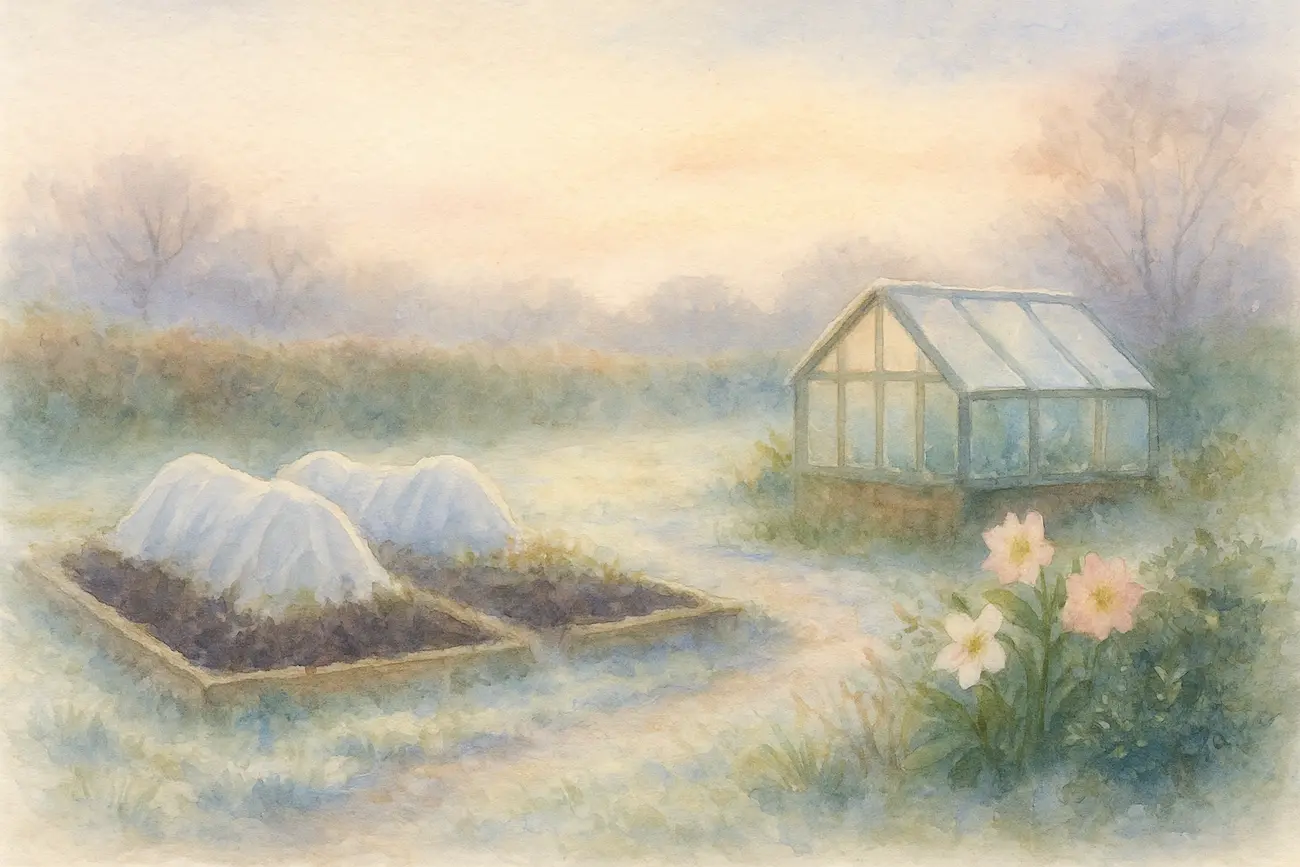
A quiet season that pays you back in spring.
Winter gardening in the UK (zone 8a) means three things: protect soil, shield crops, and prep structures from December to February. Mulch beds (3–5 cm compost), use fleece/cloches before frosts, prune apples and pears while dormant, and ventilate greenhouses on dry days so damp doesn’t beat cold.
Essential Winter Gardening Tasks in the UK
The biggest winter wins are simple: protect the soil, protect the plants, check the structures. Mulch beds, cover tender crops ahead of cold snaps, prune apples and pears while dormant, and repair glazing, gutters, and paths so spring work starts clean and fast.
A 3–5cm layer of compost acts like a winter duvet for your soil. It cushions heavy rain, slows nutrient leaching, and feeds worms that stay active above ~5°C. Mulch before the longest wet spells to stop damage, not after it. For plant protection, keep fleece or cloches ready to throw over salads when frost is forecast; in harder snaps, double the fleece. Wrap containers with bubble‑wrap so roots don’t freeze, and add a low windbreak on exposed beds — winter wind desiccates leaves and flattens brassicas as surely as cold. For more on frost protection, see RHS frost protection advice.
Pruning sits neatly in January for pip fruit — once the leaves have dropped and sap is quiet, structure is easy to see. (RHS guidance generally runs November to early March: see the RHS winter pruning guide for apples and pears.) A tidy shed and sharpened secateurs save hours later. Finish with a structure pass: fix greenhouse seals, clear gutters, and check water‑butt taps before storms undo your good work. Ten winter minutes spent on mulch and fleece will often save two spring hours on weeding and re‑sowing.
Month‑by‑month:
- December: Clear leaves, protect containers, and plan seed orders.
- January: Prune apples and pears; check stored produce for rot; ventilate greenhouses on dry days.
- February: Force rhubarb; pre‑warm seedbeds with cloches; start broad beans under cover.
Which Vegetables Can You Grow in Winter?
You can harvest through winter by leaning on hardy brassicas, leeks, parsnips, and under‑cover cut‑and‑come‑again salads. Sow garlic and autumn broad beans before mid‑winter for a head start in spring.
Frost often improves flavour.
Leeks, kale, cavolo nero, and parsnips sweeten after freezes. Under fleece or in a cold frame, winter lettuces such as ‘Arctic King’, lamb’s lettuce, land cress, mizuna, and mustards keep a steady trickle of leaves. Outdoors, Brussels sprouts stand stoically; purple sprouting broccoli readies spears from late winter into spring. In November/December, tuck in garlic and overwintering onions — both like a cold trigger to split cloves and bulk bulbs later. Herbs aren’t off the table: parsley and chives chug along under cover, and evergreen thyme is harvestable year‑round. For fail‑safe greens, a tray of microgreens on a bright kitchen sill delivers two‑week salads.
Quick plan (zone 8a):
| Crop | Where | Start | First pick |
|---|---|---|---|
| Kale/cavolo nero | Outside, no‑dig bed | Spring planting | All winter |
| Leeks | Outside | Spring transplant | Nov–Mar |
| Winter salads | Frame/tunnel + fleece | Sept–Oct | 3–5 weeks, then cut weekly |
| Garlic (hardneck/softneck) | Outside | Nov–Dec | Jun–Jul |
| Broad beans (Aquadulce etc.) | Under cover, then out | Nov | Apr–Jun |
Water winter salads sparingly. Growth is slow and transpiration low; damp roots in cold compost rot faster than leaves regrow.

Winter Greenhouse and Polytunnel Management
Think light first, insulation second. Use bubble wrap selectively so plants still get winter light, ventilate on dry days to beat mould, and add night‑time fleece over beds to extend harvests without heavy heating.
Winter kills with damp as often as with cold. Crack vents even in January on rain‑free days to shift humid air and prevent botrytis. Bubble‑wrap lining reduces heat loss but also nibbles light, which matters for salads and seedlings; insulate walls more than the roof above benches so you keep light where it’s needed. A cheap max‑min thermometer shows where the cold truly bites. Water in the morning and only when compost feels light and dry — winter roots hate sitting wet. One hour of dry‑day ventilation is easier than a week of grey mould clean‑up.
Action steps:
- Insulate smartly: Line the coldest wall; leave some panes clear for light.
- Vent routinely: Open for an hour on dry days to dump moisture.
- Targeted warmth: Use heat mats under propagation trays; skip space heating unless you’re raising tender crops.
In our unheated greenhouse (East Anglia, Dec–Feb 2024), a single fleece layer over salad beds kept leaves pickable through –4°C nights, and bubble wrap on the north wall stopped trays from freezing.
Find out more about protecting plants during the cold months here in our Winter Plant Protection Guide.
Winter Equipment: What Actually Matters
Essential winter kit for UK gardens: fleece, sharp secateurs, a max‑min thermometer, waterproof boots and gloves, plus either a cloche (for rows) or a cold frame (for trays).
Fleece is the best pound‑for‑pound insurance in winter. Heavier grades add roughly two degrees of frost buffer and blunt wind — a real plant‑killer. Choose a cold frame if you’re raising trays (stable, sheltered microclimate) and cloches if you’re covering rows (quick to deploy, easy to move). A soil thermometer tells you when late‑winter sowings will actually germinate; there’s little point sowing at 5–6°C if you can wait a week for 8–10°C and halve germination time. Tool care pays back all year: store dry and oil blades so pruning stays crisp.
Mini buying guide:
- Fleece: heavier GSM for exposed plots; re‑use where possible; store dry.
- Cloches vs cold frame: cloches = rows/mobility; frame = trays/stability.
- Thermometer: pick a max‑min (records nightly lows) to inform covers.
Fleece grades at a glance:
| Fleece grade | Best use | Note |
| 17–23 gsm | Light cover/shoulder seasons | Minimal frost buffer; great for pests |
| 30–35 gsm | General winter cover | Balance of light and protection |
| 50 gsm | Severe snaps/containers | Heavier; check ventilation and light |
A simple max‑min thermometer (often under £10) tells you when to cover — a better guide than the calendar. And don’t just cover plants: wrap pots as well. Roots in containers freeze faster than in beds, so a band of bubble‑wrap can be the difference between loss and survival.
Planting Flowers for Winter Colour
Build winter colour with hellebores, cyclamen coum, snowdrops, sarcococca and winter pansies/violas — and put them where you pass daily so you actually see them in short daylight.
Shade‑tolerant hellebores carry bowls of bloom from January into March. Cyclamen coum carpets the base of deciduous shrubs; snowdrops naturalise beautifully when planted “in the green”. Sarcococca perfumes the path on still, cold days, and winter violas keep pots cheerful even in sleet. For rhythm, weave evergreen structure — ferns, heuchera, hebe — so borders don’t go flat between flower flushes. Plant near the back door and along the path to the compost: that’s where February colour lifts spirits most. Think nose‑height as much as eye‑height — fragrant sarcococca by the gate makes every trip outside kinder.
Design combos:
- Hellebore under a silver birch with fern fronds.
- Cyclamen coum at a shrub base, edged with snowdrops.
- Violas in a terracotta bowl by the door; refresh top‑dress monthly.
Supporting Wildlife in the Winter Garden
Food, water, and cover are the winter essentials. Keep feeders topped with high‑energy seed, refresh liquid water daily, and leave quiet corners (logs, leaf litter) for insects and hedgehogs.
Birds burn through calories staying warm; sunflower hearts and fat balls are easy refuels. On freezing mornings I crack a hole in the bird bath and top it with kettle‑cooled water — in cold snaps, water is rarer than food. Resist tidying every stem; hollow stalks and seed heads shelter lacewings and ladybirds that will pay you back in aphid season.
If you compost, keep a loose heap corner undisturbed — it’s a winter duvet for invertebrates. Clean feeders and birdbaths weekly to reduce disease risk, and put a shallow dish near cover to help small birds and hedgehogs when ponds freeze. For feeder hygiene and winter water tips, see RSPB winter bird care.

How to Mulch Fruit Trees in Winter (5–15 minutes)
Mulch apples and pears once leaves have dropped and soil is moist but unfrozen. A 5–8cm ring of compost or well‑rotted manure keeps roots warmer, conserves moisture, and feeds soil life ahead of spring growth.
Supplies: Compost or well‑rotted manure (15–25L per tree), cardboard/newspaper (optional), bucket.
Tools: Hand fork, trug, gloves, secateurs (for stray suckers).
Steps:
- Weed & water: Remove grass/weeds in a 60–90cm circle; water lightly if soil is dry.
- Lay base (optional): A ring of torn cardboard suppresses winter weeds.
- Mulch: Spread 5–8cm deep, keeping 10cm clear of the trunk.
- Finish: Check ties/stakes; prune while dormant if due.
Time: 5–15 mins per tree.
A cardboard base improves mulch contact on lumpy soil and discourages blackbirds from flicking compost off shallow roots.
Winter Pests & Diseases (UK, zone 8a)
In mild spells, pests wake up. Watch pigeons on brassicas, slugs under fleece, and grey mould (botrytis) on dense salad canopies; fix quickly with covers, traps, and ventilation.
Spot & sort:
- Pigeons: Net brassicas; a simple mesh prevents weeks of lost growth.
- Slugs: Lift fleece on bright days to dry the surface; set beer or board traps; keep mulch off stems.
- Grey mould: Thin salad leaves for airflow, remove yellowing leaves promptly, and water at dawn.
Most “winter losses” are humidity problems, not temperature. Treat water as a tool, not a habit.
Common Winter Gardening Mistakes & Quick Fixes
The classic errors are over‑watering, leaving soil bare, and ignoring wind exposure. Water less, keep beds covered, and add low windbreaks in exposed gardens.
I’ve lost more winter salads to soggy compost than to frost. In cold soil, roots can’t drink quickly, and stagnation invites rot. Uncovered beds slump, leach, and wake full of weeds in March. And while we all think “cold”, winter wind desiccates leaves and topples sprouts.
Fixes are simple: water only when compost feels light; cover soil religiously; and place cheap mesh to slow wind. If in doubt, do less watering and more covering. Quick wins: weigh fleece edges with bricks; keep a watering can under cover for unfrozen morning water; and add a soil thermometer to your January kit.
Planting & Harvest Quick Reference (UK, zone 8a)
| Task/plant | Best timing | Notes |
| Mulch resting beds | Dec–Jan | 3–5cm compost; avoid piling on stems |
| Prune apples/pears | Jan–Feb | Dormant window; shape for light and airflow |
| Sow garlic | Nov–Dec | Benefits from cold; harvest Jun–Jul |
| Sow broad beans | Nov (under cover) | Plant out late Feb/Mar, harvest Apr–Jun |
| Start microgreens indoors | Any time | 10–14 days to harvest on a bright sill |
| Force rhubarb | Feb | Cover crowns with a forcer or bucket |
FAQs on Winter Gardening in the UK
What veg grows in winter UK?
Kale, leeks, parsnips, sprouts, and under‑cover salads grow well; sow garlic/onions in Nov–Dec for spring momentum.
How do I protect plants from frost?
Deploy fleece/cloches on forecasted frosts, wrap pots, and mulch roots; water in the morning so foliage dries by night.
When should I prune fruit trees in winter?
Prune apples and pears during dormancy (roughly Nov–early Mar) to open the canopy and improve airflow and light.
Should I water plants in winter?
Yes, but sparingly. Prioritise containers and evergreens during dry spells; aim for morning watering.
Is it worth starting seeds indoors in winter?
Yes — start chillies/aubergines or early tomatoes with a heated mat in late winter; otherwise stick to hardy salads under cover.
Related Reading
As a home grower, you might also like:
Disclosure: This guide contains affiliate links to Thompson & Morgan. We may earn from qualifying purchases at no extra cost to you. (All affiliate links are marked as sponsored.)
About the author: John gardens in the East of England (zone 8a) with a no‑dig kitchen garden and polytunnel. He trials winter salads and fruit‑tree care so your spring is easier.
Updated September 2025
You must be logged in to post a comment.