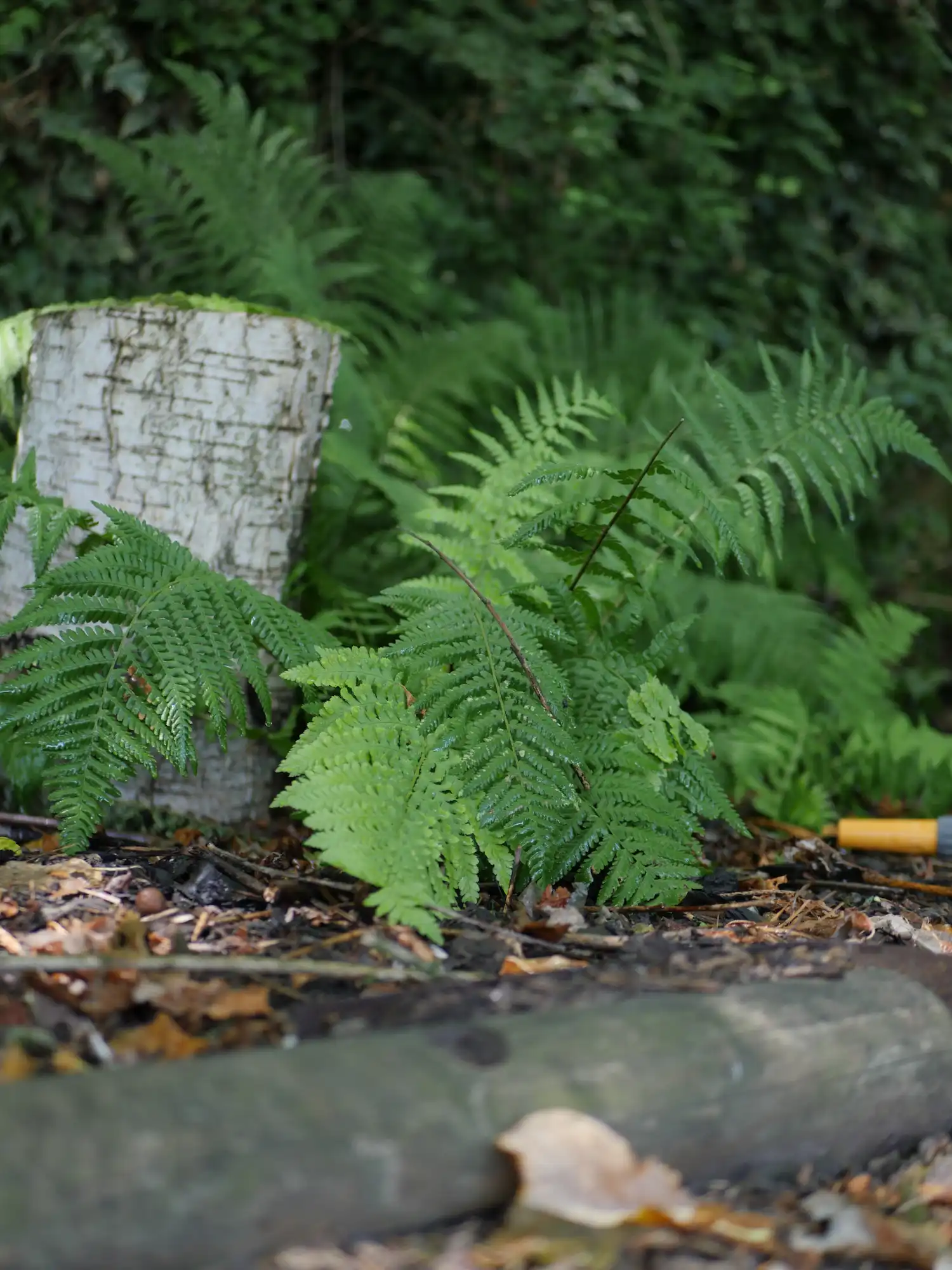
Ferns are among the easiest and most rewarding plants for shaded UK and US gardens. From native Male Ferns to decorative Painted Ferns, this guide covers the best types and how to care for them.
In my own woodland garden, ferns bring the calm. The garden is nestled under the shade of a few old trees in the East of England. Hardy, structural, and surprisingly easy to care for — they’ve become the backbone of my retreat space.
In this post, I’ll walk you through the most popular and beginner-friendly types of ferns to grow in UK (and US) gardens. I’ll also show you how I’ve used them in my own planting schemes. Plus, I’ll share what you need to know to get the best out of these shade-loving beauties.

What are the best ferns for shady UK gardens?
The best ferns for UK gardens are hardy, shade-tolerant varieties that thrive in moist, humus-rich soil. Many are evergreen or semi-evergreen, bringing structure and calm to darker corners.
Here are some of my favourites, all of which I grow in my own woodland bed:
- Dryopteris filix-mas (Male Fern): A reliable native fern that holds its shape well through most of the year. RHS guide
- Athyrium niponicum ‘Pictum’ (Japanese Painted Fern): Silvery fronds with purple highlights — more tolerant of drier soil than you’d think. Missouri Botanical Garden profile
- Blechnum spicant (Hard Fern): Evergreen, upright, and perfect for winter interest. Wildflower.org native database
- Polystichum setiferum (Soft Shield Fern): Elegant, lacy, and perfect for softening edges. RHS plant details
- Asplenium scolopendrium (Hart’s Tongue Fern): Strap-like fronds that contrast beautifully with more divided types. Gardeners’ World plant profile
- Matteuccia struthiopteris (Ostrich Fern): Bold architectural shape, best planted in moist woodland beds. Horticulture.co.uk
- Osmunda regalis (Royal Fern): Tall, lush, and loves damp shade. A native beauty with tropical vibes. Missouri Botanical Garden
- Dryopteris erythrosora (Autumn Fern): Bronze-orange new fronds, great for year-round colour. RHS guide
- Onoclea sensibilis (Sensitive Fern): Spreading native that thrives in boggy soils. USDA Plants Database
- Cyrtomium falcatum (Holly Fern): Evergreen with leathery texture — brilliant structural backdrop. Plant Delights
- Adiantum pedatum (Maidenhair Fern): Delicate texture, excellent contrast in deep shade. RHS Guide
- Polystichum acrostichoides (Christmas Fern): Evergreen, tidy form, great for winter interest. NC Extension Gardener
Bonus: Ferns to try if you love texture and variety
- Woodwardia fimbriata (Giant Chain Fern): Huge fronds, semi-evergreen in sheltered spots.
- Athyrium filix-femina (Lady Fern): UK native with feathery fronds — naturalises beautifully.
- Dryopteris wallichiana (Wallich’s Wood Fern): Upright and tropical-looking.
Can these ferns grow in the US too?
Yes! Most of the ferns listed above are hardy in USDA Zones 3–8. This makes them suitable for large parts of the US. They are especially useful in shaded woodland-style gardens or north-facing areas. USDA Zone Map
Many of these ferns are native or naturalised across the US and UK. This makes them ideal candidates for sustainable, climate-resilient planting. Christmas Fern, Maidenhair, and Ostrich Fern are US natives that adapt well to backyard gardens.
Some US-specific favourites to explore include:
- Dryopteris marginalis (Marginal Wood Fern)
- Thelypteris noveboracensis (New York Fern)
- Dennstaedtia punctilobula (Hay-Scented Fern)

Quick Comparison Table: Fern Growing Conditions
| Fern | Zones | Height | Spread | Light | Notes |
|---|---|---|---|---|---|
| Male Fern | 4–8 | 60–100cm | Clumping | Shade | UK native, tough |
| Ostrich Fern | 3–7 | 100–150cm | Spreads | Part shade | Bold foliage |
| Autumn Fern | 5–9 | 45–60cm | Clumping | Shade | Coppery spring fronds |
| Royal Fern | 3–8 | 120–180cm | Clumping | Moist shade | Prefers wet ground |
| Holly Fern | 6–9 | 30–60cm | Clumping | Part shade | Evergreen, leathery |
| Painted Fern | 4–8 | 30–45cm | Clumping | Shade | Silvery, colourful |
| Maidenhair Fern | 3–9 | 30–60cm | Spreads | Shade | Delicate texture |
How do you plant and care for ferns?
Ferns are wonderfully low-maintenance once established, but a good start makes all the difference:
- Soil: Moist but well-drained, rich in organic matter
- Watering: Keep consistent in dry spells, especially during the first year
- Mulching: Annual mulch with leaf mould or compost boosts moisture retention and feeds soil life
- Cutting back: Remove tatty fronds in early spring; leave overwintering foliage where possible for frost protection
- Feeding: Usually not needed; if growth is poor, try a diluted seaweed tonic
- Protection: Protect from harsh wind or full summer sun
Avoid letting soil dry out fully. Ferns grown in pots may need watering every few days during warm weather.
I plant mine in groups of three or five to create a natural, layered look. I avoid cutting back too early — old fronds provide winter structure and protect new growth.
For a comprehensive guide, check out the RHS fern growing advice.
Propagation, Pests & Troubleshooting
Propagation
Most ferns are best propagated by division in early spring when new growth is just emerging. Dig up the clump, divide gently at the root base, and replant at the same depth.
Growing ferns from spores is possible — but slow and a bit specialist. You’ll need a sterile container, damp growing medium, and patience. Spores are found on the undersides of mature fronds and can take weeks to months to germinate.

Common Issues
- Slugs and snails can nibble young fronds. Use beer traps or wildlife-friendly pellets.
- Brown fronds? It’s usually underwatering or too much sun. Shade and consistent moisture fix this.
- Dry crowns in spring can be a sign of rot from winter wet; good drainage helps avoid this.
I’ve found that leaving fronds over winter offers some frost protection and helps suppress early weeds.
What ferns work well together?
Combining ferns adds depth and variety. Try mixing:
- Structural uprights like Royal Fern or Wallich’s Fern
- Low mounds like Painted or Maidenhair
- Evergreens like Holly or Christmas Fern
- Strap-leaved types like Hart’s Tongue for texture contrast
Companion plants that thrive alongside ferns:
- Wood sorrel (Oxalis acetosella)
- Brunnera macrophylla (esp. ‘Jack Frost’)
- Lamium maculatum (groundcover)
- Pulmonaria (lungwort)
- Hostas and native Primula
These combinations are perfect for naturalistic or National Trust-style borders.
See Horticulture.co.uk for more native-friendly planting companions.
Design Ideas: Stumperies & Fern-Friendly Schemes
Stumperies — Victorian-style displays of ferns and mosses among decorative logs or stumps — are perfect for shady, awkward spaces. Ferns like Royal, Autumn, and Maidenhair lend texture and drama.
Use ferns to edge paths, soften shady seating zones, or provide natural screening for compost bins or utility areas.
Explore Wikipedia: Stumpery and Gardenia’s fern border designs for ideas.
A Year with Ferns – My Seasonal Garden Diary
Ferns reward consistency. In my own garden, I’ve learnt to follow their rhythm:
- March–April: New croziers emerge, soft and curled like fiddleheads. I gently remove old fronds and mulch with home-made leaf mould.
- May–July: Full flush of foliage. I check soil moisture weekly and trim back anything leaning into paths.
- August–September: Painted Ferns turn bronze. Royal Ferns add height and volume — this is when the stumpery comes alive.
- October–January: I leave everything in place. Old fronds collapse, but structure remains. Only the evergreen types stay perky.
This rhythm helps me feel grounded. No year is the same, but there’s a steadiness to it that I’ve come to rely on.
A Year with Ferns – My Seasonal Garden Diary
Ferns reward consistency. In my own garden, I’ve learnt to follow their rhythm:
- March–April: New croziers emerge, soft and curled like fiddleheads. I gently remove old fronds and mulch with home-made leaf mould.
- May–July: Full flush of foliage. I check soil moisture weekly and trim back anything leaning into paths.
- August–September: Painted Ferns turn bronze. Royal Ferns add height and volume — this is when the stumpery comes alive.
- October–January: I leave everything in place. Old fronds collapse, but structure remains. Only the evergreen types stay perky.
This rhythm helps me feel grounded. No year is the same, but there’s a steadiness to it that I’ve come to rely on.
A Ferny Nod to History – Pteridomania
The Victorian obsession with ferns — known as pteridomania — was more than just a fad. It shaped how we think about shade gardening to this day.
Collectors filled glasshouses, stumperies, and even parlours with ferns. Their motifs crept into textiles, wallpapers, and wrought iron. This link to calm, ordered nature still speaks to me. It is why I built my bench where it is, among the ferns.
When you grow ferns, you join a tradition of quiet, green appreciation. It’s not just gardening — it’s a way of noticing time, texture, and life.
Where to Source Ferns
One of the joys of growing ferns is how often they’re shared. Many of mine came from divisions offered by friends and family. They were passed on in damp paper or an old plastic tub after a garden visit.
Ferns are incredibly community-friendly plants. They divide well, travel lightly, and establish easily. I’ve picked up some of my favourites at:
- Local plant swaps and neighbourhood gardening groups
- Spring and autumn village sales
- RHS plant fairs and community events
- Online forums and trading groups
Swapping plants is more affordable than buying everything new. It also connects you with gardeners who can share real-world advice. If you get a fern from someone’s shady back border, you know it’s going to work in yours.
For less common varieties, I also check small nurseries specialising in woodland or shade-loving plants. They often have more resilient, well-acclimated stock than mass retailers.
FAQ: Ferns in Garden Design
Can ferns grow in pots? Yes, but choose a large, shady container and water regularly. Use loam-based compost with added leaf mould.
Are ferns pet safe? Most outdoor ferns are non-toxic, but always check variety specifics if you have pets that nibble. ASPCA Toxic Plant List
Will ferns spread or take over? Some clump, others spread slowly. None are truly invasive, but Dryopteris and Onoclea can gently self-seed in moist, undisturbed soil.
What’s the difference between clumping and spreading ferns? Clumping ferns stay contained and expand slowly from a central crown. Spreading ferns grow from underground rhizomes and gradually colonise more space.
All photos in this post are from my own woodland garden. They reflect the naturalistic planting style I’ve used to create a shaded, calming space inspired by National Trust woodlands.
Let me know if you’d like help choosing ferns for a tricky spot in your own garden. I’d be happy to share what’s worked for me.


Leave a Reply