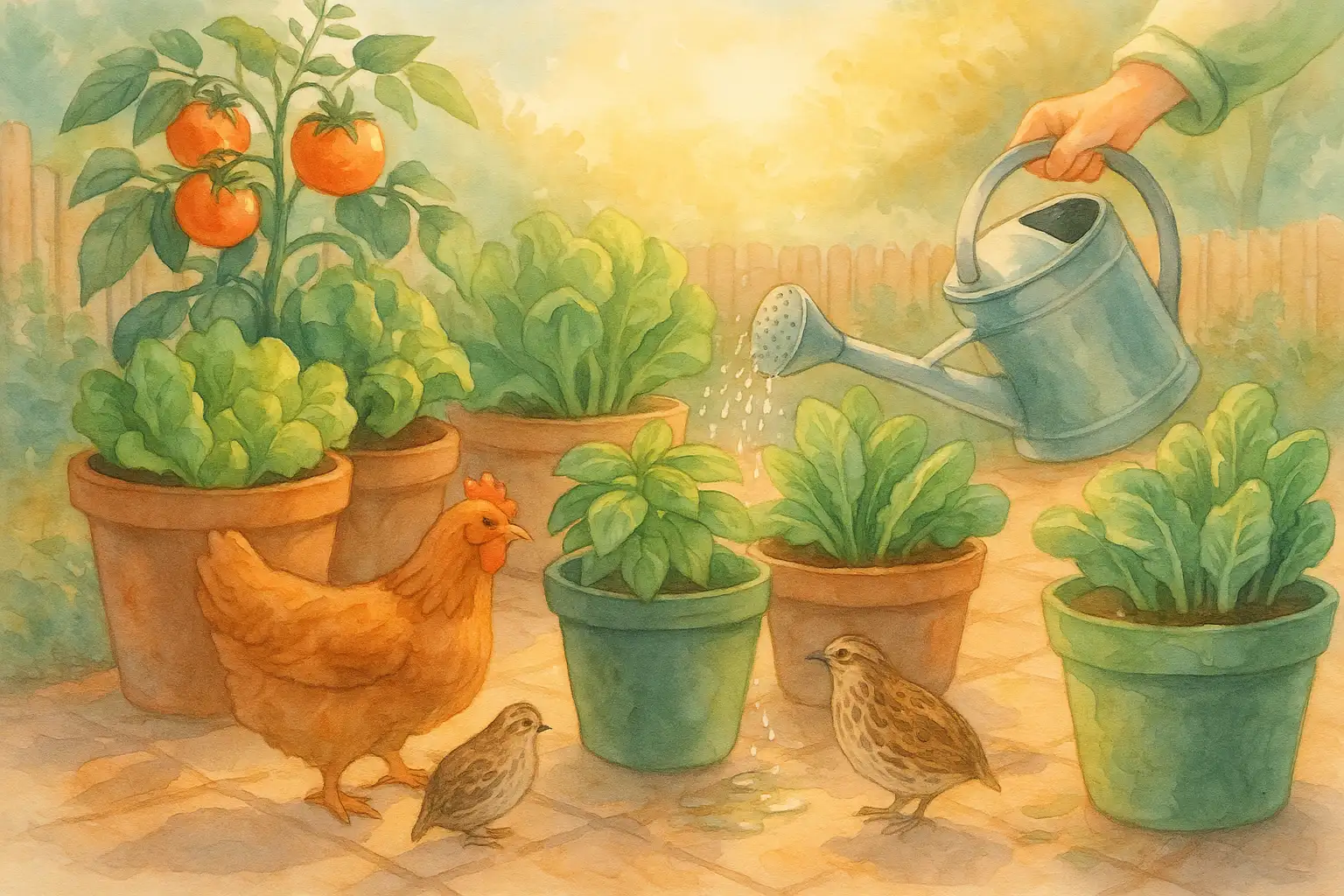
Vegetables in pots can go from comfortable to thirsty surprisingly quickly in summer. A tomato in a sunny container, a courgette with broad leaves or a small pot of basil may need attention long before the same crop growing in open ground.
The useful answer is not simply “water every day”. Container size, compost, wind, sunshine and the crop itself all change how quickly a pot dries. A quick moisture check each morning is more reliable than watering by the calendar.
Quick Answer: How Often Should You Water Container Vegetables in Summer?
Check container vegetables every morning in warm weather. Water when the compost feels dry about 2–3 cm below the surface, applying enough water to moisten the whole root ball. Many pots will need watering once a day during hot, dry spells; small pots, thirsty crops and containers in full sun or wind may need a second check later in the day. Larger pots may go longer in cooler or cloudy weather. Early morning is the best time, but watering in the evening is better than leaving a plant dry.
Treat that as a starting point rather than a fixed timetable. The Royal Horticultural Society’s container-watering guidance also recommends checking pots regularly and watering thoroughly when they need it.
Why Container Vegetables Dry Out So Quickly
A container holds a limited volume of compost. Its roots cannot travel farther into the ground to find moisture, and the sides of the pot are exposed to warm air and sunshine. Leaves continue losing water as the plant grows, while wind can dry both foliage and compost.
- Small pots have less compost in reserve and can dry very quickly.
- Terracotta pots lose moisture through their porous sides more readily than plastic or glazed containers.
- Large, leafy or fruiting crops generally use more water than compact, established herbs.
- Full sun and wind increase water loss, even when the air does not feel exceptionally hot.
- Root-filled containers have less compost available to hold moisture.
This is why two pots standing beside each other may need different treatment. Water the plant and container in front of you, not every pot by the same rule.
How to Tell When a Pot Needs Water
Push a finger into the compost to about the first knuckle. If it feels dry at that depth, water. If it is still cool and moist, check again later. The colour of the compost can help, but the surface alone is misleading because it may look dry while the root zone remains damp.
Once you know the usual weight of a pot, lifting one edge is another useful check. A dry container feels much lighter than a well-watered one. This is particularly handy with smaller herb pots and hanging containers.
Wilting can indicate thirst, but it is not a perfect test. Some plants droop temporarily in fierce midday heat even when the compost still contains moisture. Check the compost before adding more water.
Morning or Evening: When Is the Best Time to Water?
Early morning is usually best. The compost is cooler, evaporation is lower than it will be later in the day, and the plant has moisture available as temperatures rise. Water at compost level rather than spraying the leaves.
If a plant is dry in the evening, water it then rather than making it wait until morning. Aim the water at the base and avoid leaving foliage unnecessarily wet overnight. During severe heat, a late-afternoon or evening check is sensible for small pots and thirsty crops. Gardeners’ World’s feeding and watering advice likewise favours watering at cooler times of day.

How to Water Thoroughly Without Waterlogging the Pot
Pour water slowly over the compost, covering the surface rather than tipping everything into one spot. Pause if water starts to pool, then continue once it has soaked in. The aim is to wet the root ball evenly, with a little water eventually reaching the drainage holes.
If very dry compost has shrunk away from the sides, water may rush straight down the gap and out of the bottom. Apply a small amount, wait for it to absorb, then water again slowly. For a manageable pot, standing it briefly in a shallow tray of water can help re-wet a stubbornly dry root ball; remove it once the compost has taken up moisture and let it drain.
Drainage matters. Containers need open drainage holes, and they should not sit permanently in water unless they are designed as reservoir or self-watering pots. Thorough watering followed by drainage is different from keeping roots continually saturated. RHS guidance on watering containers also stresses watering the root zone thoroughly rather than giving frequent surface splashes.
Adjust the Routine for the Crop, Pot and Weather
Thirsty crops and small containers
Tomatoes, cucumbers, courgettes, beans and leafy crops can use a great deal of water when actively growing. Small pots and hanging containers have little margin for error. Check these first, especially once plants are flowering or carrying fruit.
Herbs and larger pots
Established Mediterranean herbs such as rosemary and thyme usually prefer not to remain constantly wet. Large containers also hold a bigger moisture reserve. Check before watering rather than assuming every pot needs the same daily dose.
Rain, wind and heat
Do not assume summer rain has reached the compost. Dense foliage can shed water beyond the rim, and a brief shower may only dampen the surface. Conversely, reduce watering after sustained rain if the root zone remains moist. On windy days, check exposed containers even if the temperature is moderate.
Signs of Too Little or Too Much Water
Possible signs of underwatering
- Compost is dry below the surface and the pot feels light.
- The root ball has pulled away from the sides of the container.
- Leaves remain limp after the hottest part of the day has passed.
- Leaf edges are dry or crisp.
Possible signs of overwatering
- Compost stays wet for a long time and smells stale or sour.
- Leaves yellow or become limp despite wet compost.
- Stems or roots become soft.
- Water cannot escape because drainage holes are blocked.
Several problems can produce similar symptoms, so always inspect the compost and drainage before deciding that more water is the answer. The existing Gardening Know How overview of garden watering is a useful general reference, but the condition of each container should guide the decision.
Ways to Help Pots Hold Moisture for Longer
- Use a suitably large container. More compost means a larger moisture reserve and more room for roots.
- Add a surface mulch. A layer of suitable organic material helps shade the compost and slow evaporation; keep it clear of the main stem.
- Group pots where practical. This can shelter them from drying wind, although each pot still needs checking.
- Move vulnerable pots out of harsh afternoon sun. Temporary light shade can reduce stress during an unusually hot spell.
- Use self-watering pots or drip irrigation. These can provide steadier moisture, but reservoirs and emitters still need regular checks.
- Collect rainwater where suitable. For more on storage and everyday use, see Using a Water Butt to Collect Rainwater in a Small Garden.

For broader advice when temperatures climb, read How to Water Your Garden in Hot Weather. This page stays focused on the extra demands of vegetables grown in containers.
Keeping Containers Watered While You Are Away
Water every container thoroughly before leaving, group movable pots in a sheltered position and move the thirstiest plants out of strong afternoon sun. Test any wick, drip or self-watering system for several days first; a system that has not been trialled can run dry, block or deliver too much water.
For a longer absence, asking a friend or neighbour is often the simplest option. Group the pots, label any exceptions and leave brief instructions based on checking the compost rather than applying the same amount to everything.
The UF/IFAS Extension introduction to vegetable container gardening and the Old Farmer’s Almanac container vegetable guide remain useful further reading on container choice, crops and general care.
A Simple Summer Watering Routine
- Check the thirstiest and smallest pots each morning.
- Feel below the compost surface rather than judging by appearance alone.
- Water slowly at the base until the whole root ball is moist and excess can drain.
- Recheck vulnerable containers later during hot, dry or windy weather.
- Adjust after rain and as plants grow; do not follow a fixed schedule blindly.
Container gardening in summer is not about getting every watering decision perfect. It is about noticing how quickly each pot changes and responding before a temporary dry spell becomes prolonged stress. If you are planning the rest of the space around your vegetables, these perennial plants for UK gardens offer ideas beyond the veg pots. For more seasonal growing advice, the existing October vegetable gardening tips can help with the transition into autumn, while this guide remains your summer container-watering reference.
Leave a Reply