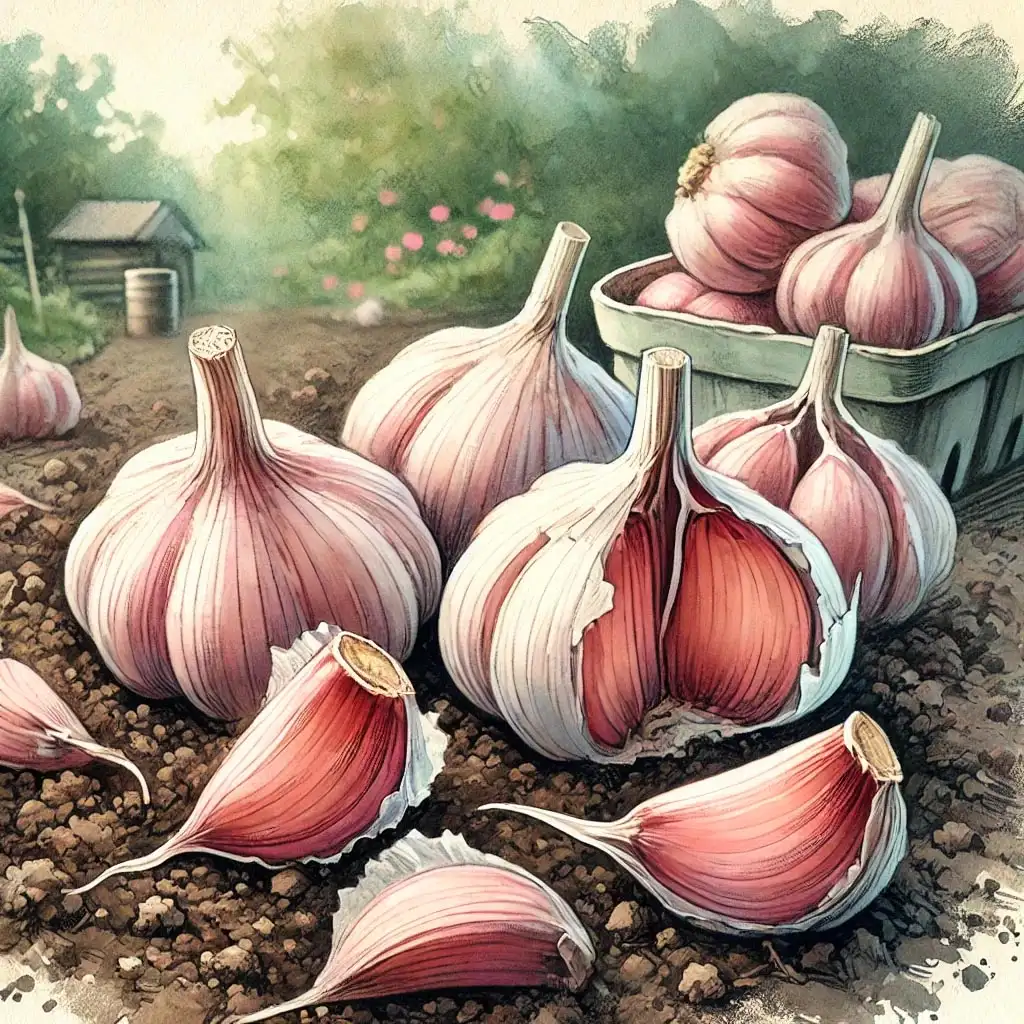
Plant garlic across the UK from mid-autumn to early winter, using a named variety suited to UK growing conditions. Plant each clove pointed end up, with its tip about 2.5cm below the soil surface, and allow 15cm between cloves. Drainage matters: I have previously grown garlic and onions in clay, where ridges reduced the losses I had when bulbs sat in wet soil. This guide covers planting, containers, late starts and the signs that garlic is ready to harvest. You can also see my earlier garlic and onion planting vlog for supporting experience.
When should I plant garlic in the UK?
Across the UK, garlic is usually planted from mid-autumn to early winter. There is no need to work to separate fixed dates for different regions. Pick a day when the ground is workable, and avoid planting into wet winter soil because that makes garlic more prone to disease.
| Planting method | Suitable timing or condition |
|---|---|
| Standard autumn planting | Mid-autumn to early winter |
| Late-winter or early-spring planting | Use only a variety described as suitable for this planting window |
| Heavy or wet winter soil | Start cloves in modules rather than putting them straight into unsuitable ground |
Most garlic varieties benefit from one to two months at 0 to 10°C for good bulb development. Autumn planting normally gives the plants an opportunity to experience these cooler conditions.
Choosing a garlic variety
Softneck garlic generally stores for longer, while hardneck garlic generally produces fewer, larger cloves. Solent Wight is a softneck variety adapted to the British climate and its bulbs store well. Buy named garlic varieties from a garden centre or mail-order supplier rather than planting supermarket garlic.
The varieties I grow change from year to year depending on what I choose. Treat the named garlic varieties here as examples rather than a record of what I grow every season.
When do I harvest garlic in the UK?
The condition of the foliage is more useful than relying on a regional calendar date. Carefully lift garlic when the first four to six leaves have turned yellow. Do not wait for all the foliage to turn brown, as late-lifted bulbs tend to open up and have a shorter storage life.
| How the garlic was planted | General harvest period |
|---|---|
| Autumn-planted garlic | Late spring to early summer |
| Spring-planted garlic | Mid-summer to early autumn |
After lifting, dry the bulbs thoroughly in a single layer in a well-ventilated place for approximately two to four weeks.
Cold and drainage: two important growing conditions
Garlic benefits from a cool period, but it also needs free-draining soil. Most varieties need one to two months at 0 to 10°C for good bulb development. At the same time, wet winter ground makes the crop more prone to disease.
- Cool conditions: The chilling period helps good bulb development.
- Free drainage: Don’t leave cloves sitting in persistently wet ground. If your soil is heavy or wet, starting them in modules is another option.
If winter drainage is the weak point in your garden, deal with that before trying to fine-tune anything else.
Beds on clay: exact spacing, depth and a simple ridge method
I have grown garlic and onions successfully in clay soil in the past. The main issue was drainage: without using ridges, the bulbs sat in wet soil and many rotted. Growing on ridges improved drainage and reduced that problem. My current soil is not clay, so this reflects previous experience rather than my present growing conditions.
If I were planting into clay again, I’d use a ridge to help excess water drain away. I wouldn’t work to one fixed ridge height; the planting depth and spacing are the useful measurements here.
- Prepare the planting line: Form a raised ridge that keeps the cloves above the wettest part of the bed and allows excess water to move away.
- Plant pointed end up: Set each clove so its tip is about 2.5cm below the soil surface.
- Keep the spacing consistent: Allow 15cm between cloves and 30cm between rows.
- Adjust for soil type: Garlic may be planted slightly deeper in light soil, but do not plant it deeply in heavy soil.
- Use modules when necessary: If the ground remains heavy or wet over winter, start one clove in each module instead.

Common issues: rust, white rot and allium leaf miner
- Leek or allium rust: The fungus affecting garlic is Puccinia porri, with Puccinia allii listed as a synonym. Avoid crowding plants, as congestion raises humidity and increases the likelihood of infection.
- Onion white rot: Avoid transferring contaminated soil on tools or muddy footwear. A short rotation is not a reliable safeguard because the pathogen can remain in soil for at least 15 years.
- Allium leaf miner: Adult flights normally occur from March to June and September to November. Cover susceptible plants with insect-proof mesh during these periods and rotate allium crops annually.
Containers that work: pot depth, spacing and layout
Containers are useful in small growing spaces and where garden soil stays wet. For garlic grown to produce bulbs, use a container at least 25cm deep, maintain 15cm between clove centres and make sure excess water can drain away.
I haven’t tested fixed clove counts for particular pot sizes myself, so I wouldn’t pretend there is one magic number. Before planting, lay the cloves on the compost, starting near the centre and working outwards. Keep 15cm between neighbouring clove centres, and leave out an outer clove if it would be crowded against the side.
| Container decision | Guidance for full bulbs |
|---|---|
| Minimum depth | At least 25cm |
| Spacing | 15cm between clove centres |
| How to plan the layout | Place cloves on the compost before planting, start near the centre and work outwards while checking the spacing between neighbouring centres |
| Outer positions | Omit a position if the clove would be crowded against the side of the container |
| Pot count | Do not rely on a fixed count based only on the stated pot size |
Fill the container with a free-draining growing medium and make sure excess water can escape. Once the layout is marked, plant each clove pointed end up, with its tip about 2.5cm below the surface.
If you are starting late: modules, fleece and realistic timing
If autumn planting has passed, first check the variety. Some garlic varieties are suitable for planting in late winter and early spring, but this is not a universal schedule for every variety.
- Start in modules if the ground is wet: If your soil is heavy or wet, put one clove in each module and cover the tip with about 2.5cm of compost.
- Plant out when the ground is ready: Keep 15cm between cloves, with 30cm between rows.
- Don’t expect too much from fleece: It offers limited protection from cold and wind. Light fleece is commonly 17g per square metre, while heavier 35g fleece gives more protection, including about 2°C of frost protection.
- Allow for a later harvest: Spring-planted garlic is generally harvested from mid-summer to early autumn.
See the full guide to using horticultural fleece and the separate advice on winter plant protection before relying on a cover during severe weather.
Harvest, cure and store garlic
Carefully dig out garlic when the first four to six leaves have turned yellow. Avoid delaying until all the foliage is brown because bulbs lifted late tend to open up and have a shorter storage life.
On hardneck garlic, remove flower stems as they start to form. Otherwise, the plant directs energy into the flower rather than swelling the bulb.
Dry or cure the lifted bulbs in a single layer in a well-ventilated location for approximately two to four weeks, depending on conditions. Avoid excessive heat above 30°C.
Once the foliage is dry and rustling, store the bulbs in a cool, dry place at 5 to 10°C. Plaits or net sacks allow air to circulate. Softneck garlic generally stores for longer than hardneck garlic.
FAQs: quick fixes and common questions
When should I plant garlic in the UK?
Plant garlic from mid-autumn to early winter. Some varieties are also suitable for late-winter or early-spring planting, so check the variety description.
When do I harvest garlic in the UK?
Lift garlic when the first four to six leaves have turned yellow. Autumn-planted garlic is generally ready from late spring to early summer, while spring-planted garlic is generally ready from mid-summer to early autumn.
How deep and how far apart should garlic be planted?
Plant cloves pointed end up, with each tip about 2.5cm below the soil surface. Space cloves 15cm apart in rows 30cm apart.
Can I grow garlic in containers?
Yes. Use a pot at least 25cm deep, keep neighbouring clove centres 15cm apart and make sure excess water can drain away. Before planting, place the cloves on the compost, start near the centre and work outwards. Omit an outer position if it would be crowded against the side rather than relying on a fixed count for the pot size.
What should I do if my soil is heavy or wet?
Drainage is the main thing to sort out. If your soil is heavy or wet, start one clove in each module. In my previous clay garden, growing garlic and onions on ridges improved drainage and reduced the rot I had when bulbs sat in wet soil.
Can I plant supermarket garlic?
It is not recommended. Use named garlic varieties bought from a garden centre or mail-order supplier.
How do I protect garlic from allium leaf miner?
Use insect-proof mesh during the normal adult flight periods of March to June and September to November. Rotate susceptible allium crops annually.
How long should garlic be cured?
Dry garlic in a single layer in a well-ventilated place for about two to four weeks. Avoid temperatures above 30°C.

Leave a Reply