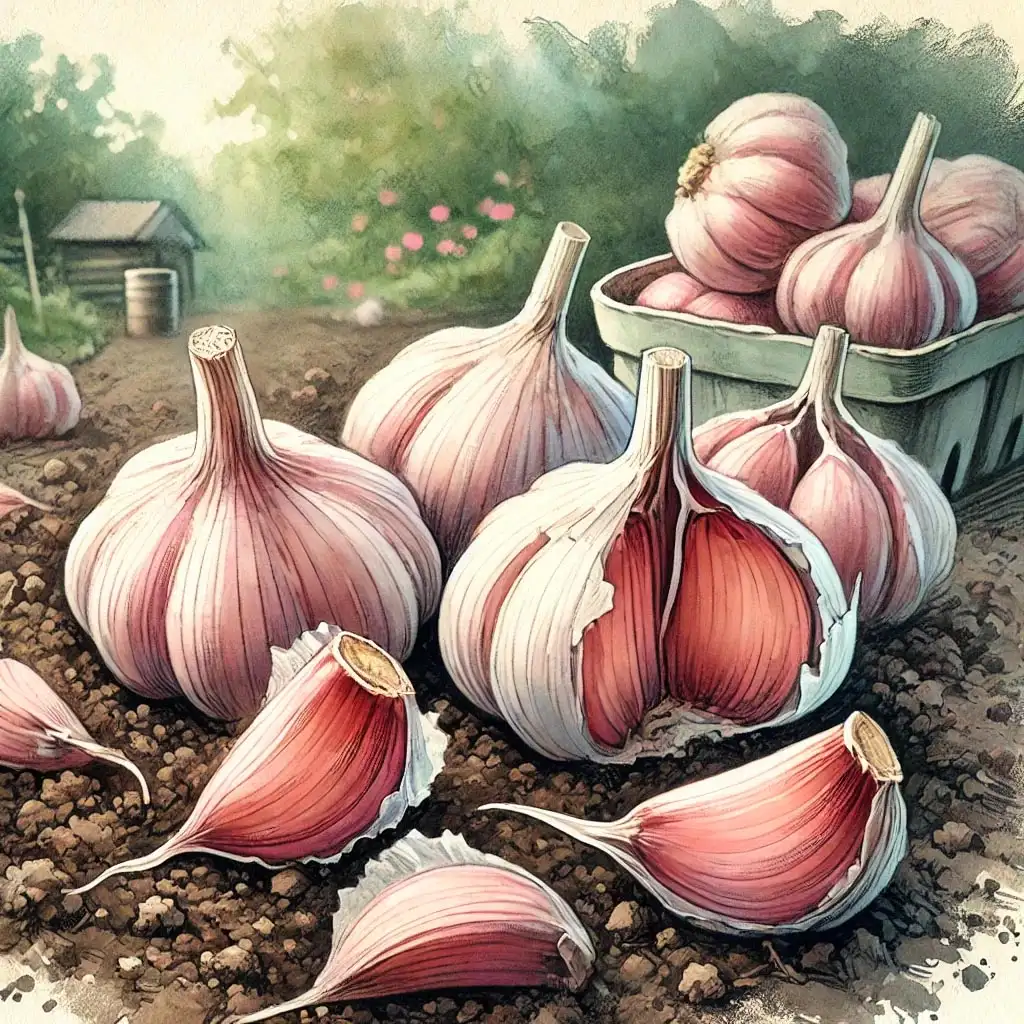
When to plant garlic in the UK is the first decision that decides your harvest. South & Midlands late Sept–Oct; North Oct–early Nov; Scotland late Oct–Nov. We grow on clay, so ridges and containers have been the difference between fat bulbs and mush; this guide is the damp‑winter, UK‑first plan that works in small spaces too. This is your practical plan for when to plant garlic in the UK and when to harvest, with exact depths, spacing, pot counts, and a late‑planter rescue.
When should I plant garlic in the UK (by region)?
Timing matters more than variety for most of us. You want a planting window that gives cloves some root growth before persistent cold, then a decent chill to trigger bulbing later in spring. The dates below are realistic for damp UK winters.
Plant on a dry, workable day. If a cold snap just passed, wait for the soil surface to drain before planting — garlic hates sitting wet.
Autumn planting windows (by region)
| UK region | Best window |
|---|---|
| South & Midlands | Late September – October |
| North England | October – early November |
| Scotland (lowland) | Late October – November |
| High/rural frost pockets | Nudge later within your regional range |
| Spring‑planting types | January – February (backup option) |
Variety tip: Softnecks tend to store longer; hardnecks bring bigger cloves and great flavour. I grow Solent Wight (softneck) and Early Purple Wight (hardneck) most years.
When do I harvest garlic in the UK?
Calendar months help, but leaf signals are more reliable. If you wait until the tops are fully brown and dry you risk split bulbs and shorter storage.
Harvest when one or two leaves are still green. In the South that’s typically late June – July; further north July – August. Lift with a fork under the bulbs (don’t yank by the leaves) and keep the skins intact.
Typical harvest windows
| UK region | Likely harvest |
| South & Midlands | Late June – July |
| North England | July – August |
| Scotland (lowland) | Mid–late July – August |
Cure somewhere airy and shaded for 2–3 weeks. Hardnecks cure faster but store for fewer months; softnecks cure a touch slower and can store to spring.
A cold spell & drainage: the two levers that change your harvest
Garlic is honest: give it chill and drainage and it will repay you. Most varieties benefit from 1–2 months at 0–10 °C (vernalisation) to form proper bulbs.
- Chill (vernalisation) tells the plant to form multiple cloves rather than one round. Autumn planting usually provides this for free; spring types cope with less chill but still prefer a cool spell.
- Drainage keeps the basal plate from rotting. In wet winters a simple ridge or a well‑drained container protects the neck, reduces yellowing, and improves survival.
If you only tweak one thing this year and your soil is heavy, tweak drainage.
Beds on clay: exact spacing, depth and a simple ridge method
Clay holds nutrients well, but winter wet is the enemy. Ridges lift the basal plate above the waterline and create a drier shoulder for roots.
- Shape ridges: Draw out beds into parallel ridges 5–8 cm high with shallow furrows between. On narrow beds, one ridge down the centre works; on wide beds, make two ridges with a walking channel.
- Plant precisely: On the ridge top, space cloves 15 cm apart, rows 25–30 cm. Plant 2.5–3 cm deep with the point up — just deep enough to anchor, not so deep that stems sit in a sump.
- Mulch lightly: A thin mulch prevents capping and splash, but keep necks exposed. In slugs‑heavy plots, hold back on thick mulches until winter cold sets in.
- Spring tonic: If leaf tips yellow despite decent drainage, a modest potash feed in early spring can help strengthen tissues. Avoid high‑nitrogen feeds — they push leaf at the expense of bulbs.
- Soil nuance: On light soils, slightly deeper planting can help size bulbs; don’t plant deeply in heavy soils. On very heavy or wet sites, start cloves in modules and plant out once rooted.

Common issues: rust and white rot (quick hygiene rules)
- Rust (Puccinia allii): Thin congested leaves, avoid overhead watering, improve airflow, remove worst leaves; dispose of heavily infected foliage.
- White rot: If discovered, don’t move soil; clean tools; rotate out of alliums for several years and avoid sharing compost between beds.
Containers that actually work: pot depth and counts per size
Default (best bulb size): 20 cm = 3–4, 25 cm = 4–6, 30 cm = 5–6. Containers are brilliant for small spaces and for wet gardens that waterlog. Prioritise depth and drainage over fancy compost.
- Minimum depth: Aim for ≥20–25 cm; the RHS suggests 25 cm as a sensible minimum for pots.
- Mix: Peat‑free compost cut with 20–30% grit or perlite. Ensure at least one free hole at the lowest point.
How many cloves per pot? Choose your lane
| Pot size | Minimum depth | Standard (max bulb size) | Intensive/compact |
| 15 cm | ≥ 15 cm | — (tight) | 3 cloves |
| 20 cm | ≥ 20 cm | 3–4 cloves | 5–6 cloves |
| 25 cm | ≥ 20–25 cm | 4–6 cloves | 6–8 cloves |
| 30 cm | ≥ 25 cm | 5–6 cloves | 7–9 cloves |
| Trough 60×25 cm | ≥ 20–25 cm | 14–16 cloves | 18–20 cloves |
Water to settle, then keep just moist through winter. From March, water more consistently and rotate the pot to even up light.

If you’re starting late: modules, fleece and realistic timing
Life happens. If you’ve missed the autumn window, use modules and a little protection to catch up (also a good tactic on very heavy soils).
- Sow in modules (1 cell per clove) for 4–6 weeks under cover. Keep cool and bright.
- Plant out once roots knit the plug. Space as normal; protect with 30 gsm fleece during hard frosts and windy snaps.
- Expectations: You’ll still harvest July–August, though bulbs may be slightly smaller. It’s still worth doing.
If it’s already late February, switch to a spring‑planting variety and reset expectations to a modest bulb with good flavour.
Harvest, cure and store: when to lift and how to keep it months
Harvest on a dry day with 1–2 green leaves remaining. Slide a fork in from the side; lift the whole plant; don’t wash. Shake soil, leave skins intact.
With hardneck types, remove the curly flowering stalk (the scape) when it appears; bulbs typically size up better. Expect to harvest ~2–3 weeks (~20 days) after scape removal.
Cure for 2–3 weeks in warm, airy shade (shed doorway, carport, or a rack indoors with airflow). When necks are fully dry, trim roots to 1 cm and tops to about 5–8 cm (or braid softnecks).
Storage: Cool, dark, dry; free airflow. Softnecks like Solent Wight store longest (often to spring). Hardnecks such as Early Purple Wight give the biggest cloves and superb flavour but store fewer months. Don’t delay harvest; late lifting causes split bulbs and poorer storage.
FAQs: quick fixes and common questions
When should I plant garlic in the UK?
South & Midlands late September–October; North October–early November; Scotland late October–November. Spring types January–February.
When do I harvest garlic in the UK?
South late June–July; North July–August. Lift when 1–2 leaves are still green; cure 2–3 weeks.
Will frost damage garlic?
Established autumn plantings are hardy. Protect very new plantings and pots with 30 gsm fleece during hard freezes and cold winds.
How many bulbs should I plant to be self‑sufficient?
As a rule of thumb, a family of 4 using ~3 bulbs/month needs 36 bulbs/year. Plant 1.3–1.5× that to allow for losses and small bulbs.
How deep and how far apart?
About 2.5–3 cm deep; 15 cm apart; rows 25–30 cm.
Can I grow garlic in containers?
Yes. Pots ≥20–25 cm deep (RHS guidance suggests 25 cm). Recommended counts: 20 cm = 3–4, 25 cm = 4–6, 30 cm = 5–6 (15 cm pots are tight; use 3 for compact/green garlic).
Is supermarket garlic OK to plant in the UK?
Not recommended due to disease risk and uncertain varieties; certified seed garlic is tested and reliable. If you experiment, choose organic, firm bulbs and expect mixed results.
How do I prevent allium leaf miner on garlic?
Use insect‑proof mesh during adult flights (March–June and September–November), rotate beds yearly, and remove affected leaves promptly.
What’s the best garlic to grow in the UK?
For storage, a softneck such as Solent Wight. For flavour/large cloves, a hardneck like Early Purple Wight.
Yellow tips?
Often wet/cold stress. Improve drainage (ridges, grit), and consider a light potash top‑up in early spring.
Split bulbs?
Usually left too long. Lift with 1–2 green leaves remaining.
Rot in heavy soil?
Use 5–8 cm ridges or containers. Avoid standing water around the neck.

Leave a Reply