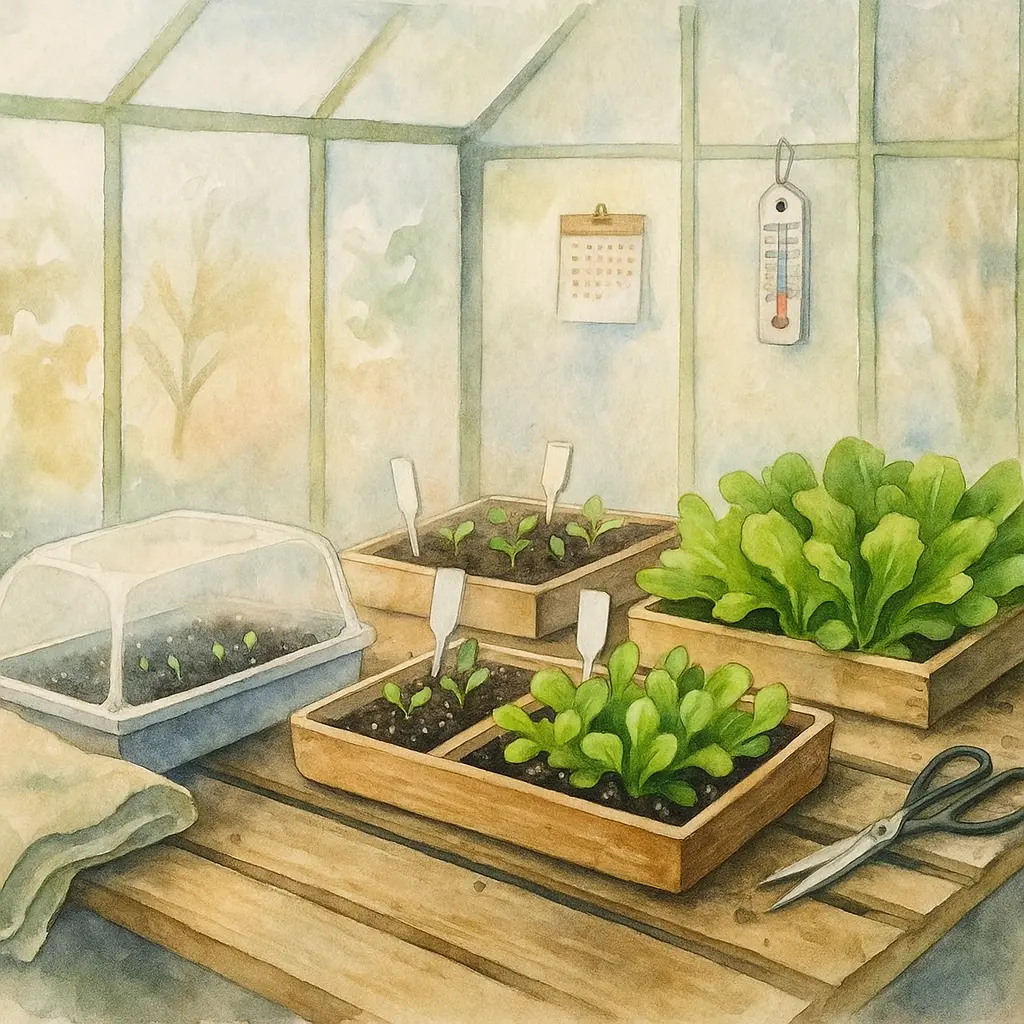
Frost on the grass, salad in the bowl — that’s winter done right.
Grow winter salads in the UK (zone 8a) without any heating by sowing hardy varieties in September–October, keeping them under an unheated greenhouse/polytunnel/cold frame, using fleece on frosty nights, and venting on dry days; water sparingly in the mornings and harvest little and often. As a UK Zone 8a home grower, I’ve found the right genetics, light, and airflow matter more than chasing heat.
By John @ My Gardening Journey — UK Zone 8a · Last updated: 29 Aug 2025
This post may contain affiliate links to Thompson & Morgan. If you buy via these links, we may earn a small commission at no extra cost to you. We only recommend seeds and kit we genuinely use.
New to winter growing? Start with our Winter Gardening UK plan for tasks & timing.
Which winter salads actually thrive in the UK?
Under unheated cover in the UK, the most dependable winter salads are lamb’s lettuce (corn salad), land cress, claytonia (miner’s lettuce), mizuna/mustards, and hardy lettuces such as ‘Arctic King’ and ‘Winter Density’; sow in Sept–Oct for baby leaves in ~3–5 weeks. I learned this the hard way: fancy varieties sulk in low light, while these workhorse leaves keep the bowls steady.
UK sowing & first-cut timing (unheated cover, East of England zone 8a):
| Crop | Best sowing window (UK) | Days to first cut | Notes | Source |
|---|---|---|---|---|
| Lamb’s lettuce (corn salad) | 20 Aug–15 Oct | 28–40 | Ultra-hardy; frames & troughs | MGJ logs; RHS |
| Land cress | 1 Sept–10 Oct | 30–45 | Peppery; low-light tolerant | MGJ logs |
| Claytonia | 1 Sept–31 Oct | 40–55 | Slow start, then steady | MGJ logs |
| Mizuna/mustards | 25 Aug–10 Oct | 21–35 | Fast; re-cut 7–10 days | MGJ logs |
| Lettuce ‘Arctic King’ | 25 Aug–30 Sept | 35–50 (baby) / 70–90 (head) | Cold-tolerant | RHS; MGJ logs |
| Lettuce ‘Winter Density’ | 25 Aug–30 Sept | 35–50 (baby) / 65–85 (head) | Dense leaves | MGJ logs |
Pitfalls: late November sowings often stall under short days; better to pause and resume mid-February than clog benches with sulking trays. As UK 8a growers, light beats warmth every time in mid-winter.
Do this next (1-minute win): set a weekly reminder for a half-tray sowing. Most gardeners miss: light continuity beats warmth for winter leaves.
When to sow and how to keep cuts coming
Succession-sow every 7–10 days from early September to mid-October (zone 8a), pause during the darkest six weeks (mid-Nov to late Dec), then restart small sowings in mid-February. Expect slower regrowth mid-winter and faster from late February; harvest cut-and-come-again to keep throughput high.
| Week | Task |
|---|---|
| Early Sept | Sow trays of mizuna/mustards + ‘Winter Density’ (baby leaves) |
| Late Sept | Sow lamb’s lettuce + claytonia |
| Early Oct | Final outdoor sowings; move trays under cover as nights cool |
| Mid-Nov→late Dec | Pause sowing; harvest lightly; protect on frosty nights |
| Mid-Feb | Restart small sowings; refresh tired rows |
Pitfalls: trays sown in late Nov often stall; you’ll get better bowls by harvesting the stock you have and resuming mid-Feb. As UK 8a growers, we plan around daylength, not just temperature.
Do this next (1-minute win): keep two trays per crop moving — one germinating, one establishing.

Cold frame vs unheated greenhouse: which is better?
Cold frames excel at cosy microclimates for trays and micro-rows; unheated greenhouses/polytunnels win for volume and airflow. Use frames for fast-turn modules and greenhouses for regrowth and throughput; both benefit from night fleece on hard frosts and daytime venting.
| Shelter | Best for | Big pro | Watch out |
|---|---|---|---|
| Cold frame | Trays, micro-rows | Warmer nights, low wind | Stale air → vent daily |
| Unheated greenhouse | Rows, higher yield | Better light + headroom | Larger volume to warm at night |
| Polytunnel | Beds + paths | Even light, easy hoops | Condensation → botrytis risk if unvented |
Do this next (1-minute win): put a max–min thermometer in both frame and greenhouse; your site’s swings will guide fleece use better than any chart.

Light, fleece and ventilation: stopping damp beating cold
Light is the winter throttle; fleece is the night-time quilt — prioritise clean glazing and only add fleece on cold nights, venting on dry days to push out humidity and prevent botrytis. A clean pane usually adds more growth than an extra fleece layer.
- Fleece GSM: 17–23 gsm for routine nights; 30–35 gsm for hard snaps; double fleece below ~−3 °C.
- Venting habit: crack lids/vents by mid-morning on dry days; close before dusk.
- Condensation control: shake off drips; thin older leaves to improve airflow.
Need GSM specifics? Read our Horticultural Fleece GSM guide. For frost-night routines and simple covers, see our Winter Plant Protection guide.

Do this next (1-minute win): wash greenhouse glazing in late Sept; it’s the highest-ROI winter prep.
Watering and feeding in winter (UK, zone 8a)
Water in the morning only when compost is dry to your first knuckle and trays feel light; aim for leaves dry by late afternoon, and avoid heavy feeds until daylength rises. If needed in late winter, use a very weak seaweed feed monthly.
- Finger test before watering; if in doubt, wait a day.
- Prefer tepid water; water the media, not foliage.
- No heavy feeds in Dec–Jan; resume gentle nutrition from late Feb.
Do this next (1-minute win): lift trays before watering — feather-light means water; anything else, wait.
Layout & spacing for 1m² of winter salads
Mix fast baby-leaf strips (mizuna/mustards) with slower, hardy anchors (lamb’s lettuce, claytonia, winter lettuces), keep air-lanes between rows, and harvest little-and-often for 200–500 g/week across Dec–Feb depending on light and variety.
- 3 × 25 cm strips of mizuna/mustards @ 2–3 cm spacing.
- 2 × 25 cm strips of lamb’s lettuce @ 7–10 cm spacing.
- 1 × 25 cm strip of claytonia @ 10–12 cm spacing.
- Edge: 10–15 winter lettuces @ 20–25 cm for heads/big baby leaves.
- Air-lanes: 10–12 cm gaps after every two strips.
| Month | Baby-leaf mix | Lamb’s lettuce & claytonia | Total (range) | Source |
|---|---|---|---|---|
| December | 150–300 g | 50–150 g | 200–450 g | MGJ logs |
| January | 120–280 g | 60–120 g | 180–400 g | MGJ logs |
| February | 180–350 g | 80–180 g | 260–530 g | MGJ logs |
Bed not prepped yet? Start with our No-Dig Gardening setup to build a warm, fertile base before winter.
Do this next (1-minute win): mark 10–12 cm air-lanes with string — it raises usable yield by keeping mould down.
Common winter salad problems & quick fixes
Most winter losses are soggy compost, slugs, and grey mould; water less, trap slugs with boards/beer traps, thin older leaves for airflow, and vent on dry days — double fleece only on hard frosts and remove early.
- Soggy trays/compost: skip watering; fork in air; add dry compost to the surface.
- Slugs: lay scrap timber/tiles as decoy shelters; morning patrol + beer traps; if necessary, use ferric phosphate pellets sparingly and covered.
- Grey mould (botrytis): remove affected leaves; vent and thin; keep fleece off wet foliage.
Pitfalls: over-fleece steals light; evening watering spikes mould. As UK 8a growers, we vent on any dry day — even if it feels chilly.
Do this next (1-minute win): add two slug boards per frame and check each morning after rain — it’s the highest-leverage winter habit.
HowTo: Set up a winter salad cold frame in 10 minutes
A simple wood-and-polycarbonate cold frame in a sunny, wind-sheltered spot gives salads a winter home — hinge a clear lid, keep night fleece inside, open on dry mornings and close before dusk.
Supplies: untreated timber (approx. 120 × 60 cm frame), clear polycarbonate/acrylic lid, two hinges + latch, ground stakes/screws, 17–30 gsm fleece.
Tools: hand saw, drill/driver, tape measure, stapler, gloves. Total time: ~10 minutes (pre-cut timber helps).
- Site & set: pick a south-facing patch in full winter sun. Level the ground; lay a 3–5 cm grit/compost base.
- Assemble box: screw four boards into a rectangle (taller at the back for slope). Stake corners if windy.
- Fit lid & fleece: hinge the clear lid; add a simple prop. Fold fleece inside the frame for quick night covers.
- Load trays/rows: place modules or a 1 m² mixed bed. Add a max–min thermometer and start venting on dry days.
Read next:
FAQs: Grow Winter Salads UK
What salads grow in winter in the UK?
Lamb’s lettuce, land cress, claytonia, mizuna/mustards, and winter lettuces like ‘Arctic King’ and ‘Winter Density’. Grow under unheated cover and use fleece on frosty nights.
Do I need to heat a greenhouse for winter salads?
No. In zone 8a you can harvest without heating by choosing hardy varieties, venting on dry days, and using 17–35 gsm fleece at night during frosts.
How often should I water winter salads?
Morning-only and only when compost feels light and dry to your first knuckle. Aim for leaves dry by late afternoon.
Should I double fleece inside a frame?
Yes, during hard frosts (around −3 °C and below). Remove fleece early the next morning for maximum light.
How do I stop grey mould on winter leaves?
Prioritise light and ventilation: open lids/vents on dry days, thin older leaves, avoid evening watering, and keep fleece off wet foliage.