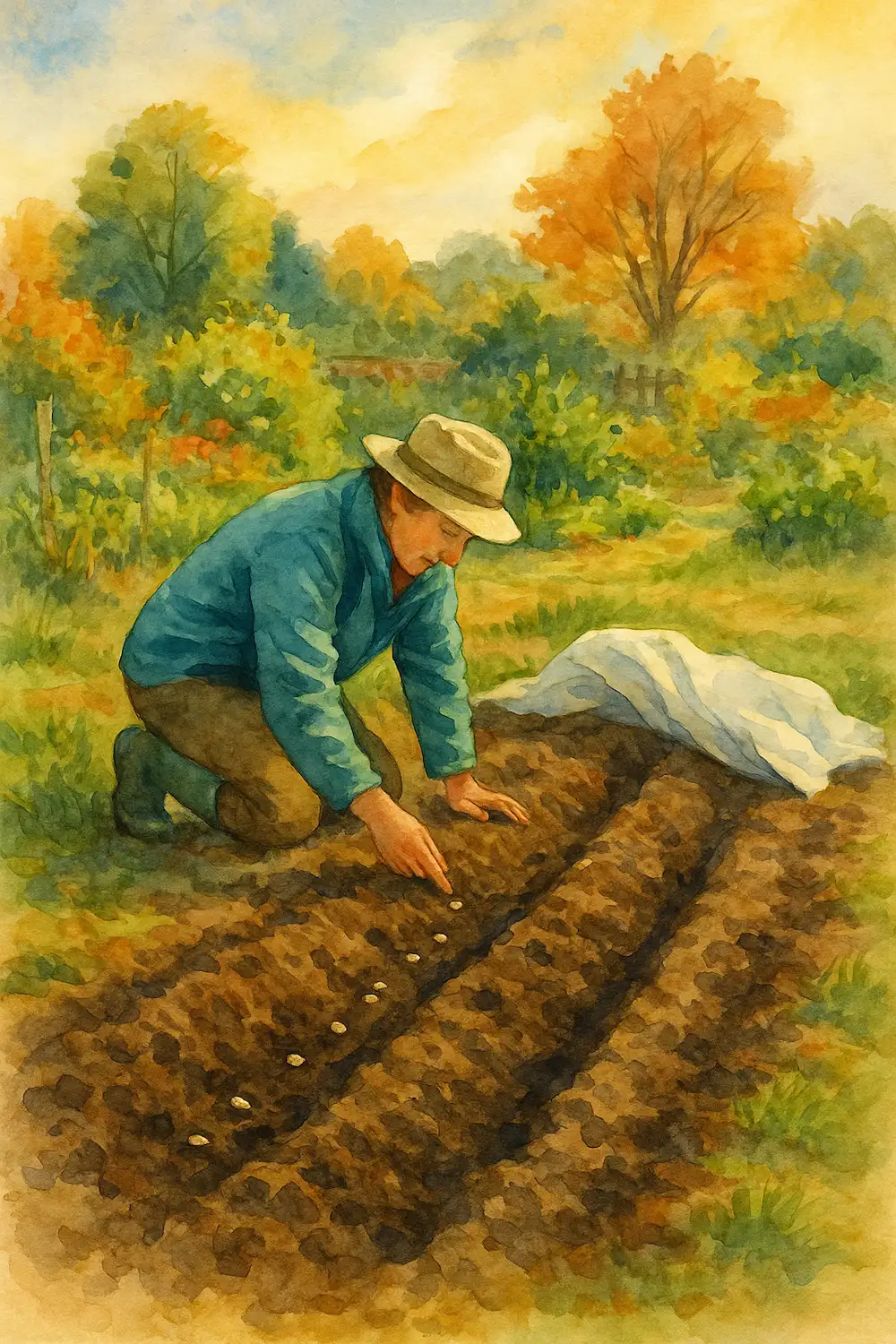
Planting broad beans in autumn UK is the simplest way to get sturdy plants and an earlier spring harvest. In this guide, I cover the best hardy varieties. I also explain the exact sowing depth and spacing. Additionally, I discuss how to protect plants through winter in Zone 8a conditions. All information here reflects the perspective of a Zone 8a allotment gardener in London. It draws on advice from the RHS, BBC Gardeners’ World and other authoritative UK sources.
- Sow hardy types Sept–Nov in mild UK regions
- Use varieties such as Aquadulce Claudia or The Sutton
- Sow 5–7.5 cm deep, spacing 15–20 cm between plants
- Protect with fleece or cloches in hard frost
- Harvest usually begins from May onwards
Why sow broad beans in autumn
For many UK gardeners, planting broad beans in autumn UK delivers stronger roots and earlier pods.
If you have the space and a reasonably free‑draining soil, autumn sowing is worth the effort. The beans germinate while the soil is still warm and then remain dormant over winter. This allows the plants to establish a strong root system, giving a head start compared with spring‑sown beans. Early planting also helps keep the soil covered through winter, protecting soil structure and making use of empty beds. I’ve found that cropping happens a good three to four weeks earlier than spring sowings.
My October‑sown ‘Aquadulce Claudia’ yielded pods by late May. This occurred when there was little else to pick. Gardeners in heavy clay areas or very exposed sites might choose spring sowing instead, as water‑logging can rot the seeds.

When to sow (by UK region)
If you’re planting broad beans in autumn UK, aim for Sept–Nov, adjusting for local frost.
Mild southern and western counties (Zone 8a–9)
For gardeners in milder parts of England, such as the south, southwest, and urban areas of London, broad beans can be sown outdoors. This is possible from mid-September through early November. Garden Focused recommends making autumn sowings around the third week of October. The Guardian notes that hardy cultivars like ‘Aquadulce Claudia’ can be sown in late November and will emerge within a few weeks when given fleece protection.
Northern England, Scotland and high ground
In colder or higher‑elevation areas, winters can be too harsh or soils too wet for outdoor autumn sowing. The safest option is to sow in pots under cover in an unheated greenhouse. Alternatively, use a cold frame in late winter. Then, plant out in March. Garden Focused suggests starting seeds in pots in late February, transplanting them outside by the last week of March.
Wet or heavy soils
If your soil retains water, autumn sowings may rot. Choose a free‑draining bed or raised area; otherwise delay until spring or sow into modules. The English Garden advises that heavy clay soils are better left until spring.
Best varieties for autumn sowing
Not every broad‑bean cultivar copes with winter. Select hardy types that are bred for overwintering:
- ‘Aquadulce Claudia’ – RHS and BBC Gardeners’ World both highlight this long‑podded variety as very hardy. It is considered the best choice for autumn sowing.
- ‘The Sutton’ – A dwarf bean reaching only 30 cm high, ideal for small gardens or windy plots. Its short stature means less staking and it performs well in containers.
- Other options – ‘Crimson Flowered’ has attractive pink flowers. ‘Bunyard’s Exhibition’ produces large pods and high yields. ‘Masterpiece Green Longpod’ also produces large pods and high yields. For container growing, look for compact or dwarf varieties.
How to plant (depth, spacing, soil prep)
When planting broad beans in autumn UK, sow 5–7.5 cm deep and space 15–20 cm.
Prepare the soil
Broad beans thrive in fertile, well‑drained ground with a neutral to slightly alkaline pH. Before sowing, fork in a layer of compost or well‑rotted manure. Garden Focused notes that beans seldom need additional feeding if planted into nutrient‑rich soil. However, you can add a handful of fish, blood, and bone around each plant in spring. If your soil is heavy or prone to water‑logging, use raised beds or ridge the soil to improve drainage.
Sowing in the ground
- Mark out rows. For most varieties, space rows 60 cm apart; this allows you to walk between them for harvesting. Dwarf beans can be grown in double rows 23 cm apart with 60 cm between pairs.
- Spacing within rows. Hardy varieties should be sown 20 cm apart. Dwarf types like ‘The Sutton’ can be spaced at 15 cm. Some gardeners prefer to sow in blocks rather than rows. In that case, leave 20 cm between each seed in all directions.
- Depth and orientation. Place each seed 5–7.5 cm deep (2 in) with the scar facing down. In heavy soils a shallower 3 cm depth may help prevent rotting.
- Water and cover. Firm the soil and water in. In the case of cold snaps, cover the row with horticultural fleece or cloches. Netting will protect seeds from birds and mice until they germinate.
Sowing in pots or modules
If your garden is exposed or you have problems with mice, sow seeds one per pot or module. Place them 5 cm deep and keep them in a cool, frost‑free place. Move them outside after six weeks when the roots fill the pot and the weather moderates. For a compact, healthy plant, keep temperatures around 12 °C and ensure plenty of light.
Protection during winter
After planting broad beans in autumn UK, cover with fleece during sharp frosts.
Autumn‑sown broad beans are hardy, but they’ll benefit from protection during harsh weather:
- Fleece or cloches – Use horticultural fleece or low cloches to cover rows during prolonged frost. Remove the covers when the weather moderates to avoid excessive humidity.
- Keep plants short – Avoid sowing too early. Seedlings should reach only a couple of centimetres high before winter. Tall, lush growth is prone to being knocked back by cold. If plants become leggy, earth them up and use fleece through cold snaps.
- Drainage and weed control – Ensure beds remain free‑draining to prevent rot. Weed lightly so young plants don’t compete for nutrients.

Check your local outlook with the Met Office frost advice before sowing in colder regions or exposed plots.
Spring care and harvest timing
Autumn sowings pay off: those broad beans planted in autumn UK usually crop from May.
Early spring
Once temperatures rise, the plants will begin to grow rapidly. Here’s how to look after them:
- Support – Tall varieties need support; insert sturdy stakes at the ends of rows and run twine around them. Dwarf types usually support one another but may benefit from twiggy sticks or netting.
- Watering and mulching – Broad beans in the ground usually need minimal watering, but giving them a good soak when the first flowers appear and again two weeks later improves yields. Spread a mulch of compost around plants to retain moisture and suppress weeds.
- Pinch out tips – When the first pods start to form, pinch out the soft shoot tips to deter blackfly and encourage the plant’s energy into pod production. The tips are edible and taste like spinach.
- Feed – Container‑grown beans may need a fortnightly feed with high‑potassium liquid fertiliser once flowers appear.
Harvesting
Autumn‑sown beans can be ready to pick as early as May. Pick pods regularly to encourage further cropping. You can harvest at two stages:
- Young pods – When pods are about 6 cm long they can be eaten whole like mange tout; pods are sweet and tender.
- Mature beans – Wait until pods swell and you can feel the beans inside; harvest before the scar on the bean turns black for the sweetest flavour. Use scissors or secateurs to avoid damaging the stems.
After harvesting, cut plants at the base but leave roots in the soil to add nitrogen. Rotate beds next season to make use of the enriched soil.

FAQs
Can I sow broad beans in November?
Yes – in milder parts of the UK and in free‑draining soil, hardy varieties like ‘Aquadulce Claudia’ can still be sown in late November and will germinate before winter. Use fleece or cloches to protect them from frost.
What spacing should I use for dwarf vs tall varieties?
Dwarf beans such as ‘The Sutton’ can be spaced 15 cm apart, while taller varieties need 20 cm spacing within rows and 60 cm between rows.
Do I need to soak broad‑bean seeds before planting?
Soaking isn’t essential. Broad‑bean seeds have high germination rates and will sprout in moist soil. Focus on sowing at the correct depth (5–7.5 cm) and ensuring good soil contact.
How do I protect autumn‑sown beans from pests?
Birds and mice may dig up seeds. Cover newly sown rows with netting or wire mesh until seedlings appear. In spring, pinch out the growing tips once pods start forming to deter blackfly.
When should I harvest broad beans?
Pods from autumn‑sown beans are usually ready by May. Pick regularly when pods are 6 cm long for whole‑pod eating. You can also wait until the beans inside fill the pod. Make sure to harvest before the scar darkens.
Can I grow broad beans in containers?
Absolutely. Choose dwarf varieties like ‘The Sutton’. Use large containers at least 40 cm wide; fill with peat‑free multi‑purpose compost and space plants 15 cm apart. Water regularly and feed with a high‑potassium fertiliser once flowers appear.
Do broad beans fix nitrogen in the soil?
Yes. Like other legumes, broad beans host nitrogen‑fixing bacteria on their roots. After harvest, cut plants down and leave the roots in the soil to boost nitrogen for the next crop.
Final Thoughts
Autumn sowing of broad beans is a satisfying way to get ahead for the following year. By choosing hardy varieties, sowing at the right time and depth and giving seedlings simple protection, you can enjoy an early harvest with minimal fuss.
Pair your beans with other frost‑resistant plants for a resilient winter plot, and remember that winter plant protection extends beyond vegetables. I like to rotate my broad‑bean bed with a patch of naturalising bulbs to keep the soil productive.
If you keep chickens on your allotment, planning sowings around what to feed chickens makes good sense. For more guidance, consult RHS advice on broad beans and the organic growing tips at Garden Organic UK, and keep an eye on Met Office frost advice during severe cold snaps.
You must be logged in to post a comment.