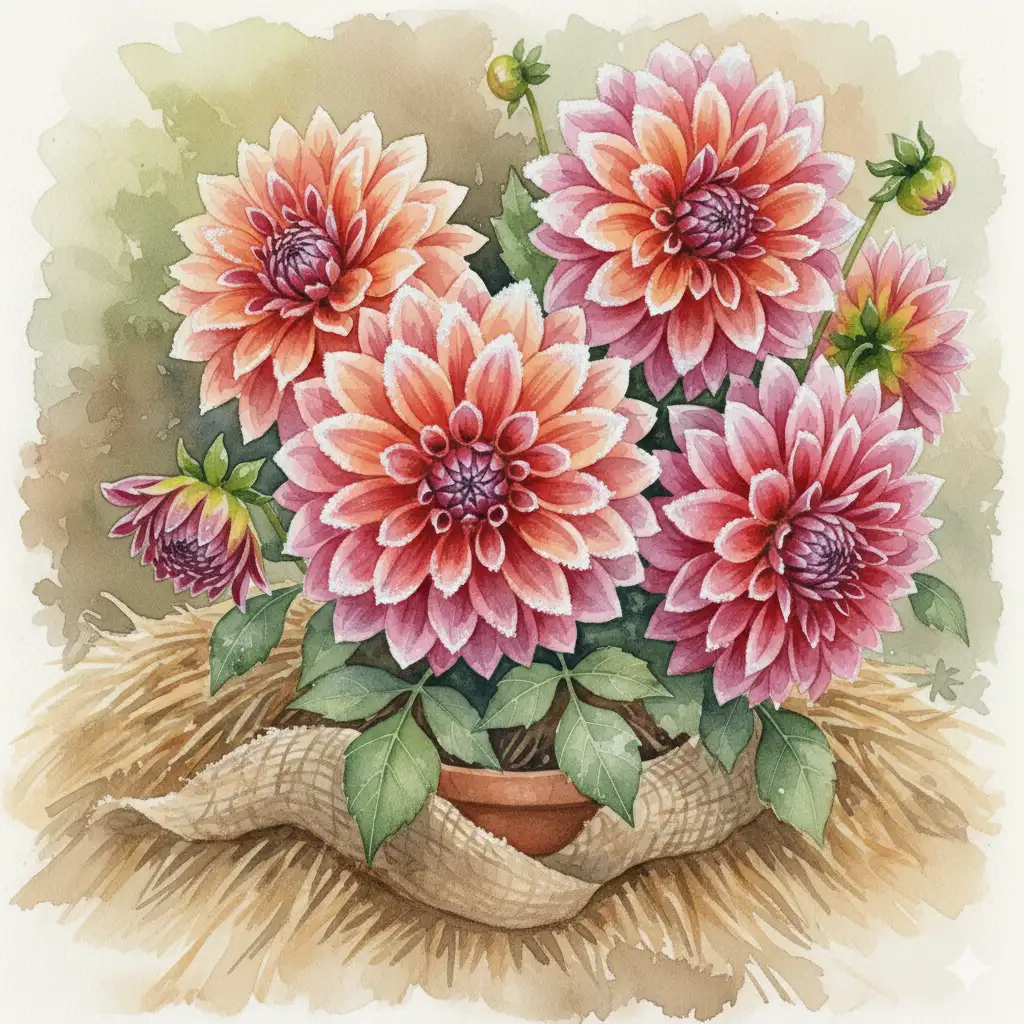
When the first frosts arrive in October or early November across most of the UK, the vibrant display of dahlia foliage will blacken. The key to overwintering dahlias is to act promptly, as their tubers face a great threat from cold and damp. A single hard frost around –2°C (28°F) can kill unprotected tubers, and repeated nights of –4°C to –10°C will finish them off.
To keep your favourite dahlias alive, you need to act promptly. This guide provides practical, first-hand guidance based on UK conditions, including temperature thresholds, step-by-step instructions, and the pros and cons of various storage media. You’ll find unique insights on moisture management and the importance of air-drying, which are often overlooked but critical to success.
- Wait until frost blackens the foliage, then cut stems to 10–15 cm (4–6 in), lift tubers and cure them for 7–10 days in a frost‑free, ventilated shed.
- Store cured tubers in a cool, dark place between 4 °C and 7 °C (39–45 °F); freezing kills them and higher temperatures cause premature sprouting.
- To overwinter in pots, stop watering in late autumn, move the pot to a sheltered spot, insulate with fleece or bubble wrap and protect it from rain.
- Leaving tubers in the ground is only advisable in mild, well‑drained areas; cut back stems, mulch 10–15 cm deep and accept potential losses.
- Check stored tubers monthly, removing any that are rotting and lightly misting the medium if it becomes bone dry.
When to act (first‑frost cues)
The key to overwintering dahlias is timing your actions precisely around the first frost. This is when the plant signals that its growing season is over and the tubers have gone dormant. This is a great task to do as you prepare your garden for winter.
- Monitor local forecasts: In the UK’s Zone 8a (southern England and Wales), the first frost typically arrives in late October or early November. The Met Office’s “Minimum Temperature” forecasts are your best friend here. Wait for a dry spell so you aren’t digging in wet, heavy soil, which encourages rot during storage.
- Look for blackened foliage: As soon as a light frost has turned the leaves black, photosynthesis stops. This is the ideal time to lift them, as the plant has now pulled all remaining energy into the tuber for winter survival.
- Work on a dry day: This is a crucial and often overlooked tip. Lifting in dry soil minimises damage and prevents thick mud from clinging to the tubers, which can trap moisture and lead to rot.
Check the MET office for your local weather forecast if you plan to overwinter dahlias.
Option 1 — The Best Way to Overwinter Dahlias: Lift & Store
Lifting and storing tubers indoors offers the highest survival rate, particularly for cherished varieties.
- Cut back the stems: After the first frost, cut stems back to 10–15 cm (4–6 in), leaving a short stump. Leaving a stump is vital, as it provides a handle and prevents moisture from entering the crown, which can cause rot.
- Lift the tubers: Use a garden fork or spade to gently loosen the soil about 30 cm around the plant. Carefully prise the clump out. Avoid pulling by the stems, which may snap and damage the tuberous roots.
- Remove soil and label: Gently shake off loose soil. Do not wash them at this stage, as excess moisture is the enemy of storage. Label each clump with a waterproof tag or marker; they all look the same when dormant!
- The Curing Process (A Critical, Unique Step): Place tubers upside-down on a tray of newspaper in a frost-free shed or greenhouse for 7–10 days. This is where you add unique value. The goal is to let sap and moisture drain from the hollow stems and allow the skin to harden (callus). Aim for 10–15°C and good ventilation to prevent desiccation.
- Trim and clean: After curing, cut away any rotten or shrivelled tubers. You can now gently brush off remaining soil. Only wash if absolutely necessary, but always re-dry them for 2-3 days before storage.
- Pack in storage medium: Nestles the tubers in boxes filled with barely moist compost, vermiculite, or wood shavings. The medium should feel slightly damp, not wet. The unique insight here is to cover the crown and roots but leave the stem stump exposed to monitor for rot.
- Store cool and dark: Place the boxes in a dark, ventilated area with temperatures of 4–7°C (39–45°F). A garage, cellar, or unheated spare room works well in most UK homes. Freezing will kill them, while higher temperatures encourage premature sprouting.
- Check monthly: Inspect your tubers every 4 weeks. Remove any mouldy or rotting pieces and lightly mist the medium if it becomes bone dry.
There is a great guide provided by the RHS: growing and overwintering dahlias
Option 2 — Overwintering Dahlias in Pots
Overwintering dahlias in pots is less reliable because the rootball is exposed to extreme temperature fluctuations.
- Dry the compost: Stop watering in late autumn. Tubers are more likely to survive in a barely moist rootball than a soggy one.
- Shelter from frost: Move pots to a sheltered wall, greenhouse, or unheated garage. The unique challenge with pots is condensation. To combat this, insulate the pot with fleece or bubble wrap but leave an air gap to allow for ventilation and reduce trapped moisture.
- Protect against rain: Cover the pot with a makeshift roof or move it under a bench to prevent winter rain from saturating the compost. Saturated compost that subsequently freezes will kill the tubers.
- Emergency measures: If temperatures are forecast to fall below –2°C, add extra layers of fleece or temporarily move the pots indoors. Prolonged periods below –4°C mean you’re better off lifting the tubers.

Option 3 — In‑ground (for mild UK sites only)
Overwintering dahlias in the ground carries the highest risk of failure and is not recommended for valuable plants. It only works where soil drains exceptionally well and winters rarely drop below –2°C.
- Cut back and mulch: After the first frost, cut stems to about 15 cm (6 in) and cover the crown with 10–15 cm of a dry, coarse mulch such as straw or bark. Mulch insulates the tubers and moderates soil temperature.
- Keep soil dry: If your soil is heavy clay, erect a simple plastic sheet or cloche over the mulched area to shed winter rain. Waterlogging is as great a threat as freezing.
- Accept losses: Even in mild winters, extremely wet or severe cold spells can kill tubers left in the ground.
Many plants struggle with frost but some are more resistant, our guide on the top frost resistant plants for a vibrant winter garden shares plants that cope well.
The Science of Overwintering Dahlia Tubers
The Role of Curing: Beyond Just Drying
Many gardeners know they need to “cure” tubers, but few understand the underlying science. Curing is not just about drying; it’s a critical process where the outer skin of the tuber hardens and forms a protective, corky layer. This process is called suberisation, and it seals any minor wounds from lifting. This suberized layer is your dahlia’s primary defence against fungal and bacterial pathogens during its dormancy. Skipping this step or doing it improperly (e.g., in a humid, cold environment) is one of the top reasons tubers rot in storage.

Temperature vs. Protection
A fundamental part of successful overwintering dahlias in the UK is understanding exactly what temperatures pose a threat to your tubers. The following table provides a quick-reference guide on what actions to take based on the expected overnight low forecast. Use it to help you quickly decide between simply insulating your plants in situ or lifting and storing them for guaranteed survival.
| Forecast Low (°C) | Action | Reason |
| 0 to –2 | Leave pots with single fleece layer. | Tubers can tolerate light frost if soil stays dry. |
| –2 to –4 | Lift & store or double fleece on pots. | Hard freeze kills tubers; repeated nights worsen damage. |
| Below –4 | Lift all tubers. | Ground is likely to freeze; even insulated pots may fail. |
Check out our guide to protecting plants from frost.
Understanding Storage Media
The choice of storage medium is a balance between providing moisture and ensuring adequate airflow.
- Vermiculite: This is a fantastic choice because its porous structure retains some moisture without becoming waterlogged, and it’s sterile, so it won’t introduce pathogens.
- Barely Moist Compost: The key word here is “barely.” Compost provides a more natural environment but can harbor pests or fungal spores if it’s too wet. The risk of mould is higher, so it requires more vigilant monthly checks.
- Wood Shavings: These offer excellent airflow, which is great for preventing rot. However, they can dry out too quickly, causing the tubers to shrivel and lose viability. This medium requires more frequent light misting.
Garden Organic has great information and advice on sustainable peat free growing.
Moisture is a Double-Edged Sword
The most common cause of storage failure when overwintering dahlias is either too much or too little moisture.
- Too much moisture encourages rot and mould. This happens when tubers are washed before storage, the curing process is too short, or the storage medium is waterlogged.
- Too little moisture causes the tubers to dehydrate and shrivel. A desiccated dahlia tuber will not sprout in the spring, as it has lost the stored energy and moisture needed to break dormancy.
Common Mistakes to Avoid
- Storing in an airtight plastic bag: This is a death sentence for dahlias. The tubers respire, releasing carbon dioxide and moisture. An airtight bag traps this humidity, creating the perfect greenhouse for mould and rot. Proper storage requires ventilation.
- Sealing cuts with wax or tape: This is a persistent myth. Wax can trap moisture underneath, leading to rot. The suberization process, which occurs during curing, is the natural and effective way to heal wounds.
- Storing too warm: Temperatures above 7°C break the dahlia’s natural dormancy. The tubers will begin to sprout prematurely, using up their limited energy stores. When planted in the spring, these weak, leggy sprouts are highly vulnerable and often fail.
Gardening and protecting plants during winter is a challenge for every gardener, check out our guide to winter gardening in the UK for advice on how to protect other plants in your garden.
FAQs
- What temperature kills dahlia tubers in the UK? Dahlia tubers can tolerate a light frost, but a hard freeze around –2°C (28°F) will kill them. Repeated nights at –4°C to –10°C are especially fatal.
- How long should I cure tubers before storage? Cure freshly lifted tubers for 7–10 days in a frost-free, ventilated space at 10–15°C. This allows cuts to seal and excess moisture to evaporate, which significantly reduces the risk of rot.
- What is the best storage medium for overwintering dahlia tubers? Barely moist compost, vermiculite, and wood shavings all work well. The unique benefit of vermiculite is its ability to retain some moisture while resisting mould, making it a reliable choice for beginners.
- Can I leave dahlias in pots over winter in the UK? Yes, but success depends on keeping the compost dry and protecting the pots from frost. Move them to a sheltered location, wrap them with fleece, and cover the crown with dry mulch.
- Do I need to wash dahlia tubers before storing them? No. Washing introduces excess moisture and encourages mould. Simply shake off loose soil and allow the tubers to dry during the curing period.
- Should I cut dahlia stems flush to the crown? Avoid cutting stems flush. Leave a 10–15 cm stump above the crown. This helps you handle the clump and reduces rot where stems meet the tuber, as it prevents water from settling there.
You must be logged in to post a comment.