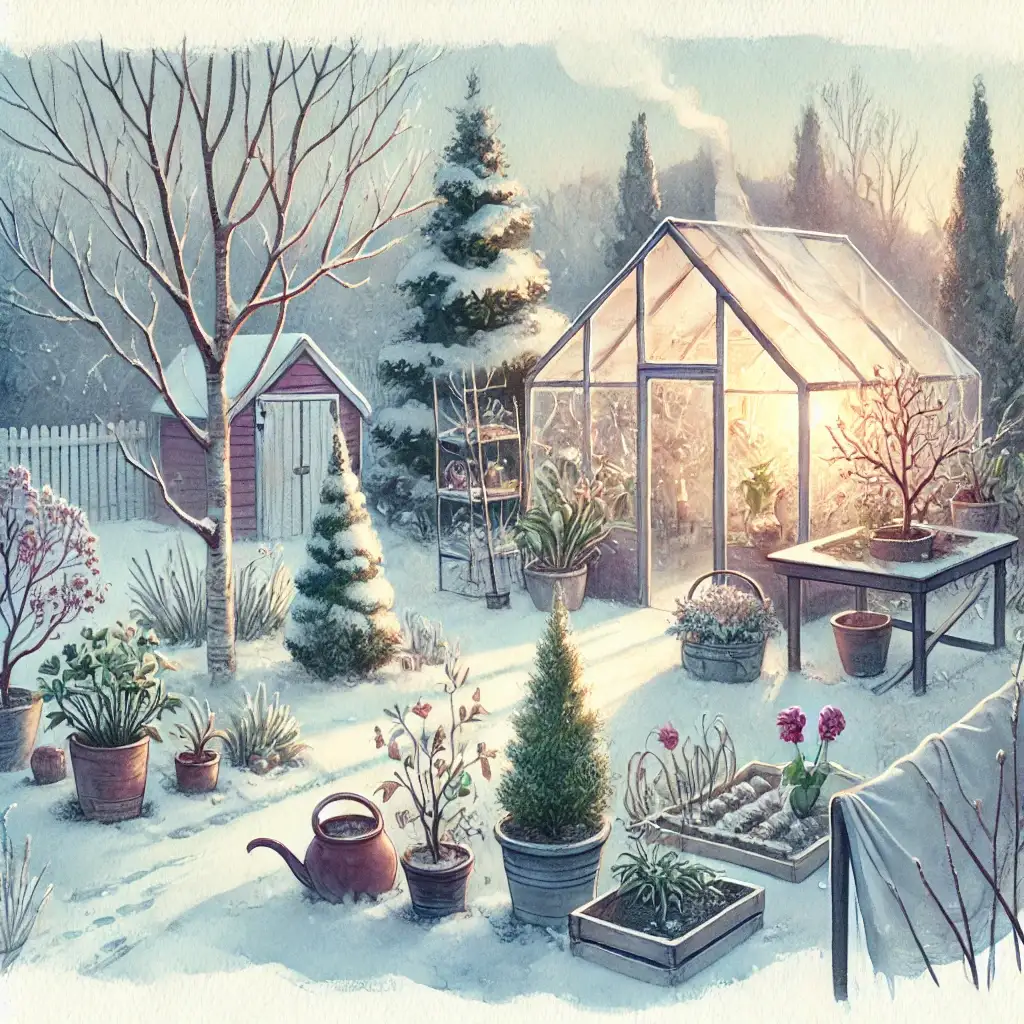
First frost always catches me out.
Frost protection for plants (UK): In zone 8a, act when nights are forecast at 0 to –2°C — water soil at midday, cover tender growth with 17–30 gsm horticultural fleece held off the leaves, seal edges, and vent next morning. Add 5–7 cm mulch and use windbreaks on exposed beds.
As UK home growers (zone 8a here in the East), frost protection for plants is mostly about timing and a few simple, repeatable steps. The short version: watch the forecast, water the soil (not leaves) the afternoon before a cold snap, cover tender growth with fleece that doesn’t touch the foliage, and vent covers the next morning to avoid damp-related disease. The details below will save plants and sanity.
Best ways to protect plants from frost (UK zone 8a)
In UK zone 8a, protect plants by mulching roots, watering the soil the afternoon before frost, covering tender growth with 17–30 gsm horticultural fleece that doesn’t touch the leaves, and using windbreaks or cold frames on exposed sites. Aim to act when night lows are forecast at 0 to –2°C, typically late October–March. Interested in how the Met Office measures temperature, click here>>
Our first frosts usually arrive late October–December, with sharp spells through February. I keep a “night‑before” kit ready: pegs, hoops, fleece, and a tub of cloche weights. For garden beds, a 5–7 cm mulch buffers root temperatures. For borders and containers, I group pots together and shift the tender ones beside a south- or west‑facing wall. Beds with winter salads or spring bulbs get hoops in place from November so I can throw fleece over in sixty seconds when the forecast turns.
Night‑before frost checklist (3 minutes):
- Water soil lightly at midday–early afternoon (moist soil holds heat better than dry). Avoid wetting leaves.
- Drape fleece so it’s not touching foliage; peg or weight the edges. Double layer if forecast is ≤ –3°C.
- Close cold frames and prop a small vent for morning release; secure greenhouse doors.
For UK frost alerts, see the Met Office; for plant-by-plant hardiness, the RHS database is excellent.
For a month‑by‑month winter plan, see our Winter Gardening in the UK (Zone 8a).
Curious which cover to use and when? Jump to the fleece/cloche/cold frame section below.

Fleece, cloches or cold frames — which wins when?
Use fleece for fast, cheap, breathable protection on beds and borders; cloches to shield rows or individual crops from frost and wind; and cold frames for the most stable microclimate and easy morning venting. In deep cold, combine methods: fleece under a cloche, or cloche within a cold frame.
Quick picker table (UK focus):
| Solution | Best for | Typical protection | When to use | Notes |
|---|---|---|---|---|
| Fleece 17 gsm | Mild frosts on hardy crops | ~1–2°C buffer | Oct–Mar mild spells | Highest light transmission; great for leafy crops. |
| Fleece 23 gsm | Tender bedding, young veg | ~2–3°C buffer | Nov–Mar | Good balance of warmth vs light. |
| Fleece 30–35 gsm | Colder snaps / overnight lows ≤ –3°C | ~3–4°C buffer | Dec–Feb | Heavier; reduce daytime light; vent mornings. |
| Row cloches (rigid or tunnel) | Rows of salads/brassicas | Wind + frost | Oct–Mar | Fast to deploy; combine with fleece in cold spells. |
| Cold frame (timber/aluminium) | Trays/pots & small beds | Most stable | Oct–Apr | Must vent on sunny mornings to avoid damp/overheating. |
Venting & double‑layer rules: On clear, bright winter mornings, lift or vent covers by mid‑morning once temperatures rise above 2–3°C; re‑cover before dusk. If using plastic cloches, avoid direct contact with leaves (plastic can chill leaves and cause scorch). In prolonged cold or wind, double fleece with a small air gap.
Why this works: Supporting fleece off leaves creates an insulating air gap and reduces conductive heat loss; breathable fabric also lets moisture escape so leaves dry after sunrise.
A double layer of 23 gsm fleece over hoops typically buys ~3–4°C on clear nights.
If you’re choosing a weight, see our Horticultural Fleece UK (GSM guide & venting). Cold mornings are easier with a frame you can crack open — here’s Cold Frames vs Cloches (UK) to pick your first build.
Venting a cold frame mid‑morning stops condensation, mould and leggy growth.
Cut fleece to bed length and keep a roll by the back door for fast deployment.
Watering before frost — does it help?
Yes — watering the soil (not leaves) at midday–early afternoon before a cold night helps, because moist soil stores daytime warmth and releases it slowly overnight. Avoid watering late in the day, in already waterlogged beds, or if containers are likely to freeze solid.
How to do it well: Give a light, even soak so the top 5–8 cm of soil is moist. In borders and veg beds this buffers root temperatures a touch and reduces desiccation from freezing winds. For pots, water sparingly; saturated compost in small containers can freeze and damage roots. Never wet foliage before a freeze — ice crystals on leaves cause more harm than dry cold.
Rule of thumb: If the forecast is 0 to –2°C, water soil and cover tender crops. If it’s colder than –3°C for multiple nights, prioritise physical protection (double fleece, cloches, cold frames) and consider moving the most precious pots to shelter.
Why this works: Water has a high heat capacity, so moist soil stores daytime warmth and releases it slowly overnight — a small but real buffer.
Moist soil can be ~1–3°C warmer overnight than dry soil in calm conditions.
Now that the soil is prepared, let’s cut the wind and bank every degree we can.
Windbreaks & microclimates
Reduce wind to reduce frost damage. Temporary hessian/burlap screens or mesh windbreaks slow cold airflow, lowering desiccation and helping trapped ground heat linger. Place them on the prevailing wind side and leave a small gap at ground level for air movement.
Practical setups:
- Borders: Drive stakes and staple hessian at 60–90 cm height to shield tender perennials (salvias, penstemons).
- Veg beds: Erect a short mesh fence on the windward side, then use hoops + fleece on the crop.
- Containers: Group pots together and tuck them beside a sun‑warmed wall; raise them on pot feet to avoid frozen bases.
Reading the microclimate: Low spots are frost pockets. Paths and patios radiate a little heat after sunset. Evergreen hedges can shelter but also shade — worth noting in your layout.
I keep notes of where the first rime appears — it’s always where I now add the earliest windbreak and mulch.
Containers need extra care — here’s what to change in winter.

Pots and planters: special measures
Containers freeze faster than ground soil. Protect by wrapping pots, raising them off paving, grouping together, and moving the tender ones to a sheltered, bright spot. Water sparingly, and avoid feeding until spring growth starts.
Steps that make the difference:
- Wrap & lift: Use hessian or bubble wrap around pots (leave drainage holes clear). Raise on feet or battens.
- Group & shelter: Cluster pots to share warmth; place near a south‑ or west‑facing wall.
- Move the precious: Half‑hardy pelargoniums, young rosemary, citrus, and seedlings belong in a cold frame, porch, or unheated greenhouse on cold nights.
- Root health: Check for water pooling; soggy compost + freeze = root death. Water just enough to prevent desiccation.
Plant choices that help: Hardy evergreens (box, holly), hellebores, heuchera, and many herbs (sage, thyme) shrug off ordinary frosts. Keep genuinely tender plants as portable container displays so they can be whisked under cover.
Wrap, raise and group pots beside a sun‑warmed wall — small wins add up in winter.
How to cover plants with fleece (fast HowTo)
Support fleece so it doesn’t touch foliage, seal the edges, and vent in the morning. That’s it — done right, you gain a few crucial degrees without inviting damp.
You’ll need: horticultural fleece (17–30 gsm), hoops or canes, pegs/weights, scissors, and 5 minutes.
Steps:
- Hoop first: Push hoops/canes at 60–90 cm intervals so the fleece will sit clear of leaves.
- Drape & seal: Lay fleece over the hoops; weigh or peg the edges on all sides. Leave a slack curve for airflow.
- Morning routine: Once temps rise above 2–3°C, lift a side or remove fleece to vent and dry leaves; re‑cover before dusk if another frost is due.
That’s the technique I trust on my salad beds all winter.
What actually worked for me last winter
On our coldest nights (–4°C, two consecutive in January), double‑layer 23 gsm fleece over hoops kept winter salads and young broad beans undamaged. Containers wrapped and raised survived; unwrapped terracotta cracked.
Notes from the garden:
- Pelargoniums survived in an unheated greenhouse with a single fleece layer and daily venting at ~10am.
- Brassicas (kale, cabbage) were fine under 17 gsm in December; I switched to 30 gsm during a late‑Feb snap.
- Cold frame trays (lettuce, parsley) needed a daily crack‑open even when still frosty outside to stop condensation and botrytis.
If I only did two things this year: hoops up by November, and a fleece roll cut to bed length.
FAQ (UK winter protection)
When should I start protecting plants from frost?
Start when night lows approach 0°C in your area (often late Oct–Dec in much of the UK). Have fleece and pegs ready so you can act on the day a cold snap is forecast.
What temperature kills bedding plants?
Many summer bedding plants are damaged at –1 to –2°C. Protect anything tender when lows hit 0 to –2°C, and double‑cover if a sharper freeze is expected.
Can I use plastic to cover plants?
You can, but don’t let plastic touch foliage and ensure morning venting. Plastic traps condensation and can chill leaves; breathable fleece is usually safer for overnight use.
When should I remove fleece in the morning?
Vent or remove once temperatures rise above 2–3°C and the sun is up. Re‑cover before dusk if another frost is expected.
Is it worth watering before a frost?
Yes — moist soil (not leaves) holds daytime heat. Water at midday–early afternoon, lightly, and avoid waterlogging or late‑day soaking in pots.
Can I leave fleece on all winter?
Yes on hardy crops if it’s supported off the leaves and vented on sunny mornings. Check weekly for condensation, slugs and any growth that’s touching the fabric.
What’s better for frost: fleece or plastic?
For overnight frost, choose breathable fleece. Use plastic only if it’s off foliage and well‑vented — it’s more prone to condensation and leaf scorch.


Leave a Reply