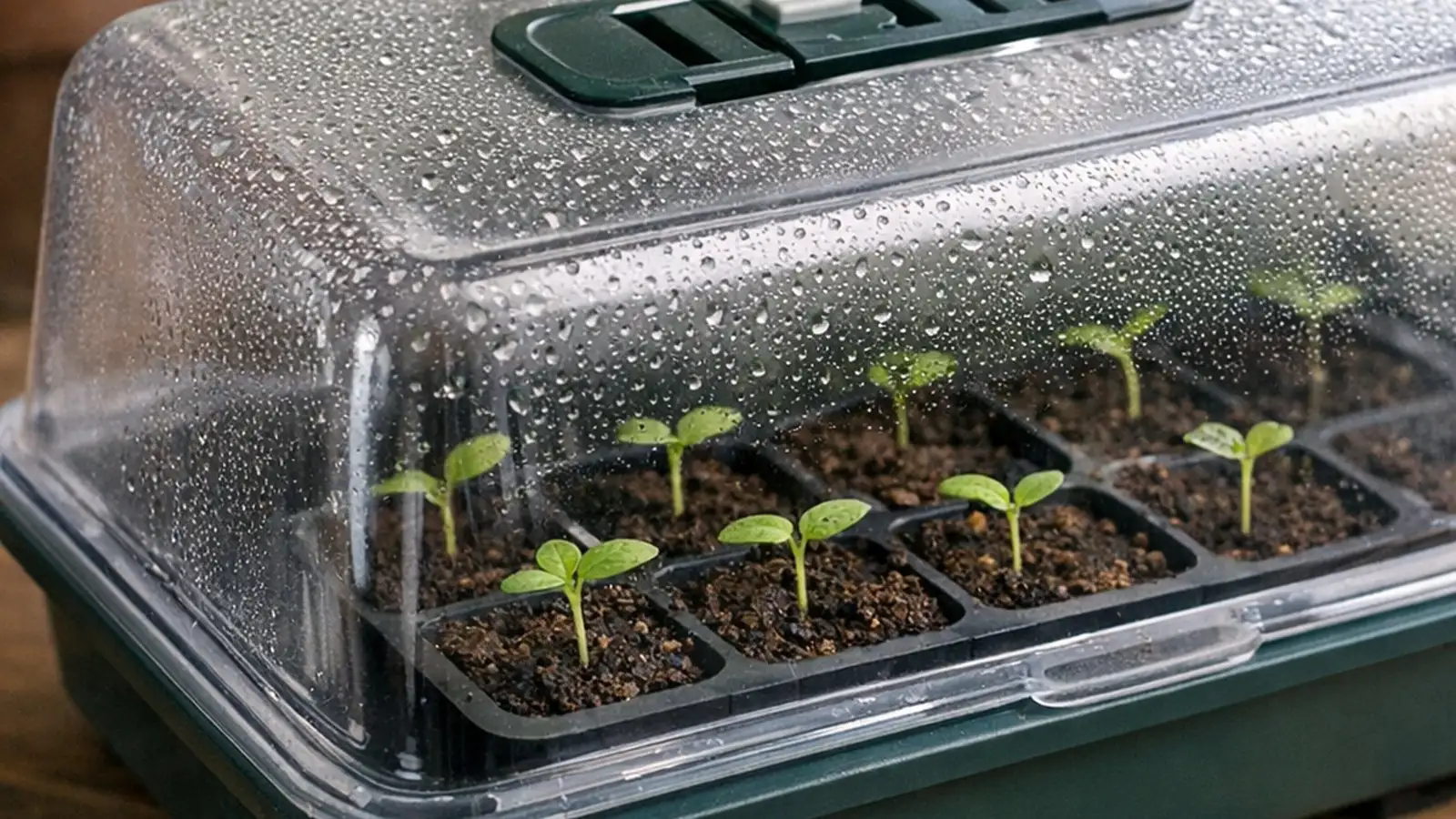
Seedlings collapsing at the compost line is often damping off. This UK Zone 8a guide provides quick checks. It offers simple ventilation and watering fixes. The guide tells you what to do immediately to save the rest.
Recognise damping off fast
Damping off is caused by soil-borne fungi and fungus-like organisms that attack seedlings in damp, still conditions. The classic symptom is a pinched stem at compost level, followed by sudden collapse. In late winter and early spring, low light slows drying, which increases risk indoors.
I often lost tomato seedlings to dampening off by leaving the propagator vents closed for too long. It showed up as the stem looking pinched at the soil level. If i didn’t act fast I would lose the plant.
Use this quick checks table to separate true damping off from common lookalikes. For a UK reference on symptoms and prevention principles, see the RHS advice on damping off.
| What you see | Likely cause | First action |
|---|---|---|
| Stem looks pinched or water-soaked at the compost line, seedling falls over | True damping off (often linked with Pythium, Rhizoctonia, Fusarium) | Remove affected seedlings plus nearby compost, then reduce humidity and improve airflow |
| Seedlings flop, but stems are long, pale, and stretchy | Legginess (low light, too warm) | Increase light and reduce heat |
| Seedlings wilt, compost feels dry, they perk up after watering | Underwatering | Bottom-water thoroughly, then drain |
| Stems snapped or crushed, damage looks local | Mechanical damage | Protect trays from rough handling and pets |
| Adult gnats hovering, larvae visible in compost, seedlings look stressed | Fungus gnat larvae (root stress, secondary issues) | Let the surface dry more, improve hygiene, isolate affected trays |
If you want the full sowing workflow, follow starting seeds early in the UK.

Change the environment first
Most outbreaks are driven by high humidity, poor airflow, and compost that stays wet at the surface. When those conditions persist, pathogens spread quickly between crowded stems. Fixing the environment first is the fastest way to stop losses.
Firstly, vent lids and reduce condensation. Next, add gentle airflow. Finally, switch to bottom watering and thin overcrowded trays so stems are not sitting wet.
- Vent lids and reduce condensation. Open vents or crack the lid as soon as seedlings appear. Remove coverings once most have germinated.
- Add gentle airflow. Use a small fan on low, not blowing directly at seedlings.
- Switch to bottom watering. Stand trays in water briefly, then let them drain fully.
- Thin crowded areas. Snip spare seedlings at compost level to improve air circulation.
If compost stays glossy wet on top for hours, conditions are too humid for tiny stems. Reduce heat where you can, increase light, and keep air moving gently.

Save the rest of the tray
Once a seedling has collapsed with a rotted stem at compost level, it is usually not saveable. The goal is to stop the outbreak spreading to neighbouring plants. Quick removal and drier, better-ventilated conditions can protect unaffected seedlings.
- Remove collapsed seedlings promptly, plus a small area of surrounding compost.
- Discard that material, and do not add it to a compost heap.
- Isolate the tray from other sowings to reduce spread.
- Vent lids more and add gentle airflow.
- Bottom-water only, and avoid misting the surface.
- If several modules are affected, prick out healthy seedlings into clean containers with fresh seed compost.
If many seedlings fail to emerge, assume pre-emergence damping off and restart with fresh compost and clean containers.
Reset your sowing routine
Prevention is mostly routine: clean containers, fresh seed compost, and controlled moisture. In Zone 8a, late winter sowings indoors are higher risk because drying is slow. A daily check keeps small problems from becoming losses.
- Start clean. Wash trays, pots, and tools, then let them dry fully.
- Use fresh seed compost. Avoid half-used bags that have been damp for months.
- Sow thinly. Overcrowding traps humidity around stems.
- Water carefully. Keep compost moist, not sodden, and avoid splashing stems.
- Label and inspect daily. Look for pinched stems and persistent surface wetness.
If germination is patchy, check viability before sowing more. Use test if old seeds are still usable.
If you are working with peat-free mixes, moisture behaviour can be different. Revisit peat-free compost essentials for handling tips.
Use a dry surface layer
A slightly drier surface discourages stem infections because seedlings are not sitting against constantly wet compost. This does not replace airflow, but it adds resilience when indoor humidity is hard to control. Keep the layer light so watering and germination still work normally.
- Top dress with fine vermiculite or perlite after sowing, or after pricking out.
- Avoid compacting the surface, which can trap moisture beneath.
- Bottom-water so the topper stays drier between checks.
For years I did not use vermiculite or perlite. Now I use it all the time to help control moisture when sowing seeds.
Optional kit that helps reduce damping off risk
We may earn a commission from links on this page (at no extra cost to you).
Vermiculite topper helps keep stems away from wet compost.
Why are my seedlings falling over?
Not every collapse is damping off. Several common problems look similar, but the fixes are different. A quick diagnosis saves time and avoids making conditions worse.
Leggy seedlings
If stems are long and weak, the issue is usually low light or too much warmth. Move seedlings into stronger light, reduce heat, and add gentle airflow. Follow prevent leggy seedlings for step-by-step fixes.
Fungus gnats
Fungus gnats thrive when compost stays wet. Let the surface dry more between waterings, improve airflow, and remove plant debris. Bottom watering also reduces wetness at the surface.
Surface mould
Light surface mould is not always dangerous, but it signals compost that is staying wet and still. Treat it as a warning: vent lids, water from below, and improve airflow. For an organic-leaning UK reference point, see Garden Organic FAQs.
FAQs
Can you save seedlings once damping off starts?
Should I throw away the compost?
Is surface mould always damping off?
Do cinnamon, chamomile, or hydrogen peroxide work?
In summary: Keep stems dry, air moving, and sowings clean. Most damping off problems indoors in the UK are caused by humidity, watering style, and overcrowding. Small daily checks can prevent big losses.
Worried you are behind on sowing this year, here’s our guide on catching up.
You must be logged in to post a comment.