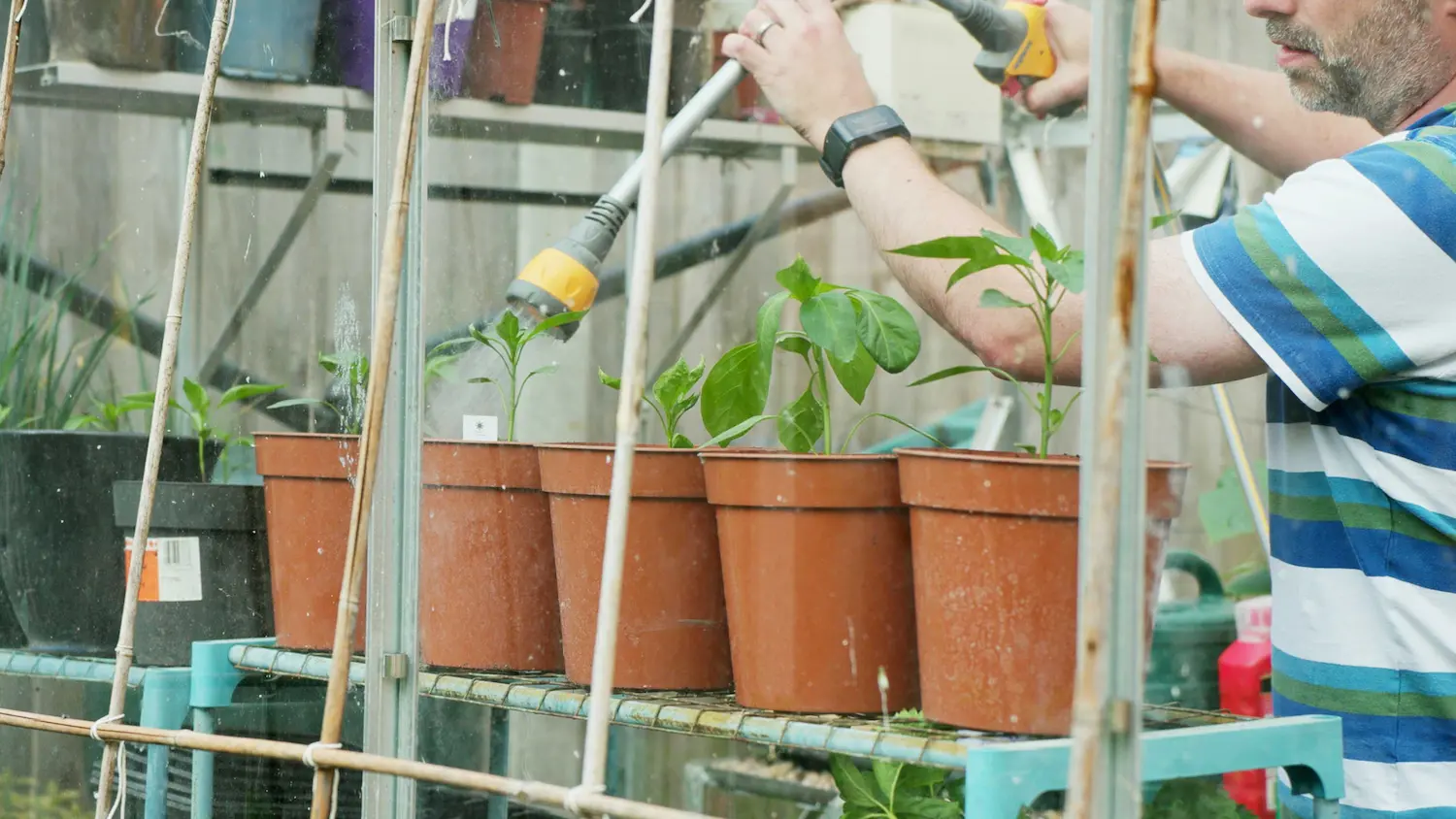
Hot weather can make a garden look desperate fast, but more water is not always the answer. This guide shows how to water beds properly in a UK dry spell without wasting water.
At a glance
- Best choice if: You are watering beds, borders or in-ground vegetables during a warm, dry spell.
- Skip this if: Most of your problem is pots or growbags, because they usually need a different routine.
- What matters most: Watering the root zone properly and checking the soil before repeating the job.
- Main risk: Splashing the surface every day and assuming the roots have had enough.
- First priority: Newly planted crops, seedlings, salads and anything actively flowering or fruiting.
UK timing note
In much of the UK: hot spells often come in bursts, not as one long settled summer. A bed that looked stressed yesterday may still hold moisture below the surface today.
Use this as a guide, not a fixed schedule: check the soil first and keep an eye on any local hosepipe restrictions during prolonged dry weather.
Water early and check the soil first
Early morning is usually the best default. The soil has time to take in the water before the hottest part of the day. The plants can use it when they start pulling hard in the sun.
Evening can still work, especially in a genuine hot spell, but midday watering is usually the least efficient option. You lose more to fast evaporation, and a rushed splash often wets the surface far more than the root zone.
Before you water, check below the top layer. Push a finger in, or scrape back the surface with a trowel and feel the soil underneath. In hot weather, the top can look dusty even when there is still usable moisture below. Conversely, the soil can appear moist when it is dry just beneath the surface.
In my own garden, I made an easy mistake. I assumed a dark, damp-looking surface meant the bed had had enough. In hot weather that can be badly misleading.
| Best default time | Early morning when possible |
| First check | Moisture below the surface, not just the top crust |
| Where to aim | The soil around the roots, not mainly the leaves |
| What wastes effort | Light surface watering in the heat of the day |
For a solid UK reference on the basics, the RHS guide to watering plants wisely is worth keeping to hand.
Soak the root zone, not just the surface
When a bed really does need water, a proper soak is usually far more useful than a quick daily sprinkle. Deep watering gives moisture time to move down into the root zone, where it can do some real good.
There is no single hot-weather schedule that suits every garden. A sandy bed in full sun and wind can dry quickly. A mulched bed with more organic matter may hold on much longer. The better question is not “Have I watered today?” but “Is the root zone actually drying out?”
If the surface is very dry and hard, slow down. Let the first pass soak in, then go back over it. That is usually more effective than blasting the ground and watching the water run off.
For edible beds, the RHS vegetables watering guide is especially useful. It keeps the focus on crops rather than broad garden advice.
When to do this
- The bed is dry below the surface, not just on top.
- Plants are in active growth and the weather has turned warm and dry.
- You can stay long enough to soak the root area properly.
When to skip it
- The soil is still holding moisture underneath the top inch or two.
- You are only about to wet the surface and call it done.
- The real issue is a container crop that dries much faster than open ground.
Prioritise the plants that actually need you
When water or time is limited, not every part of the garden needs the same attention. Start with newly planted crops, seedlings, salads, and anything flowering or fruiting heavily. Those are usually the first places where drought stress costs you growth or yield.
Established shrubs, deeper-rooted ornamentals, and tougher long-settled plants often cope better with a short dry spell than people expect. That does not mean ignore them forever. It means do not water everything evenly just to feel you have been fair.
This is where a calm check beats a fixed routine. Look for what is actively growing, what is setting fruit, and what is still getting established. Deal with those first, then come back to the rest if conditions really justify it.
If you are dealing with wider heat stress as well as watering decisions, read summer sun and heatwaves next.
Make each watering go further
The simplest way to save water is to keep more of it in the soil once you have applied it. Mulch helps. Organic matter helps. Fewer weeds help. So does putting the water where the roots can actually use it.
A watering can, hose rose, or gentle targeted flow is often better than spraying paths, bare ground and leaves. You are not trying to make the bed look wet. You are trying to get water to the right place with as little waste as possible.
In prolonged dry weather, do not ignore restrictions. During a hosepipe ban, you can usually still water with a watering can or bucket. However, always check the current local position rather than assume.
For a broader look at saving and storing water, see rain water collection in the garden. For UK background on conserving moisture in hot weather, the National Trust guide to gardening in hot weather is useful. The Ofwat hosepipe ban guidance is the right place to check the rules around restrictions.
Common mistakes and false alarms
Most watering mistakes come from reacting too fast. In hot weather it is easy to see a bit of wilt and reach for the hose. Sometimes that is right. Sometimes it is just a fast way to waste water.
Afternoon droop does not always mean the bed is dry. Some plants flag in the heat and recover later as temperatures fall. That is why checking the soil matters more than guessing from the leaf posture alone.
Common mistakes
- Watering little and often: The surface looks better briefly, but the roots may still be short of moisture.
- Judging by the top only: A dry crust does not always mean the whole bed is dry, and a wet surface does not prove the roots have had enough.
- Treating every plant the same: New plantings and thirsty crops usually need attention before tougher, established plants.
- Forgetting the soil itself: Bare soil dries faster, so better watering technique works best when moisture retention improves too.
- Waiting for obvious stress every time: By the time some crops look rough, growth and cropping may already have slowed.
Containers need a different routine
Pots, growbags and other containers dry out much faster than beds and borders. Their roots cannot search deeper for moisture, so they should not be treated as the same job.
In hot weather, some container crops may need water daily. In small pots or very exposed spots, check them more than once. That does not mean drench them blindly. It means accept that containers are a different system with a smaller buffer.
If most of your summer watering effort goes into pots and growbags, switch to a container-specific guide. Do not apply open-ground advice too literally. Start with watering container vegetables in summer.
If you are still building your plot, how to start a small vegetable garden is the better next read. The self-sufficiency garden guide also fits this page naturally. It is ideal if you are trying to reduce waste. It helps you rely less on mains water over time.
Hot weather watering checklist
- Check below the surface before you water.
- Water early if you can, and aim at the root zone.
- Soak properly rather than sprinkling little and often.
- Prioritise new plantings, salads and fruiting crops first.
- Mulch bare soil and keep weeds down to hold moisture longer.
The video below covers the original set of watering tips that prompted this refresh. Read the article first, then use the video as a quick visual reminder of the core principles.


Leave a Reply