Micro smallholding can help a family spend more useful time outdoors, learn practical food-growing skills and build small seasonal routines without needing a farm. Start with plants, compost and water-saving habits first, then only consider animals if your space, time and local rules genuinely fit.
At a glance
- Best first step: Start with plants, compost and water-saving routines.
- Keep animals optional: Wait until daily care, holiday cover, costs and rules genuinely fit.
- Main rule: Build one repeatable family routine before adding more beds, crops or livestock.
What is micro smallholding?
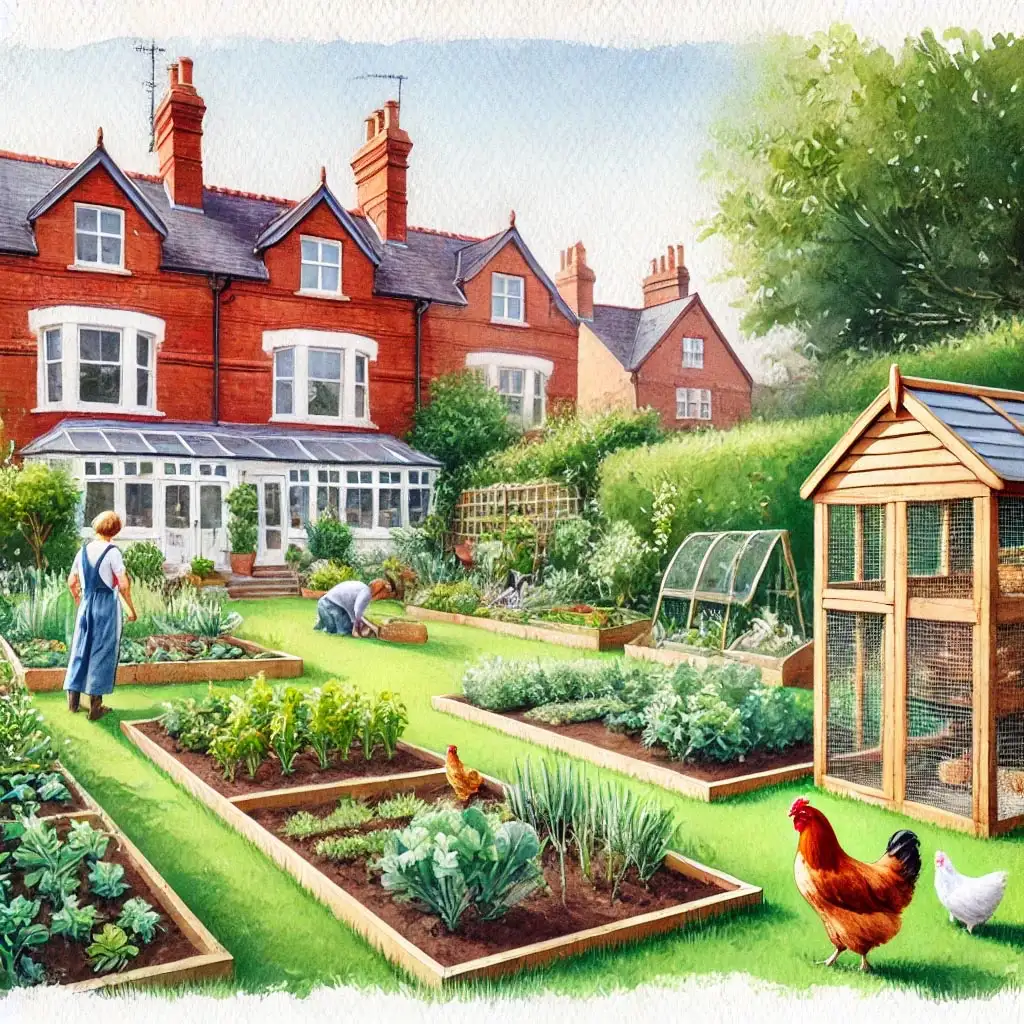
A micro smallholding is a small, practical version of self-sufficiency. Instead of managing acres of land, you use the space you already have to grow food, reduce waste and build household routines around the seasons. It might be two raised beds, a compost bin and herbs by the kitchen door, or it might grow into fruit bushes, a greenhouse, rainwater collection and, later on, hens.
The point is not to copy a country smallholding at miniature scale. The point is to make food-growing part of ordinary family life. If you want the broader setup guide, start with how to start a micro smallholding in a small space.
Is micro smallholding right for your family?
Micro smallholding works best when it matches the week you actually have, not the week you wish you had. A small, well-used growing space will teach more and produce more joy than a complicated setup that becomes another family pressure.
Good fit if…
- Your family can manage a short check-in most days in the growing season.
- You have one easy place to start with plants, compost or containers.
- Everyone understands that animals are optional and come later.
Keep it simpler if…
- Your week is already too stretched for watering, harvesting and basic maintenance.
- You would need to buy animals before building a reliable plant-growing routine.
- Local rules, costs, holiday cover or daily care are not yet clear.
In my own setup, the smallholding idea only makes sense when it fits real family life. A garden, allotment and chickens can give you plenty to work with, but the lesson is the same at any scale: build the plant-growing routine first, then add animals only if the daily care genuinely fits.
10 benefits of micro smallholding for families
1. Fresh air and everyday movement
A micro smallholding gets the family outside for useful reasons. Watering, carrying compost, sowing seeds, harvesting crops and tidying beds all add gentle movement across the week. A practical next step is to put one container or bed where the family naturally passes it.
2. Family bonding through shared jobs
Micro smallholding gives the family a shared project with visible progress. Seeds germinate, seedlings grow, compost changes texture and food reaches the plate. Keep the job small enough that one child can own it without the task becoming a battle.
3. Educational opportunities
For children, a micro smallholding is a living classroom. They can see seeds become plants, flowers become fruit, kitchen scraps become compost and weather change what happens in the garden. Choose one quick crop so the lesson has a visible result.
4. Seasonal eating and better food awareness
Growing food at home helps children understand seasonality. They learn that strawberries, herbs, beans and salad leaves arrive because someone planned, watered and waited. A useful next step is to grow one crop your family already eats.
5. Lower waste through composting and reuse
Composting peelings, reusing pots, collecting rainwater and reducing waste become ordinary household habits rather than abstract ideas. Avoid making this complicated: one compost caddy or water butt is enough to begin.
6. More resilient family routines
Small growing routines can anchor busy weeks. A short daily check and a slightly longer weekly reset are easier to keep than a dramatic new lifestyle.
7. A practical route into self-sufficiency
Self-sufficiency does not have to mean producing everything your family eats. Every meal that includes something you grew builds confidence. Keep the decision boundary clear: repeat what works before adding new systems.
8. Better use of small spaces
Micro smallholding makes small spaces work harder. Containers, raised beds, vertical supports, herbs and repeat-picking crops can all earn their place. Start by choosing the sunniest easy-to-reach spot rather than the largest one.
9. More confidence with animals, if appropriate
Animals can teach responsibility if they fit your home, time and rules, but they should come after the family has a reliable plant-growing routine.
10. A stronger connection to your home and garden
A small food-growing space can change how a family sees its home and garden. It becomes a place to notice seasons, solve problems and share useful work. The next step is to keep a simple note of what changed each week.

Common challenges of micro smallholding
Micro smallholding is rewarding, but it is not effortless. Weather, pests, holidays, tiredness, busy school weeks and changing routines can all make the work harder. Keep the system small enough to maintain on an average week.
- Time: use a short daily check and one slightly longer weekly reset.
- Weather: keep simple protection available, such as fleece or cloches.
- Pests: use barriers early and check plants often. See the beginner’s guide to organic pest control.
- Overwhelm: limit new projects until the current routine feels ordinary.
How to make micro smallholding more sustainable
The most useful sustainable choices are usually simple: composting, rainwater collection, peat-free growing choices and crops your family actually eats. For related MGJ guides, see rain water collection in the garden and peat-free compost.
How to get started
- Choose one growing area you can see and reach easily.
- Start with a couple of raised beds, containers or a small border.
- Pick easy starters: herbs, salad greens, tomatoes, strawberries, beans or courgettes.
- Give everyone a role: watering, harvesting, checking plants, composting or record-keeping.
- Add another bed, crop group or system only when the first routine feels manageable.

Final thoughts
Micro smallholding is not just about producing food. For a family, its real value is in shared routines, outdoor time, practical learning and confidence around the growing space. Start small, choose crops you will use, keep animals optional, and expand only when the first habits are working.
Leave a Reply