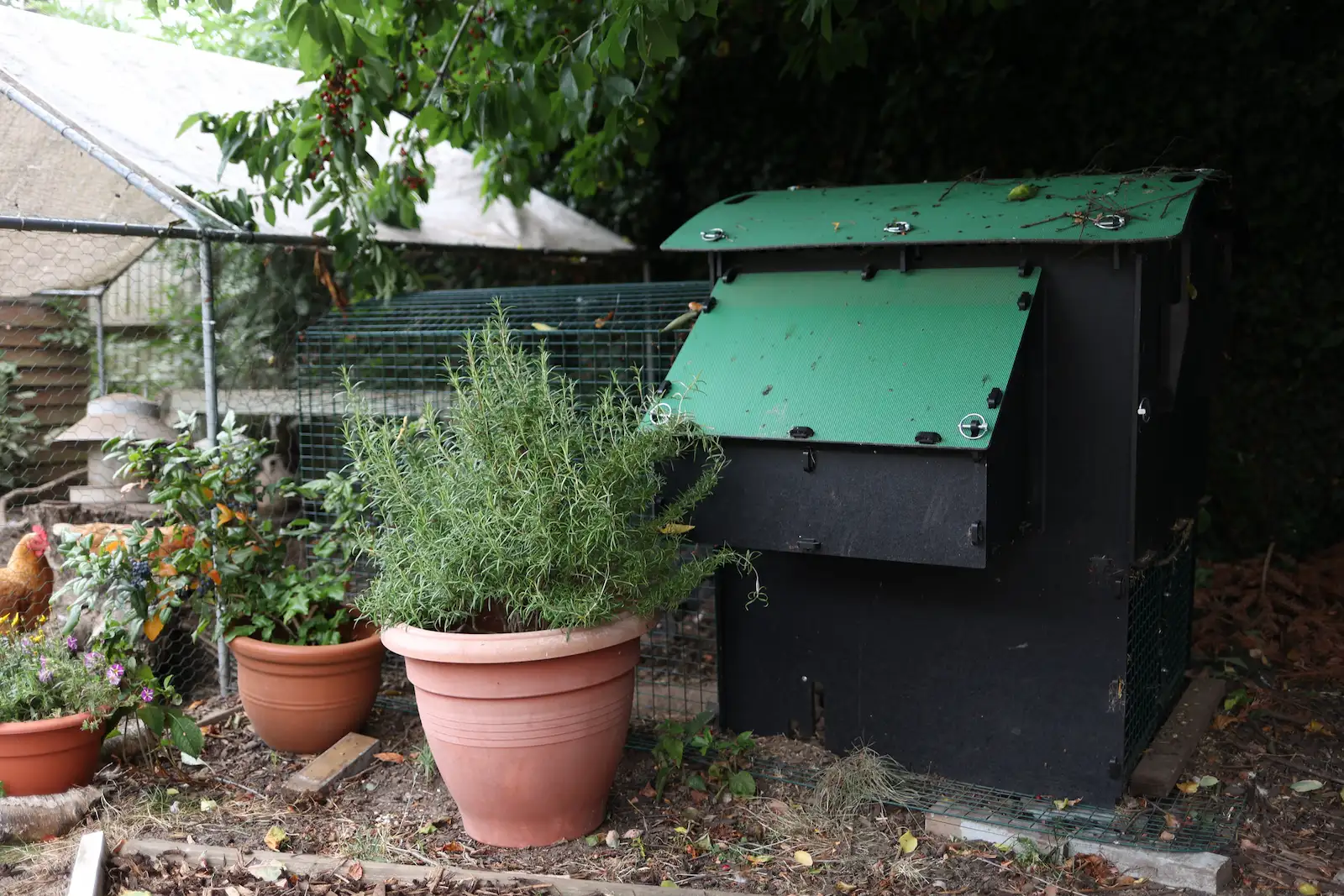
Choosing between Nestera and a cheap wooden coop is really a choice between lower upfront spend and lower long-term hassle.
Disclosure: Nestera supplied our coops. This comparison is based on real use, including downsides, and not on a scripted review.
Why trust this comparison: I have owned a cheap Amazon-style flat-pack wooden coop, built and used a DIY wooden A-frame, and used Nestera Penthouse and Aspen coops in a real UK setup.
At a glance
- Best choice if: You want the easiest cleaning, less day-to-day hassle, and a coop that feels practical rather than fiddly.
- Cheapest way in: A budget wooden coop can work, but only if your expectations are realistic and your flock is tiny.
- Best for tinkerers: DIY gives you the most flexibility, but only if you can build it securely and keep on top of maintenance.
- Main mistake: Judging a coop by sticker price or claimed flock size instead of run space, cleaning design, and how it copes with damp.
- What matters most: Cheap to buy is not the same as cheap to own.
The honest short verdict
For most keepers who can afford it, Nestera is the better ownership experience. It is quicker to clean, easier to keep hygienic, easier to pair with an automatic door, and far less annoying to live with week after week.
The cheap flat-pack wooden route only really works if you are trying chickens on a very tight budget and keeping expectations low. Our cheap Amazon-style coop cost about £160 and housed six bantams for a time, but in truth it was too small at that stocking level and I would only use that sort of coop for two bantams.

DIY sits in the middle. Our wooden A-frame was cheap to build and gave us the access and size we wanted, but it also needed yearly treatment, was harder to sanitise properly, and only stayed safe once we reinforced weak points. Cheap to build and good to own are not the same thing.
What each route really costs over time
Nestera: The big downside is obvious. The upfront price is high, and extras such as an automatic door push it up further. That said, the ongoing cost in time and hassle has been much lower for us. Weekly cleaning is quick, deep cleaning is straightforward, and the coop still looks smart after real use in a UK garden.
Cheap flat-pack wooden coop: This is the route that looks cheapest until you live with it. Ours needed a better external run almost immediately, the tray was shallow and awkward, and by around the one-year mark the thin metal tray had rusted. Once you add the extra run, the cleaning time, and the likelihood of replacing it sooner, the bargain starts to look less convincing.
DIY wooden A-frame: Our cash cost was low because we used old fence boards, but it still took a weekend to build and then kept asking for more of our time afterwards. Timber treatment, repairs, predator-proofing, and more awkward deep cleaning all need to be counted honestly. DIY is only cheap if your tools, time, and tolerance for maintenance are already there.

Which coop is easiest to clean properly
Nestera is easiest to clean properly by a distance. That is the single biggest practical difference between these routes.
Our cheap flat-pack wooden coop took about 40 minutes to clean each week, and deeper cleans took about an hour. Even then, it never felt fully clean. The tray was shallow, slid badly, and caught on the way out. Dirt collected in awkward corners, and the whole setup felt like it had been designed to look convenient rather than actually be convenient.
The DIY A-frame had better access because we built it that way, but access is not the same as hygiene. The wooden floor held onto mess, and even after a deeper clean it still never felt properly stripped back.
With our Nestera Penthouse and Aspen, weekly clean-outs take about 15 minutes and a deeper clean is under 30 minutes, not including drying time. The trays come out cleanly, the surfaces wipe down fast, and the coop can be brought back to a close-to-new state without a battle. If you already know you will resent a difficult clean-out, that alone is a strong reason to spend more upfront.

That matters for welfare as well as convenience. The RSPCA guidance on housing and outdoor space for pet chickens is a useful reminder that the basics still matter most: chickens need housing that stays dry, well ventilated, and practical to manage.
Red mites, hygiene and why materials matter
Wood is harder to reset properly once dirt, moisture, and parasites get into joints and rough surfaces. Plastic is not maintenance-free, but it is much easier to clean thoroughly and get back to a good baseline.
That was obvious in our own setups. Both wooden routes gave dirt and pests more places to hide, and the DIY coop in particular became harder to sanitise properly over time. In the Nestera coops, the smoother surfaces and simpler clean-out made it much easier to stay on top of hygiene.
If red mites are already on your radar, the British Hen Welfare Trust red mite guide is worth reading because it explains why mites are so persistent in cracks, crevices, and perches. If you want the practical MGJ version as well, read our guide to red mites in chickens.
The same logic applies to airflow and damp. A coop that is awkward to clean, slow to dry, and full of little hiding places is simply harder to keep right over time. That is also why good ventilation design matters so much in a UK chicken coop.
Weather, predators and automatic doors
How they cope with wet UK weather
Our cheap wooden coop looked tired quickly. The tray rusted, the whole setup felt more weather-exposed than it first appeared, and it never really lost that damp, worn feel. The DIY coop lasted because we maintained it, not because wood stopped being wood. It needed annual treatment, and the floorboards held onto moisture more than I liked.
The Nestera coops have been much easier to live with in wet weather. They clean up faster, dry faster, and do not feel like they are gradually absorbing the season. In a damp UK garden, that matters.
Predator resistance and weak points
Our cheap flat-pack coop never gave me much confidence in the attached run, which is why we moved quickly to a sturdier walk-in run. The DIY route taught me a harsher lesson: a fox got in after breaking off netting from a vent. That was not a theory problem. It was a build-quality problem, and one I had created by underbuilding a weak point.
Nestera has felt more secure at the house level, but no coop solves predator risk on its own. Your run matters hugely. In practice, run size usually matters more than coop size unless your birds are being kept shut in the house for long periods. If you are still working out what space you actually need, use our chicken coop and run size calculator.
If restrictions are in place, check both our bird flu protection zone guide for small flocks and the current GOV.UK bird flu housing guidance. It covers when birds must be housed, how netting should be used, and the welfare issues that come with keeping birds in for longer periods.
Automatic doors and upgrade fit
If you want automation, Nestera is the easiest route. Our cheap flat-pack coop was not a sensible fit for an auto door, and although DIY could have been adapted, that would have meant more cutting, fitting, and testing. We fitted Nestera auto doors without issue.
That convenience is not free. Nestera add-ons are expensive, and that is one of my main criticisms of the system. Still, if you already know you want an automatic door, it makes sense to factor that into the buying decision from day one rather than hoping to bodge it on later.
Who should buy which route
Choose a cheap flat-pack wooden coop if: your budget is extremely tight, you are starting very small, and you are treating it as a short-term way into keeping chickens rather than a long-term answer. For me, that sort of coop only makes sense for two bantams, not the optimistic flock sizes often implied by listings.
Choose DIY if: you already have tools, you want custom size or access, and you are realistic about build quality, predator-proofing, and ongoing timber maintenance. DIY can be satisfying and effective, but only if you build it properly and keep maintaining it properly.

Choose Nestera if: you want the easiest day-to-day experience and can swallow the upfront spend. That is especially true if you hate fiddly cleaning, want easier hygiene, or already know you want automatic doors. If you want a fuller model-specific view, read our full Nestera Aspen chicken coop review.
When cheap wooden or DIY still makes sense
Cheap wooden still makes sense when cash is genuinely tight and you want a short trial rather than a forever coop. It can also make sense as a temporary isolation setup. The key is being honest with yourself. If you think you will keep chickens for years, expand your flock, or get frustrated by awkward cleaning, it is usually a false economy.
DIY still makes sense when the off-the-shelf options are not right for your layout and you want full control over size, access, and run integration. Our DIY coop easily housed eight birds with a large walk-in run, which shows the strength of custom design. The weakness is that you become responsible for every weak point as well.
Common mistakes
- Judging by marketing flock size: Claimed capacity is often less useful than the real run setup and how long your birds will actually spend outside.
- Thinking easy access means easy cleaning: A big door helps, but it does not fix awkward trays, absorbent floors, or hard-to-reach joints.
- Underbuilding predator protection: One weak vent, latch, or section of mesh is enough to turn a decent-looking coop into a bad one.
- Ignoring future upgrades: If you know you want an auto door later, check fit now rather than assuming you will make it work.
- Forgetting the legal basics: If you keep poultry or other captive birds in England or Wales, check the current GOV.UK bird keeper registration guidance so you do not miss the registration requirement.
If you are still at the very start of your chicken keeping journey, our beginner’s guide to keeping chickens in the UK will help you think through the wider setup, not just the coop.
You must be logged in to post a comment.